
The Book of Enoch — The Lost Sacred Text Describing the Fall of Angels and the Birth of Giants
A book that seemingly vanished from history…
Imagine that between the pages of the ancient Bible, there existed a book telling such stories about the relationship between humanity and heaven that for centuries it inspired fear and wonder in millions of people. A book where angels leave heaven, share forbidden knowledge with humans, and giants are born on Earth, whose very existence threatens the entire universe.
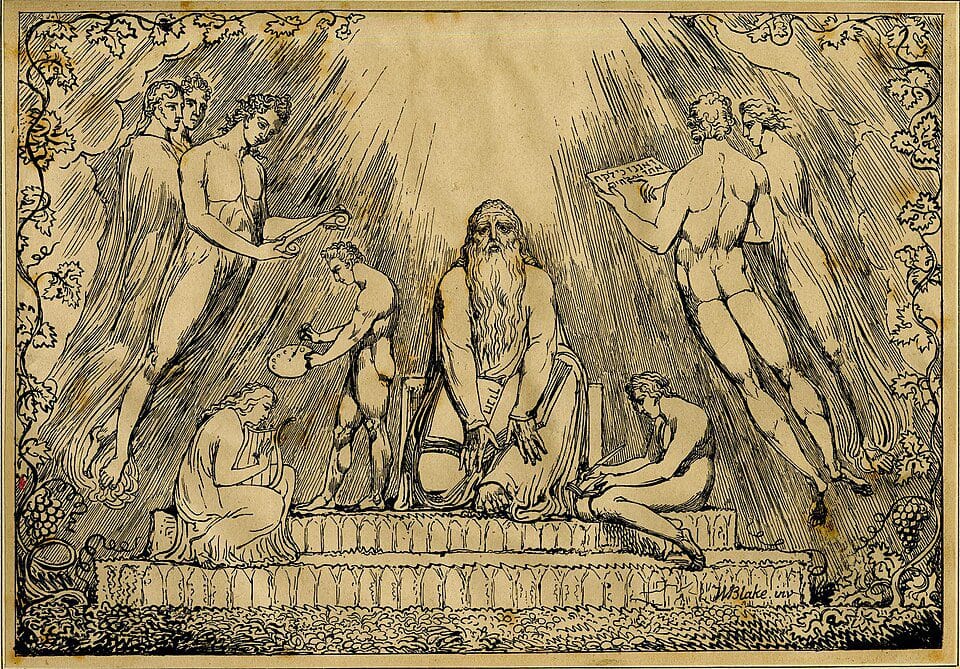
This book is the Book of Enoch.
Today, in most of the Christian world, it is no longer part of the Bible, though there was a time when it was read with special honor. Moreover, in one of the books of the New Testament — the Epistle of Jude — words of Enoch are even quoted. This raises a natural question: if the Book of Enoch was so important, why is it no longer in most editions of the Bible?
To answer this question, we must travel back nearly two thousand years.
Who Was Enoch?
Enoch is one of the most mysterious figures in the Bible. Strikingly little information about his life has survived, yet those few sentences proved sufficient to build numerous legends and religious traditions around him.
According to the Book of Genesis, Enoch was a descendant of Adam — the seventh generation from Adam. His father was Jared, and his son was Methuselah, who, according to the Bible, became the longest-living human being.
The most notable words about Enoch are these:
“Enoch walked with God; and he was no more, for God took him.”
This short sentence became the foundation for centuries of discussion.
The Bible does not say that Enoch died. On the contrary, the text gives the impression that God took him away in a special manner. That is why, in Jewish and Christian traditions, Enoch is considered one of God’s holiest men.
But if the Bible tells us only a few sentences about him, where did the multi-page book bearing his name come from?
The Book of Enoch — One Book or Several?
The title “Book of Enoch” is somewhat misleading.
In reality, most scholars believe that this is not a single work written at one time. It consists of several independent texts created during different periods that were later compiled into one collection.
According to the most common view, the book took shape between the 3rd and 1st centuries BCE. This means the text was written much later than Enoch himself would have lived, assuming he was a historical figure.
This is why modern historians believe that the authors used Enoch’s name to lend greater authority to their religious ideas. In the ancient world, this was not an uncommon practice; nevertheless, regardless of who wrote it, the Book of Enoch had a profound impact on Jewish and early Christian thought of the time.
A Book That Was Almost Lost

At one time, many believed that the Book of Enoch was lost forever.
Ancient authors often wrote about it, but almost no one had seen the text itself. European scholars possessed only brief quotes, and some even doubted whether a complete version existed at all.
Everything changed in the 18th century.
The Scottish traveler James Bruce brought several ancient manuscripts back to Europe from Ethiopia. Among them was the text considered lost for centuries — the Book of Enoch.
This discovery sparked immense interest. For the first time, scholars had the opportunity to read a text that for centuries had been known only by name.
But the story did not end there.
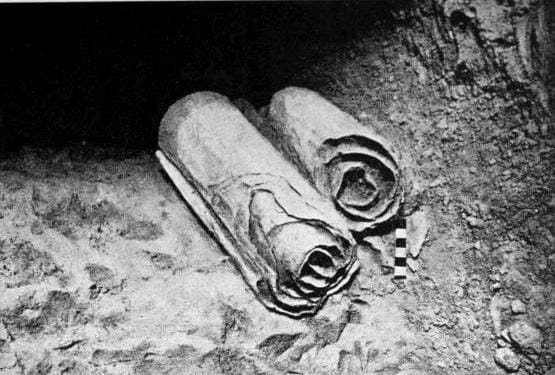
In 1947, near the Dead Sea in the Qumran caves, shepherds accidentally discovered thousands of fragments of ancient manuscripts. Among them were parts of the Book of Enoch written in Aramaic.
This discovery was particularly significant because it confirmed that the Book of Enoch indeed existed centuries before the birth of Christ and was widely circulated in the Jewish society of that era.
Why Does This Book Still Attract People Today?
The Book of Enoch is not merely a religious text.
It describes a world where heaven and earth are in constant connection; where angels interact with humans; where knowledge can build a civilization or destroy it.
In the book, you will encounter:
- Fallen angels;
- Giants called Nephilim;
- Heavenly journeys;
- Descriptions of cosmic order;
- Visions of the Last Judgment;
- Prophetic texts concerning the Messiah.
It is precisely because of this diversity that for centuries the Book of Enoch interested theologians, historians, archaeologists, and ordinary readers alike.
However, at the same time, it is important to remember that not all narratives in the book are considered historical facts. It contains numerous apocalyptic visions, symbols, and religious figures whose meanings scholars and theologians continue to debate to this day.
A Lost Book or a Forgotten Heritage?
For centuries, many believed that the Church intentionally hid the Book of Enoch.
Others thought it simply no longer met the criteria used to select the books of the Bible.
The truth is much more complex and far more intriguing.
Why does the New Testament quote Enoch? Why was this text preserved only by the Ethiopian Church? Who were those mysterious “Watchers” — angels who, according to tradition, left heaven?
The answers to these questions lie hidden in the most famous and mysterious section of the Book of Enoch — the story of the fallen angels.
Fallen Angels, Nephilim, and Forbidden Knowledge
When Heaven Touched Earth
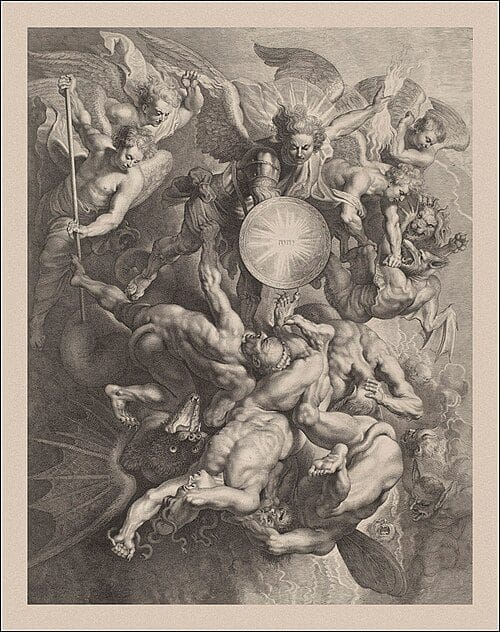
If there is one episode in the Book of Enoch that sets it apart and makes it one of the most mysterious works of world religious literature, it is the story of the fallen angels.
It all begins with an event that seems simple at first glance.
Humanity multiplies. The earth becomes filled with people. Among them, women stand out for their extraordinary beauty.
At this time, according to the Book of Enoch, some of the angels living in heaven — those referred to in the text as “Watchers” — observe human beings. Their duty was to protect humanity and fulfill God’s will, but it is right here that the story begins which, according to tradition, altered the destiny of the entire universe.
The angels fall in love with human women.
This was not merely forbidden love.
Their decision meant going against God.
An Oath That Sealed Their Fate
According to the Book of Enoch, these angels were led by a being named Semjaza (Shemihazah).

According to tradition, he feared that when it came time to make the final decision, the others would change their minds and the punishment would fall upon him alone.
Therefore, all the angels swore an oath.
They agreed that whatever the consequences of their action might be, they would not back down.
This oath, as the text states, was taken on Mount Hermon.
That is why some researchers suggest that the name of the mountain itself might be connected to this story, as in ancient Hebrew “Cherem” is associated with an oath or a curse. However, this is only one linguistic hypothesis and not an established fact.
The angels descended to Earth.
They took human women as wives.
Nephilim — Giants or Symbol?
According to the Book of Enoch, the union of angels and humans resulted in the Nephilim.
The text describes them as beings of incredible size and power.
Different manuscripts provide varying details regarding their height, but all convey a single idea — these beings were unlike ordinary mortals.
They were fierce and ruthless.
Their strength grew so immense that Earth’s resources were no longer enough to sustain them.
The Book of Enoch relates that at first they destroyed animals, and then turned upon one another. Violence, injustice, and bloodshed escalated across the world.
It should be noted that modern historians possess no archaeological evidence confirming the existence of the Nephilim. Therefore, their historical reality remains unverified. Many scholars view this narrative as a symbolic or religious tale reflecting the consequences of humanity’s fall into sin.
Nevertheless, the Nephilim remain one of the most discussed topics in biblical studies.
Forbidden Knowledge
In the Book of Enoch, the offense of the fallen angels was not limited to their relationships with human women.
Their second, and perhaps heavier sin was passing knowledge to humans that, according to the text, was not yet meant for them.
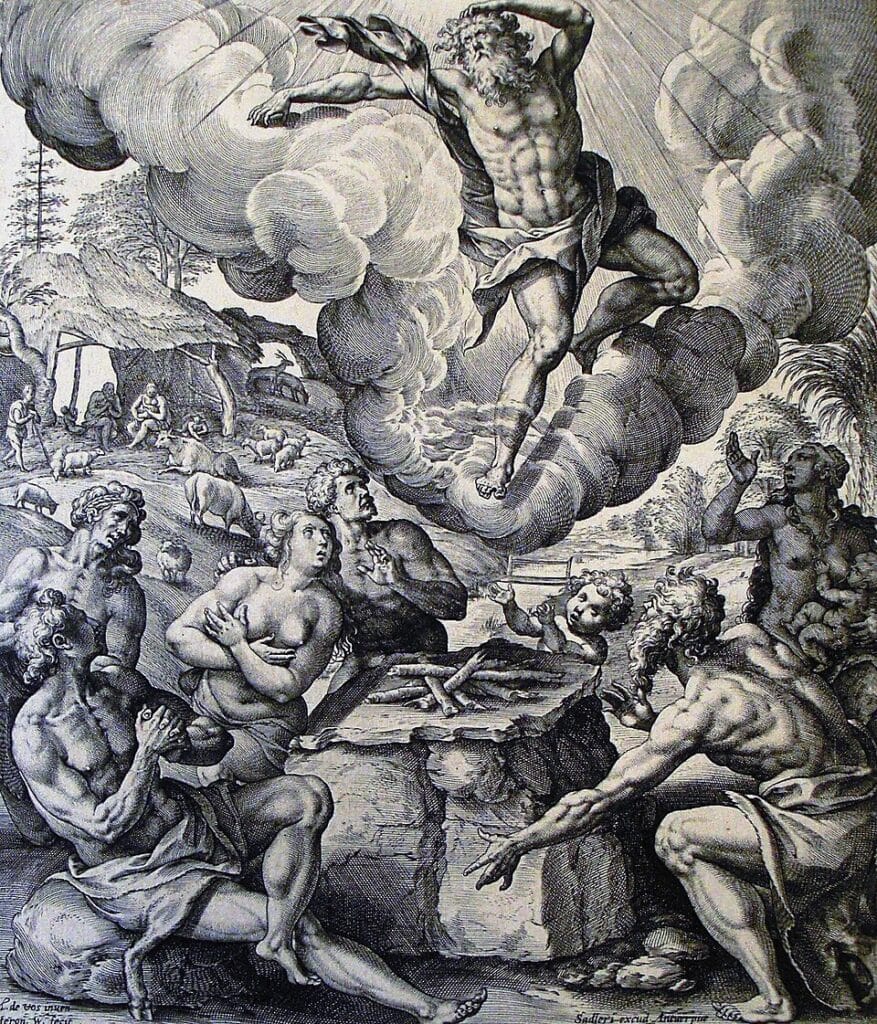
This is where the story becomes particularly fascinating.
Each angel possessed a specific “specialty.”
Azazel taught humans:
- Ironworking;
- Making swords and spears;
- Crafting shields and weapons of war.
At the same time, he taught people how to process precious stones, make jewelry, and paint their faces.
Other angels taught humans:
- Observing the stars;
- Astronomy;
- The secrets of nature;
- The use of plants;
- The interpretation of signs;
- Various mystical knowledge.
A notable detail emerges here.
Today, we view technological progress as one of humanity’s greatest achievements.
In the Book of Enoch, however, that same knowledge is presented as a cause of moral corruption.
For the author of the text, the problem is not knowledge itself, but that humanity was not prepared to receive it.
This idea recurs in many later religious and philosophical works — knowledge without responsibility can turn into a destructive force.
Why Did Azazel Become the Chief Offender?
Although there were many fallen angels, the Book of Enoch devotes special attention to Azazel.
The text attributes the gravest sins to his name.
For this reason, by divine command, the archangels were ordered to capture him.
According to the Book of Enoch, Azazel was bound in a dark, jagged pit in the desert, destined to remain there until the Last Judgment.
This passage exerted a major influence on both Jewish and Christian traditions in later periods.
Some scholars believe that these texts helped shape later concepts of demonology and fallen angels.
Can This Story Be Taken Literally?
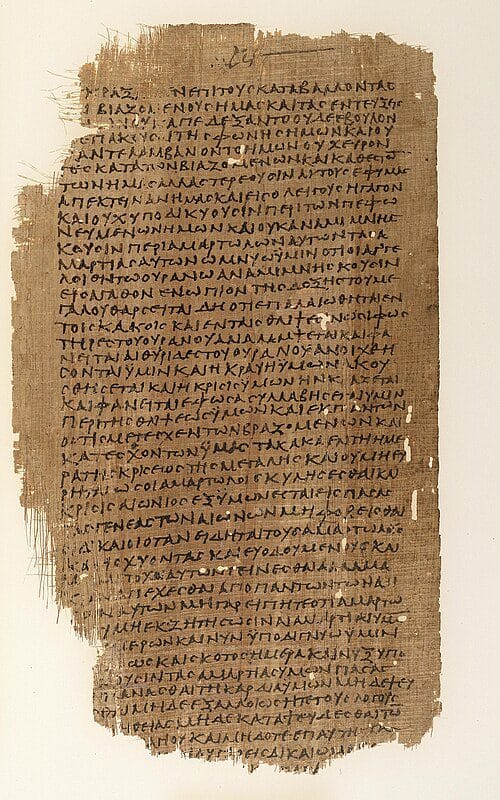
An important distinction must be made here.
The Book of Enoch is not recognized with equal authority by all Christian churches. Consequently, the events described within it are interpreted differently across traditions.
Some view them as literal historical events.
Others consider them a symbolic narrative describing human pride, disobedience, and the spread of evil.
It is precisely because of these varied interpretations that the Book of Enoch continues to generate debate among theologians, historians, and scholars of religion today.
Yet the biggest question remains unanswered.
If this book was so well known to early Christians… why was it excluded from most editions of the Bible?
The answer to this question is no less intriguing than the story of the fallen angels.
Why Was the Book of Enoch Excluded from the Biblical Canon?
A Book Quoted Even by an Apostle
This may be the most surprising fact of all.
Although the Book of Enoch is not considered canonical in most of the Christian world today, clear traces of it appear in a New Testament text: the Epistle of Jude.
In it, we read:
“See, the Lord is coming with thousands upon thousands of his holy ones to judge everyone…”
A majority of biblical scholars agree that these words match a passage in the Book of Enoch almost verbatim.
This indicates that the author of the Epistle of Jude was very likely familiar with the text.
However, a key distinction exists.
Quoting a text does not automatically mean the entire book was regarded as divinely inspired. Ancient writers frequently referenced popular contemporary works to convey their points more clearly.
Therefore, this fact alone is insufficient to prove that the Book of Enoch was ever part of the Bible for all Christians.
How Were the Books of the Bible Selected?
This question has engaged thinkers for centuries.
A common misconception holds that a ruler or church council simply decided one day which books would stay and which would disappear.
In reality, the process was far longer and more complex.
Early Christian communities read different texts depending on their location. Some books were used almost everywhere, while others were known only in specific regions.
Over time, the Church focused on several core criteria.
Most importantly:
- Was the text linked to the Apostles or their immediate circle?
- Did its teachings align with core Christian doctrine?
- Was it widely used in worship across diverse Christian communities?
- Was there a centuries-old tradition supporting its authority?
Based on these criteria, the Book of Enoch did not achieve universal recognition.
Why Did Doubts Arise Regarding the Book of Enoch?
Scholars point to several reasons.
First is authorship.
Although attributed to Enoch, historians almost unanimously agree that it was not written by him. The text was created much later, during the post-Old Testament period.
Second is its content.
The book is filled with apocalyptic visions, angelic hierarchies, cosmological descriptions, and complex symbolic scenes that are difficult to interpret.
Many Church Fathers believed such texts could easily be misunderstood.
Third, by the 4th century, the Book of Enoch was no longer as widely used in the Christian world as it had been previously.
As a result, it gradually fell outside the list of canonical books in both Eastern and Western churches.
But One Church Preserved It to This Day
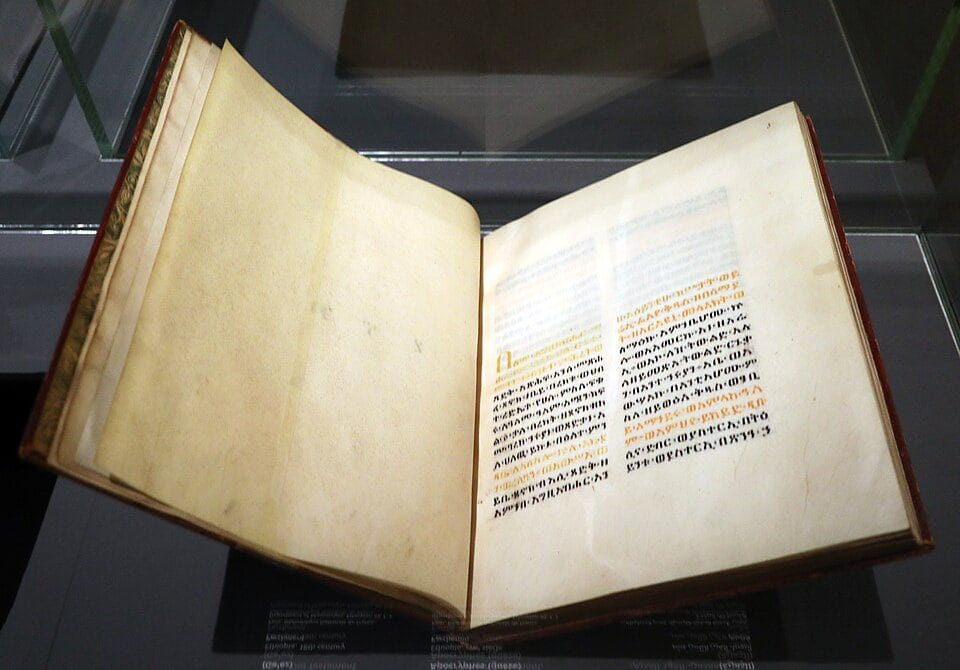
Here, the story takes an unexpected turn.
There is an ancient Christian tradition in which the Book of Enoch remains part of Holy Scripture today: the Ethiopian Orthodox Tewahedo Church.
There, the Book of Enoch was copied, read, and included in the biblical canon across centuries.
Thanks to this, the complete version of the text survived.
Were it not for Ethiopian monks and scribes, we might know the Book of Enoch today only through brief quotations in ancient sources.
The Dead Sea Scrolls Changed Everything
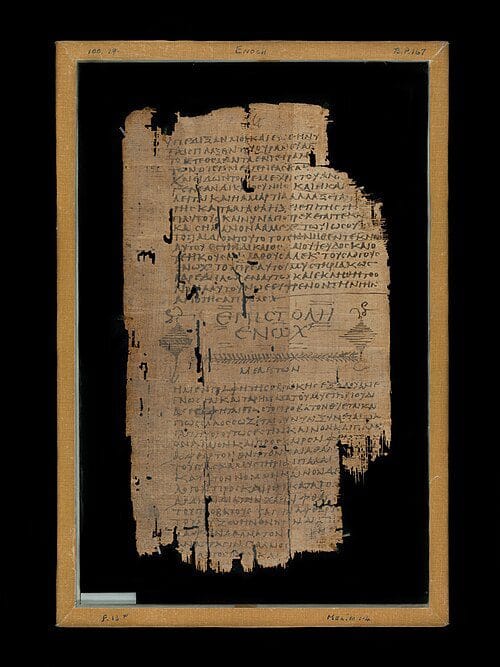
The year 1947 stands as one of the most important dates in biblical archaeology.
Near the northwestern shore of the Dead Sea, in the Qumran caves, shepherds stumbled upon thousands of fragments of ancient manuscripts.
Among them were portions of the Book of Enoch in Aramaic.
This discovery was significant for several reasons:
- It confirmed that the Book of Enoch existed before the birth of Christ.
- It revealed that the text was popular within the Jewish community that scholars often associate with the Essenes.
- It proved the text was much older than some researchers had assumed.
However, the discovery did not alter the canonical status assigned to it by churches. It simply confirmed that the Book of Enoch represents an important literary and religious heritage of ancient Judaism.
Legends That Conquered the Internet
In recent decades, the Book of Enoch has become the centerpiece of numerous popular theories online.
Claims frequently surface asserting that the book was intentionally hidden because it revealed secrets about human origins, or that it contains information about extraterrestrials.
While such theories spread widely across social media and video platforms, they lack historical or academic evidence.
Modern biblical scholars view the Book of Enoch as an apocalyptic religious text that offers insight into how ancient Jewish society contemplated the origins of evil, divine judgment, and the future of the world.
Its primary significance lies within this historical context.
A Book That Withstood Time
The Book of Enoch may no longer belong to the biblical canon of most Christian churches, but time could not erase it.
It survived obscurity, wars, and the fall of empires, remaining lost to much of the world for centuries.
Today, it continues to fascinate millions.
Why?
Because it offers not only answers, but also provokes deep questions:
- Who were the “Watchers”?
- What is the true meaning behind the story of the Nephilim?
- Why did the ancient world view knowledge as both a blessing and a threat?
And finally…
Perhaps the greatest mystery of the Book of Enoch is that it still compels us to reflect on the boundary where history, faith, legend, and human imagination meet.
The images used in the article are sourced from Wikimedia Commons and are in the public domain.
If you found the article interesting, share it with your friends and leave a comment.