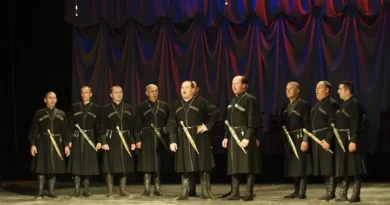
Ambrose Khelaia — A Patriarch Against an Empire
A Man Who Was Not Afraid of His Era

Ambrose Khelaia (secular name — Besarion Khelaia) was born in 1861 in Samegrelo, Georgia.
His life coincided with one of the most tragic periods in Georgian history — the rule of the Russian Empire, followed by a short-lived independence (1918–1921), and finally the Soviet occupation.
He was a clergyman, publicist, defender of national ideas, and ultimately the Catholicos-Patriarch of All Georgia (from 1921).
However, his name remained in history not only because of his position as head of the Church.
A National Voice During the Imperial Period
At the end of the 19th and the beginning of the 20th century, the Georgian Church was subordinated to the Russian Synod. Its autocephaly had been abolished.
Ambrose Khelaia began his ecclesiastical activity in Abkhazia and actively fought against Russification throughout his life. In 1902, while serving at Chelishi Monastery (Racha), he discovered a previously unknown version of the manuscript “The Conversion of Kartli”, more extensive than the Shatberdi version. He later dedicated a series of articles to it in the journals “Gantiadi” and “Tskhovreba,” titled “Journey in Racha-Lechkhumi.”
He actively struggled for the restoration of church independence and participated in the movement that restored the Georgian Church’s autocephaly in 1917.
For him, the Church was not just a religious institution — it was a pillar of national identity.
Soviet Occupation and the Boldest Step
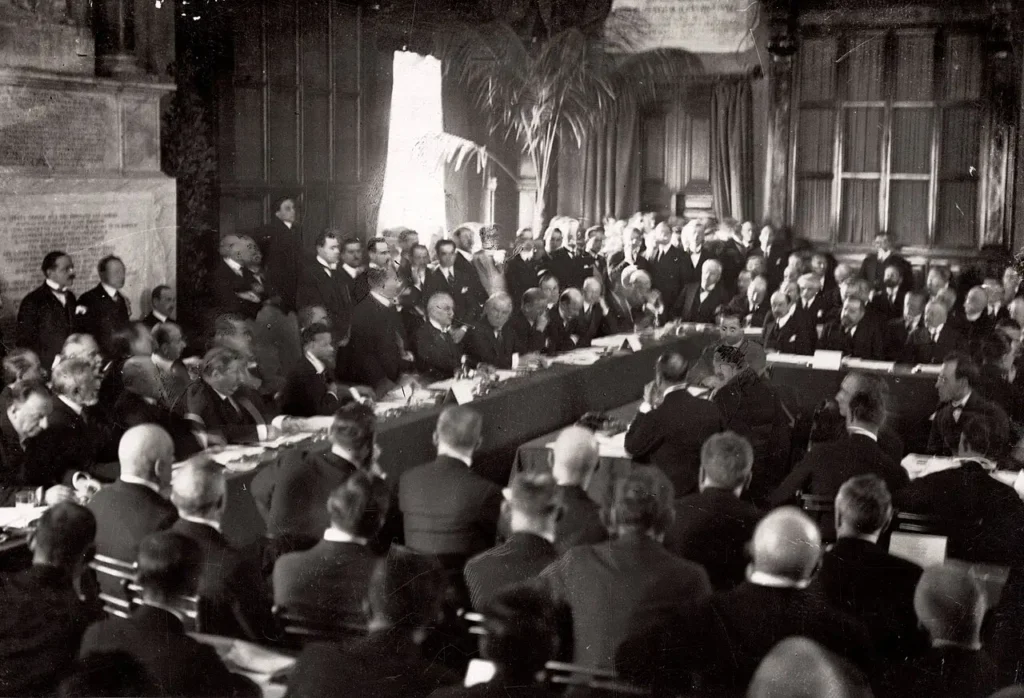
In 1921, the Red Army occupied Georgia, and the country fell under Soviet rule.
That same year, Ambrose Khelaia was elected Catholicos-Patriarch.
Many believed that under such conditions, the head of the Church would choose silence.
But Ambrose chose a different path.
In 1922, he sent an appeal to the Genoa Conference, where European states had gathered.
In this letter, he openly declared that:
- Georgia was occupied
- Soviet власти did not represent the will of the Georgian people
- The country had lost its independence
This was an unprecedented act.
Under the Soviet regime, such a statement was essentially a self-imposed sentence.
Arrest and Trial
In 1923, Soviet authorities arrested him.
At the trial, Ambrose delivered historic words:
“My soul belongs to God, my heart to my homeland, and my body I leave to you, tyrants.”
He was sentenced to 8 years of imprisonment.
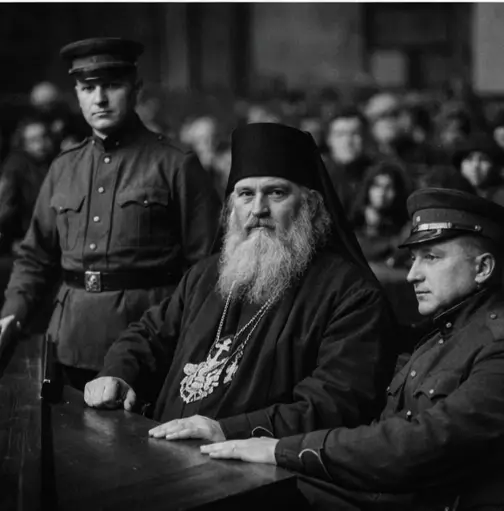
His health deteriorated severely in Soviet prison.
In 1925, he was released, but he was already gravely ill.
Ambrose Khelaia died in 1927.
Legacy and Recognition
During the Soviet era, his name was largely suppressed.
But later, he was recognized as:
- A national hero
- A spiritual leader
- A symbol of peaceful resistance to occupation
In 1995, the Georgian Church canonized him as a saint.
Why Is Ambrose Khelaia Still Important Today?
Ambrose Khelaia was the highest-ranking church leader, the Catholicos-Patriarch of Georgia, and he could have lived peacefully even under communist rule if he had submitted to Soviet authority.
But he chose a different path.
Witnessing repression, the destruction of churches and clergy, and the fragmentation of the country, he chose the path of national freedom and patriotism.
His example reminds us that the Church, at critical moments in history, can become a defender of national identity. It also shows that spiritual authority and moral courage often have a deeper and longer-lasting impact than political power.
History remembers not only the victors, but also those who stood firm when compromise would have been easier.
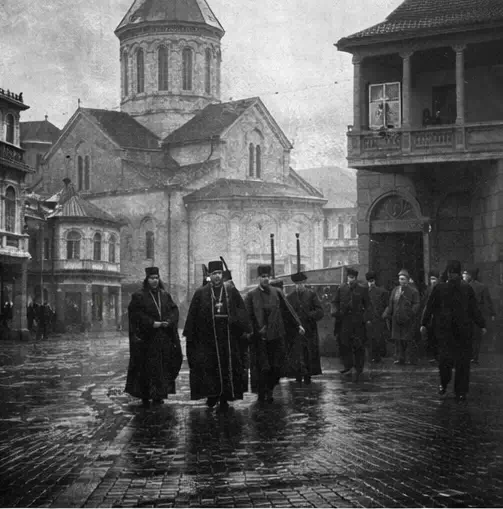
Ambrose Khelaia remains in history as a figure who opposed imperial power with moral strength and national consciousness.
He demonstrated that political occupation cannot destroy the idea of freedom.
That is why his legacy endures — as a symbol that freedom may be suppressed, but its idea can never be destroyed.
If you found the article interesting, share it with your friends and leave a comment.