From Ruins to Rebirth
World War II inflicted unprecedented and immeasurable damage on humanity. Millions perished, cities were destroyed, and societies were left morally shattered. Germany, one of the main initiators of the war, was also reduced to ruins by the anti-Hitler coalition.
In 1945, Germany was not only physically destroyed but also morally defeated. Civil infrastructure had completely collapsed, millions were left homeless, and the burden of the past cast a heavy shadow over everyday life. Many believed that Germany would disappear from the forefront of world history for a long time.


However, it was precisely here that one of the most remarkable transformations of the 20th century began.
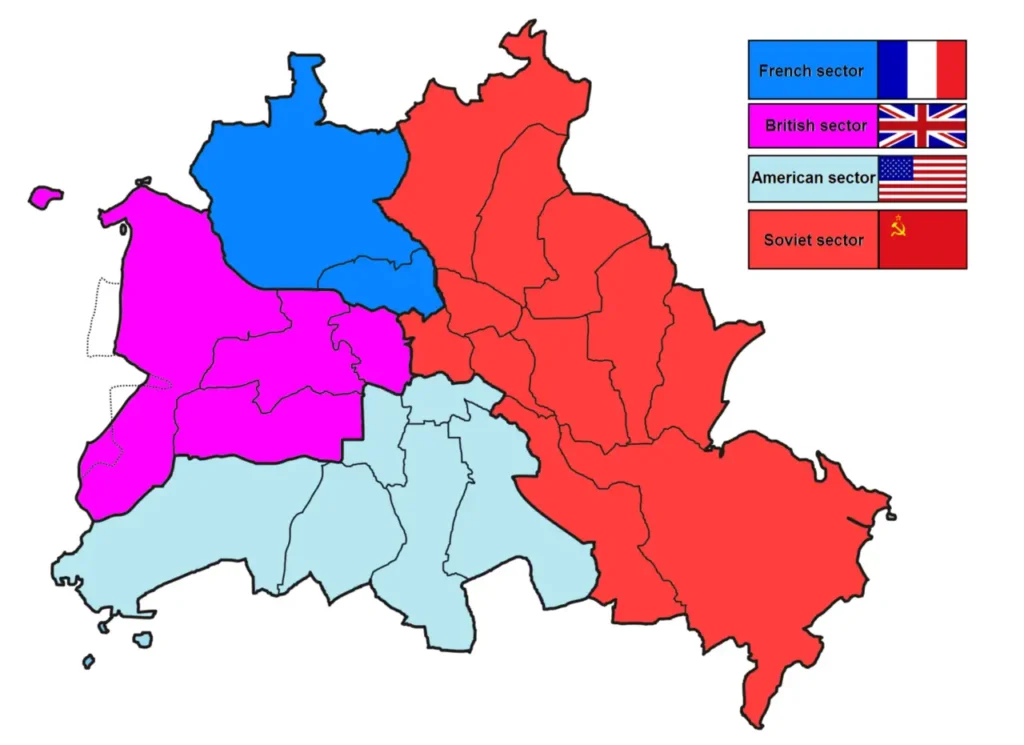
After the war, Germany was divided into four occupation zones — American, British, French, and Soviet. Even Berlin, despite being located in the Soviet zone, was split into four sectors. This division created not only political but also mental boundaries. On one side, a Western model was forming; on the other, a Soviet-style socialist system. One nation faced two completely different futures.
In the West, a democratic system gradually took shape, while in the East, a state based on the Soviet model was established.
Hunger, Ruins, and the “Trümmerfrauen”
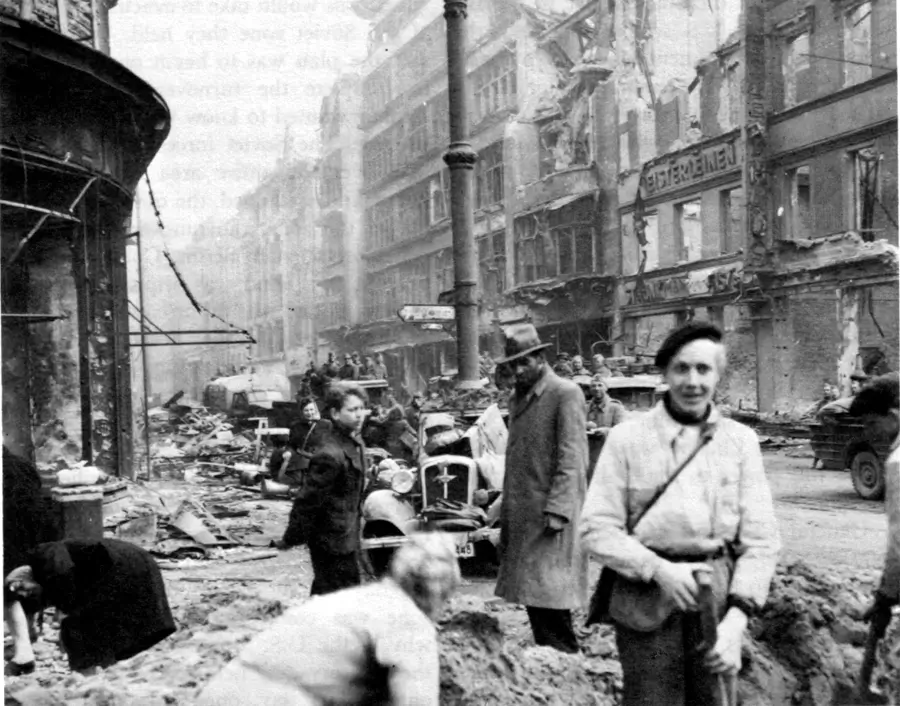
In the post-war years, Germany lived in survival mode. Food was distributed through ration cards, money had little value, and the black market became part of daily life.
Amid this hardship, a symbolic phenomenon emerged — the “Trümmerfrauen” (women of the ruins). Thousands of women cleared destroyed cities with their own hands and rebuilt a new reality brick by brick. It was silent but heroic labor for survival.
In 1948, a currency reform was implemented in West Germany, introducing the Deutsche Mark. Overnight, worthless paper turned into real money. The black market practically disappeared, goods returned to shop windows, and people regained the motivation to work.
This was a turning point — Germany slowly began to breathe again.
The Marshall Plan
In 1947, the United States launched the Marshall Plan — a large-scale economic aid program for rebuilding Europe. West Germany became one of its main beneficiaries.
However, the Marshall Plan was not just about money. It also meant:
- Modern management models
- Technologies
- A chance to return to the international market
This aid gave Germany not only resources but also time and trust — a rare luxury in the post-war world.
Konrad Adenauer — The Man Who Turned Germany Toward the West
The first Chancellor of post-war Germany, Konrad Adenauer, is often considered the architect of the state. He made a clear choice — Germany’s place should be within Western democracy.
During Adenauer’s leadership:
- Germany became a member of NATO
- Reconciliation with France began
- Strong state institutions were formed
This was an era of stability that laid the foundation for future growth.
In the 1950s, West Germany experienced the so-called “economic miracle” (Wirtschaftswunder). Factories resumed operation, exports increased, and German products became a symbol of quality.
But this miracle was not spontaneous — it was built on a culture of work, order, and responsibility.
Willy Brandt and the Kneeling
West Germany continued to develop. In 1970, Chancellor Willy Brandt unexpectedly knelt at the Warsaw Ghetto Memorial in Poland. This gesture was not planned and required no words — which is why it became historic.
Brandt’s kneeling became a symbol of:
- Remorse
- Responsibility
- Recognition of historical truth
For many, it was the moment when Germany finally acknowledged its guilt.
Two Germanys and a Difficult Reunification
At the same time, East Germany (GDR) lived under a different reality — state control, censorship, and limited freedom. The Berlin Wall became not only a political barrier but a human tragedy: divided families, escape attempts, and lost lives.
In the 1980s, the economic, social, and political decline of the Soviet Union made it possible for the Berlin Wall to fall in 1989, opening the path to German reunification. This process was economically and socially difficult, but Germany was ultimately united.
The key political figure of reunification was Helmut Kohl. Under his leadership, what many thought impossible became reality — the unification of two completely different systems into one state.


The history of post-war Germany is not just a story of economic success. It is the story of a nation that:
- Did not run from its past
- Took responsibility for its crimes
- Rebuilt not only cities but also its conscience
Germany’s strength lies precisely in this — in truth, hard work, discipline, and memory. Germany did not become strong by forgetting its past, but by confronting it.
The images used in the article are sourced from Wikimedia Commons and are in the public domain.
If you found the article interesting, share it with your friends and leave a comment.