
The Experiment That Turned Ordinary People Into Monsters
In 1971, in California (USA), an experiment was conducted that forever changed our understanding of human nature. This was not a secret military study, nor an observation of psychopaths. The participants were ordinary students — young people with no history of violence, no mental disorders, and no criminal tendencies.
They were simply given roles. And that was enough to produce unexpected results.
A Prison in the Basement
At Stanford University, psychologist Philip Zimbardo created a simulated prison in a basement. Participants were randomly divided into two groups:
- Guards
- Prisoners
Everything began like a game. Everyone was told in advance that it was only an experiment and that they could quit at any time.
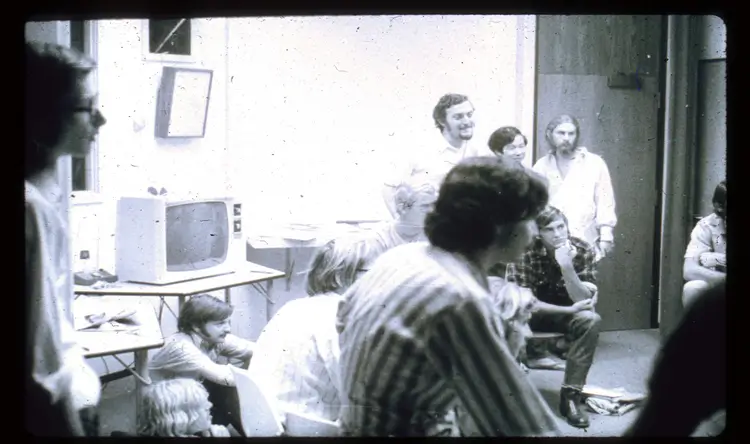
But the “game” quickly became reality.
The guards were given uniforms. It may seem like a small detail, but a uniform always carries more meaning than ordinary clothing.
They were given batons — not to use, but “symbolically.” They wore dark sunglasses to avoid eye contact. You were no longer supposed to see a person — only a role and a status.
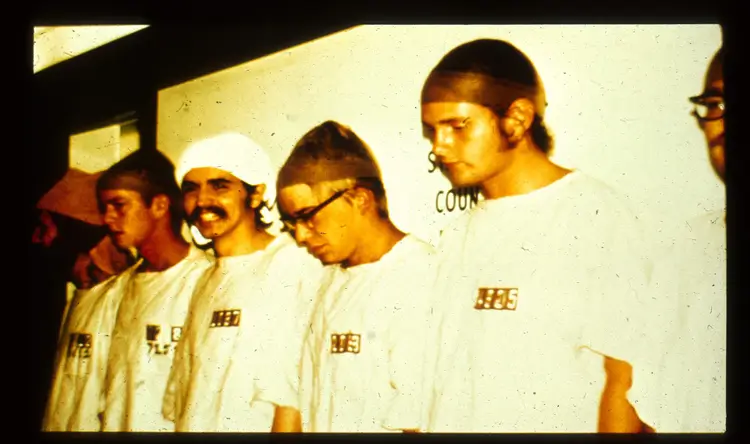
The prisoners, on the other hand, were stripped of their names and assigned numbers.
And this is where the real experiment began.
How People Became Monsters
In the first days, everything was relatively calm — there was even laughter and joking. But the power given to the “guards” quickly turned into a tool of abuse.
The guards began to:
- Invent humiliating rules
- Apply psychological pressure
- Erase prisoners’ individuality
They no longer treated prisoners as human beings — not because they had to, but because they could. There was no obligation to be cruel — it came from within, from human nature.
How a Person Disappears
At first, prisoners protested. They spoke loudly, knocked on doors.
But walls don’t answer.
Gradually, voices faded. Eyes turned to the floor. Prisoners quickly became obedient. Some developed emotional breakdowns, some cried, some were completely broken, others simply sat silently and said nothing.
When you constantly tell a person they are nothing — one day, they begin to believe it.
The most disturbing part was that they were free to leave, yet many chose to stay.
The role proved stronger than freedom.
The Experiment That Got Out of Control
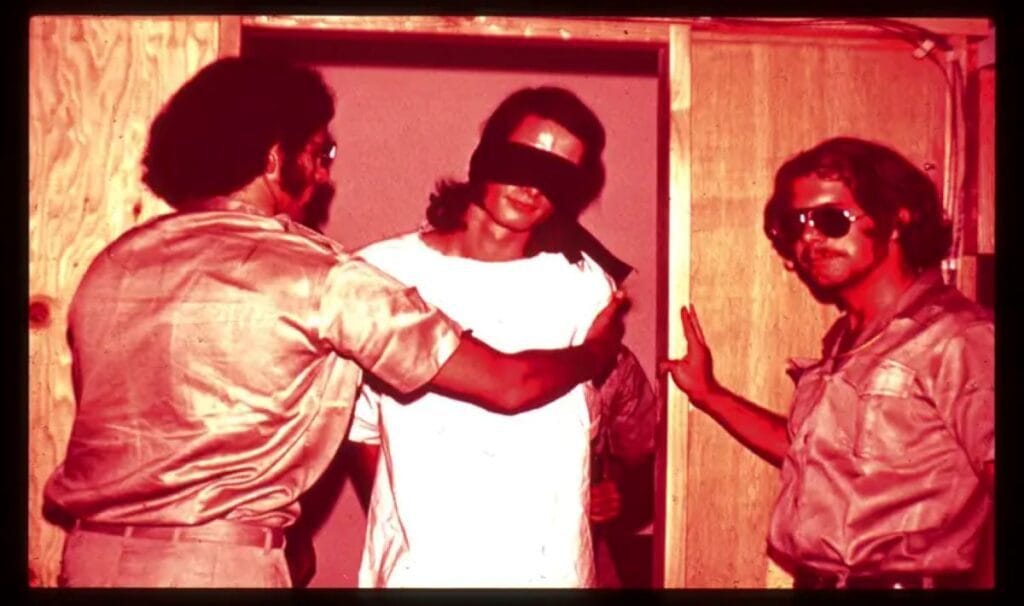
The experiment was supposed to last two weeks, but it was stopped on the sixth day.
Zimbardo later admitted that he himself had become trapped in his role — he was no longer just a researcher, but had taken on the role of a “prison director.”
The system changed everyone — including those who were supposed to maintain control.
At first, Philip Zimbardo was an observer.
Then — an organizer.
And then… the “prison director.”
He too became part of the system he had created.
A Disturbing Truth
The experiment showed that:
The problem is not “bad people.”
The problem is the system that allows bad behavior to emerge.
This means that under certain conditions, any of us can become someone we would never imagine ourselves to be; that a person reveals their dark side when power is unchecked, when identity is lost in roles and status, and when conscience is silenced behind rules and order.
Monsters are not born — they are created by systems.
Today, the Stanford prison experiment is considered ethically unacceptable. But its conclusions remain highly relevant.
There are both documentaries and feature films about this experiment, based on real events. They once again show how powerfully environment and roles influence human behavior.
Below you can watch a documentary about the Stanford experiment.:
A trailer for a feature film based on the Stanford experiment is also available.
If you found the article interesting, share it with your friends and leave a comment.