Giordano Bruno — An Intellectual Revolution
Philosophy, Cosmology, and Conflict with Church Dogma
Introduction
Giordano Bruno (1548–1600) remains one of the most difficult figures to interpret in the history of Western thought. In popular discourse, he is often portrayed simply as “the scientist burned by the Church,” but such a simplification does not reflect his true intellectual legacy. Bruno was a philosopher, a theological dissenter, and a cosmological reformer whose ideas went beyond both medieval scholasticism and the framework of early science.
The purpose of this article is to examine Giordano Bruno’s worldview within the historical, religious, and philosophical context of his era.
1. Historical and Cultural Context
The 16th century in Europe was marked by profound intellectual transformations. The Renaissance revived interest in ancient philosophy, while the Reformation challenged the Church’s monopoly on truth. At the same time, the Catholic Church tightened doctrinal control through the Counter-Reformation.
Bruno worked precisely in this tense period, where free thought and religious authority were in constant conflict.
2. Early Life and Intellectual Formation
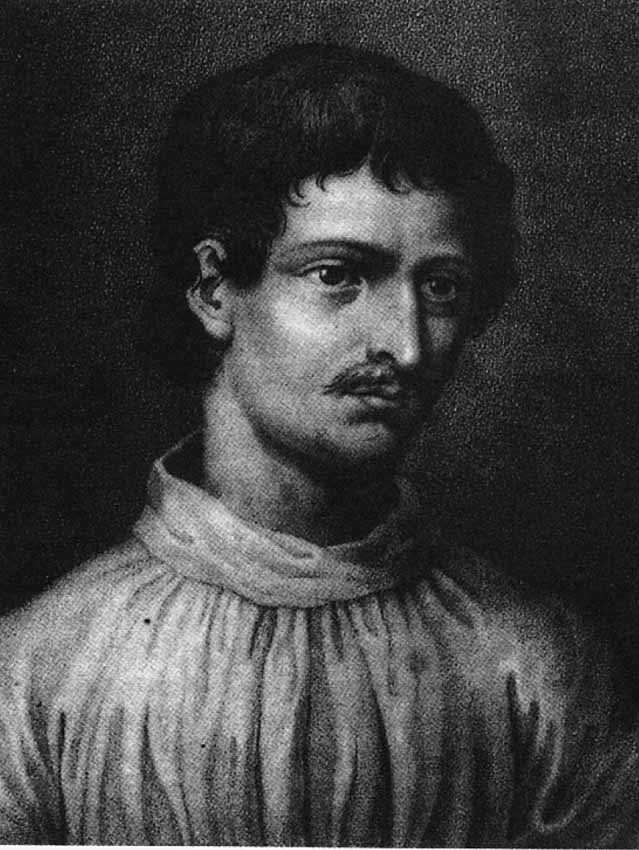
Bruno was born in 1548 in the Italian city of Nola. At birth, his name was Filippo Bruno. In his youth, he joined the Dominican Order in Naples, where he received the name “Giordano” and a solid theological education.
In the monastery, he studied the works of Aristotle, Thomas Aquinas, and other scholastic thinkers.
However, the scholastic system soon proved restrictive for Bruno. He became interested in the ideas of Plato, Neoplatonism, and Hermetic texts, which gave his thinking an alternative direction.
3. Philosophical Worldview
The central idea of Bruno’s philosophy was the infinity of the universe. In his view, the cosmos was not a closed and hierarchical structure, but an infinite whole without an absolute center.
His main philosophical principles included:
- The concept of an infinite universe
- An immanent understanding of God — as a principle present in everything
- The perception of nature as a living and dynamic system
These views sharply differed from the Church’s traditional theology, which saw the universe as a strict hierarchy.
4. Cosmological Views
Bruno’s cosmology is often associated with Copernicus, but his position was far more radical. Copernicus rejected Earth’s centrality but still accepted the limits of the universe.
Bruno, however, argued that:
- The stars are other suns
- Countless worlds exist
- Life may be widespread throughout the cosmos
These ideas were not based on experimental scientific methods, but on philosophical speculation. This does not make Bruno a classical scientist, but it does not diminish his intellectual significance.
5. Intellectual Journey Across Europe
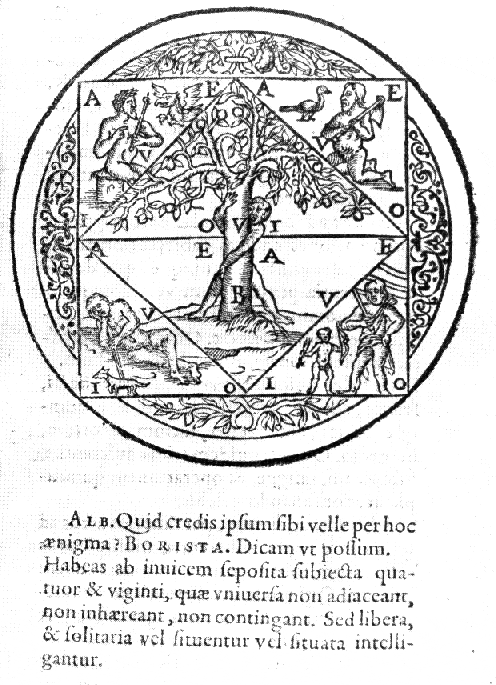
To avoid the Inquisition, Bruno left Italy and spent the following years in France, England, and Germany.
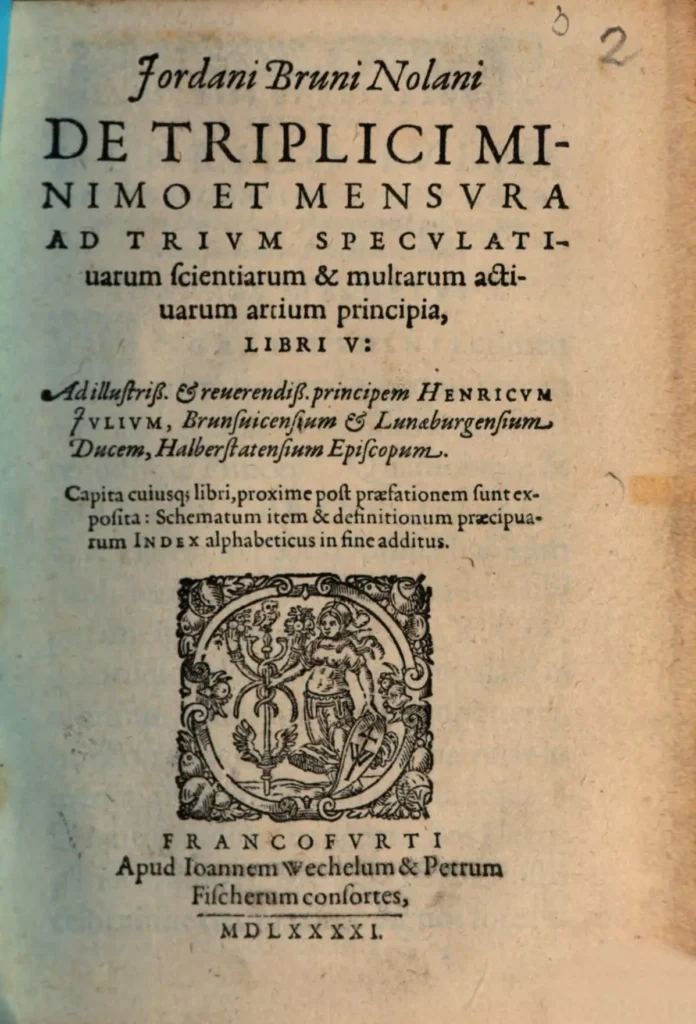
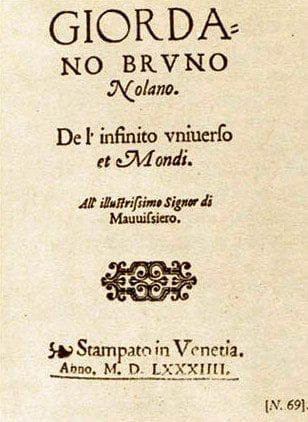
During this period, he published his major works and participated in academic debates.
It is noteworthy that Bruno often came into conflict not only with Catholic circles but also with Protestant ones, showing that his thinking did not fit into any dogmatic system.
6. The Inquisition Trial
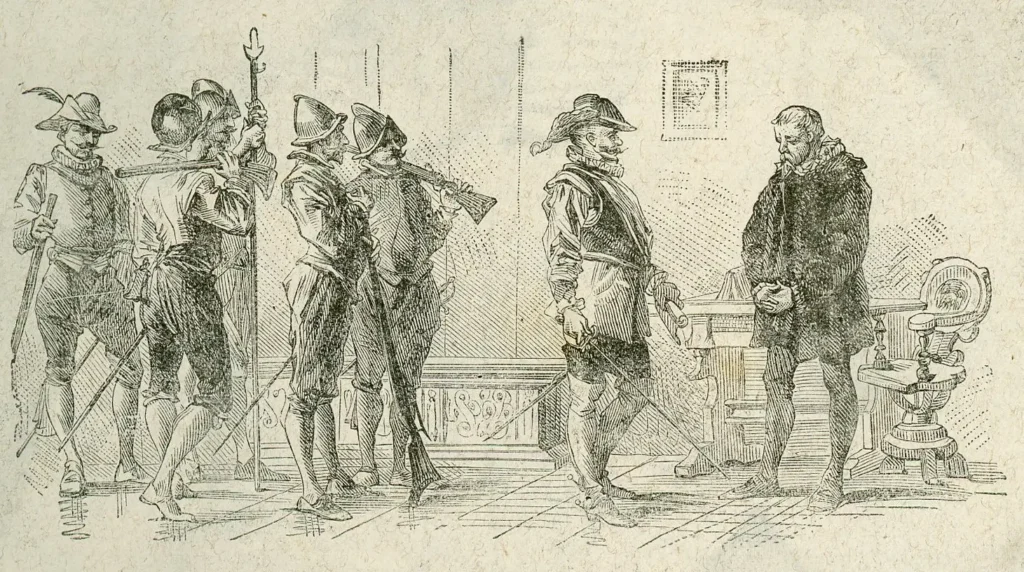
In 1591, Bruno’s return to Italy proved fatal. He was arrested and handed over to the Roman Inquisition.
The trial lasted eight years and involved numerous interrogations and document reviews.
The charges mainly concerned:
- Unorthodox interpretations of the doctrine of the Trinity
- Christological issues
- The idea of an infinite universe
This once again confirms that the case against Bruno was more theological than scientific.
7. Refusal to Recant and Intellectual Position
During the trial, Bruno was repeatedly offered the chance to renounce his views.
He refused, which may be interpreted as an expression of intellectual consistency and personal principle.
His position was based on the belief that the search for truth cannot be subjected to institutional coercion.
8. Death and Historical Legacy
In 1600, Giordano Bruno was found guilty and executed.
Later, his figure became a symbol of free thought, especially during the Enlightenment.
Modern historiography sees Bruno as a transitional figure between medieval and modern thought — a thinker who made an important contribution to the decentralized understanding of the universe.

Conclusion
Giordano Bruno was a man who boldly formulated ideas that, in his time, were considered radical, unacceptable, and forbidden.
He completely rejected the established views of science, society, and the Church regarding the structure of the universe and humanity’s role within it.
Despite the mortal danger, he remained loyal to his ideas until the end and is rightly considered a symbol of free thought.
Bruno’s legacy remains an active subject of study and an important resource for the history of philosophy, religion, and science.
The images used in the article are sourced from Wikimedia Commons and are public domain materials.
If you found the article interesting, share it with your friends and leave a comment.