The Shroud of Turin — Christianity’s Greatest Mystery?
Among the many religious relics in the world, none has generated as much fascination and controversy as the Shroud of Turin. For many believers, it is the cloth in which Jesus Christ was wrapped after being taken down from the cross. Skeptics, however, argue that it is a medieval creation. Despite centuries of investigation, its mystery remains unsolved.
What Is the Shroud of Turin?
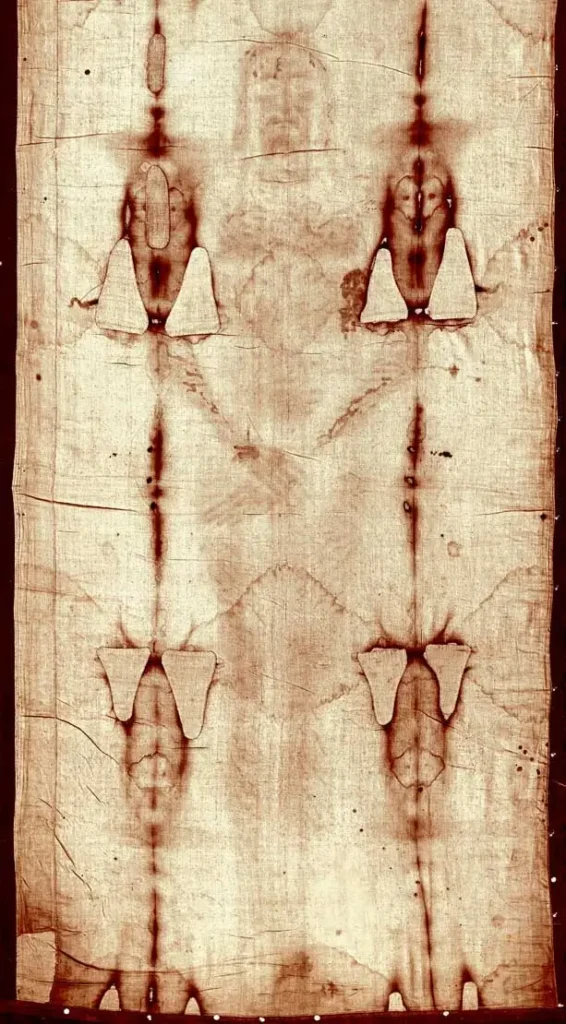
The Shroud of Turin is a linen cloth approximately 4.4 meters (14.4 feet) long and 1.1 meters (3.6 feet) wide. It bears the faint front and back image of a man.
The image displays marks that closely resemble the wounds described in the Gospels:
- Injuries consistent with a crown of thorns
- Nail wounds in the hands and feet
- Marks resembling scourging
- A wound in the side consistent with a spear thrust
Because of these features, many Christians believe the cloth is the burial shroud of Jesus Christ.
The History of the Shroud
The early history of the Shroud remains uncertain.
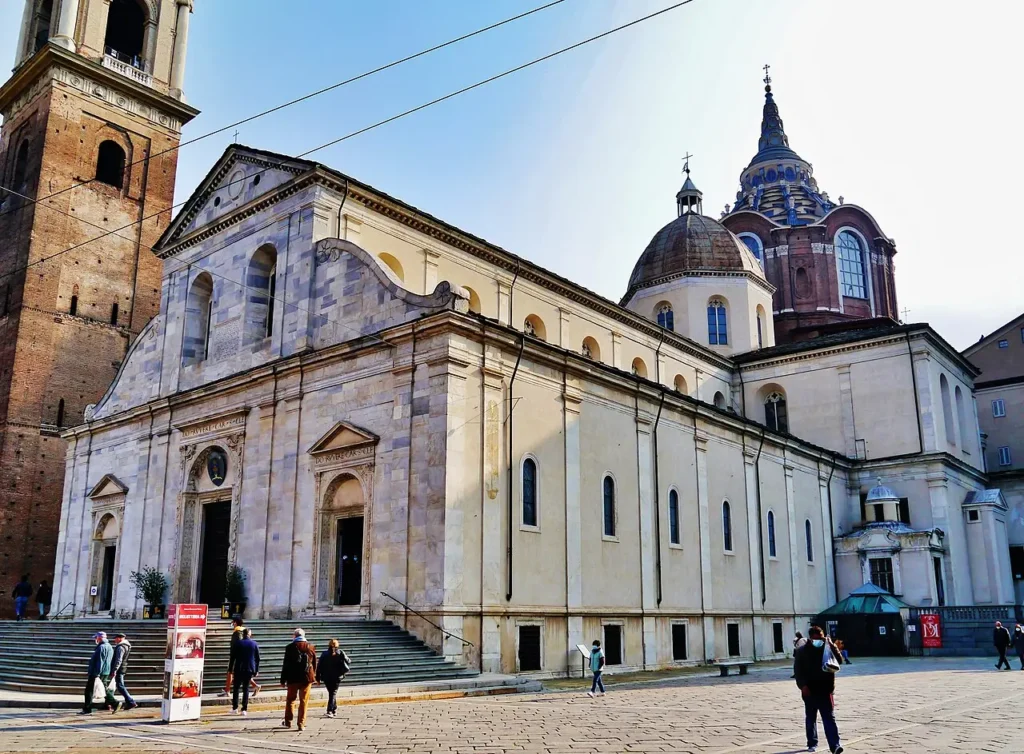
Its documented history begins in the 14th century when it appeared in France. Later, it came into the possession of the House of Savoy and was eventually transferred to the Italian city of Turin in 1578, where it remains today.
Some historians believe the Shroud’s origins may extend much further back, possibly to the Byzantine period. According to this theory, it may have been preserved in various locations for centuries before appearing in Western Europe.
The Mystery of the First Photograph
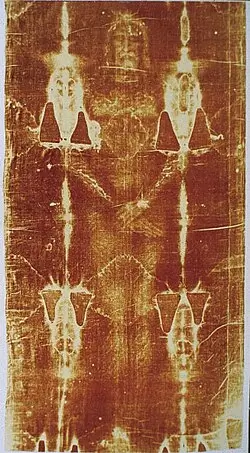
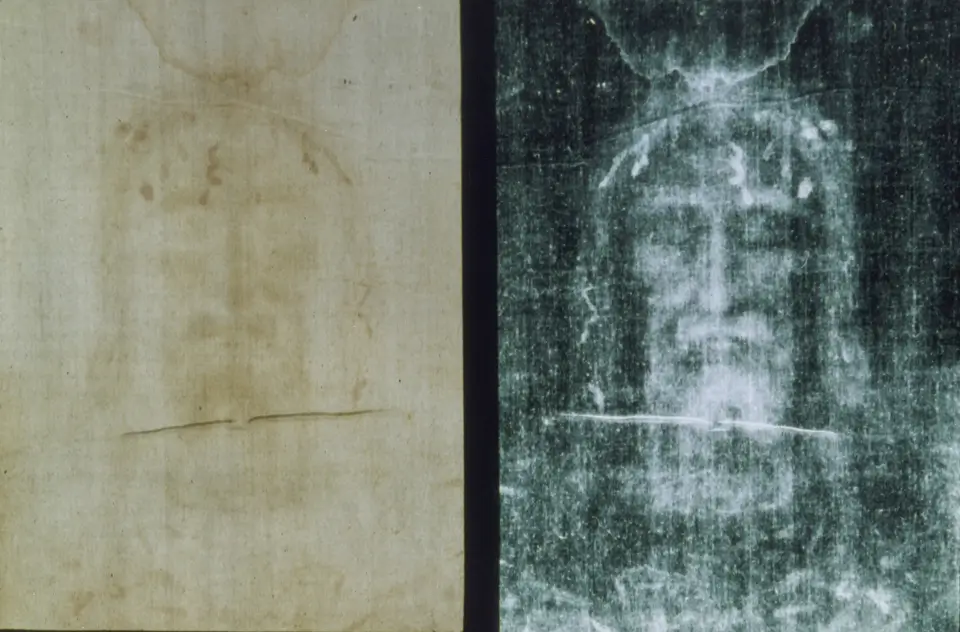
In 1898, Italian photographer Secondo Pia took the first photograph of the Shroud.
When he developed the photographic plate, he made a surprising discovery: the negative image revealed a much clearer and more detailed face than could be seen on the cloth itself.
This meant that the image on the Shroud behaved much like a photographic negative.
At a time when photography was still a relatively new technology, this finding astonished the world and sparked widespread interest in the relic.
Researchers continue to debate how such an image could have been created centuries before the invention of photography.
Scientific Investigations
Throughout the 20th century, the Shroud became the subject of numerous scientific studies.
One of the most significant investigations took place in 1978, when a team known as the Shroud of Turin Research Project (STURP) conducted extensive examinations of the cloth.
Their findings included:
- The image does not appear to be painted using conventional pigments.
- No visible brush strokes were found.
- The image affects only the outermost fibers of the linen.
- The image contains three-dimensional information.
One particularly intriguing discovery was that image-analysis technology could generate a three-dimensional representation from the image on the cloth.
Such characteristics are not typically found in ordinary paintings.
Traces of Blood
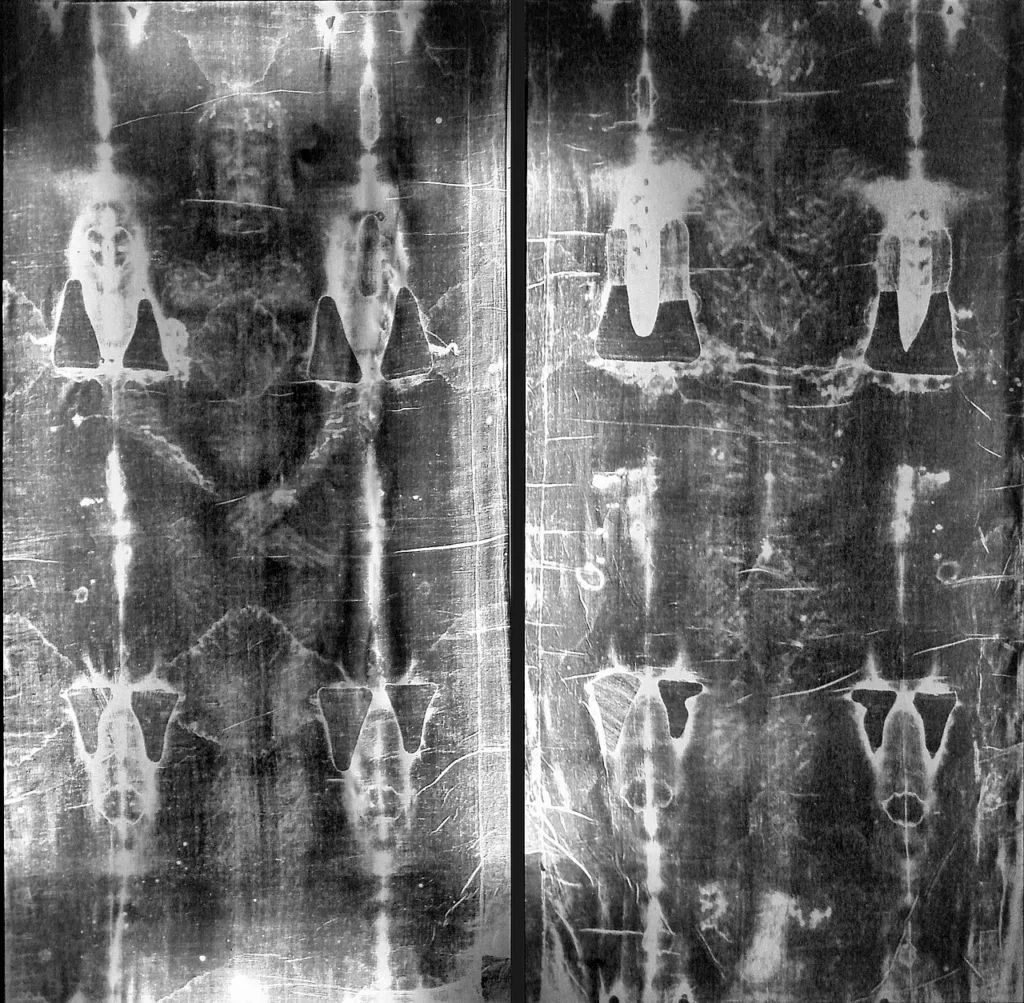
Reddish stains are visible on various parts of the Shroud and are widely believed to represent blood.
Some laboratory analyses have suggested the presence of human blood components.
However, scientists continue to debate whether these stains are truly blood or the result of other substances that may have accumulated on the cloth over centuries.
Radiocarbon Dating
In 1988, one of the most important scientific tests was performed.
Samples taken from the Shroud were analyzed independently by three laboratories using radiocarbon dating.
The results indicated that the cloth likely originated between 1260 and 1390 AD.
For many researchers, this strongly suggested that the Shroud was a medieval artifact rather than a first-century burial cloth.
Yet the debate did not end there.
Why Does the Debate Continue?
Supporters of the Shroud’s authenticity argue that the tested sample may have come from a repaired section rather than from the original cloth.
They point out several possibilities:
- The cloth may have been altered by fires and environmental damage.
- Contamination could have affected the dating results.
- The tested area may not have been representative of the entire Shroud.
For these reasons, some researchers believe additional testing is necessary.
Could the Image Have Been Artificially Created?
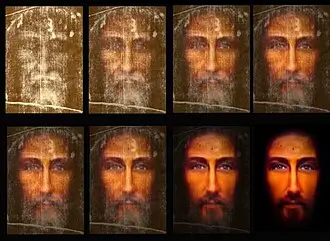
This remains one of the central questions.
If the Shroud was produced during the Middle Ages, how was such a complex image created?
Numerous theories have been proposed, including:
- Artistic techniques
- Chemical reactions
- Heat exposure
- Intense bursts of light
- Unknown physical processes
However, no theory has successfully explained all of the Shroud’s unique characteristics.
The Vatican’s Position
The Catholic Church has never officially declared the Shroud to be the authentic burial cloth of Jesus Christ.
At the same time, it is treated with great respect and is displayed for veneration on special occasions.
The Vatican maintains a cautious position: the Shroud is an important object of faith and devotion, but questions regarding its authenticity remain matters for scientific investigation.
Why Does the Shroud Fascinate People?
The Shroud of Turin is more than just a religious relic.
It stands at the intersection of several fields:
- History
- Archaeology
- Physics
- Chemistry
- Medicine
- Theology
As a result, it attracts the attention of believers, skeptics, historians, and scientists alike.
Conclusion
The Shroud of Turin remains one of the greatest mysteries of the Christian world. Despite decades of scientific research and historical investigation, no explanation has achieved universal acceptance.
Is it truly the burial cloth of Jesus Christ? Or is it an extraordinary artifact created during the Middle Ages?
No definitive answer exists today. What is certain, however, is that the Shroud of Turin remains one of the most studied—and most mysterious—religious relics in human history.
The images used in the article are sourced from Wikimedia Commons and are in the public domain.
If you found the article interesting, share it with your friends and leave a comment.