
The Gulag – An Invisible Empire
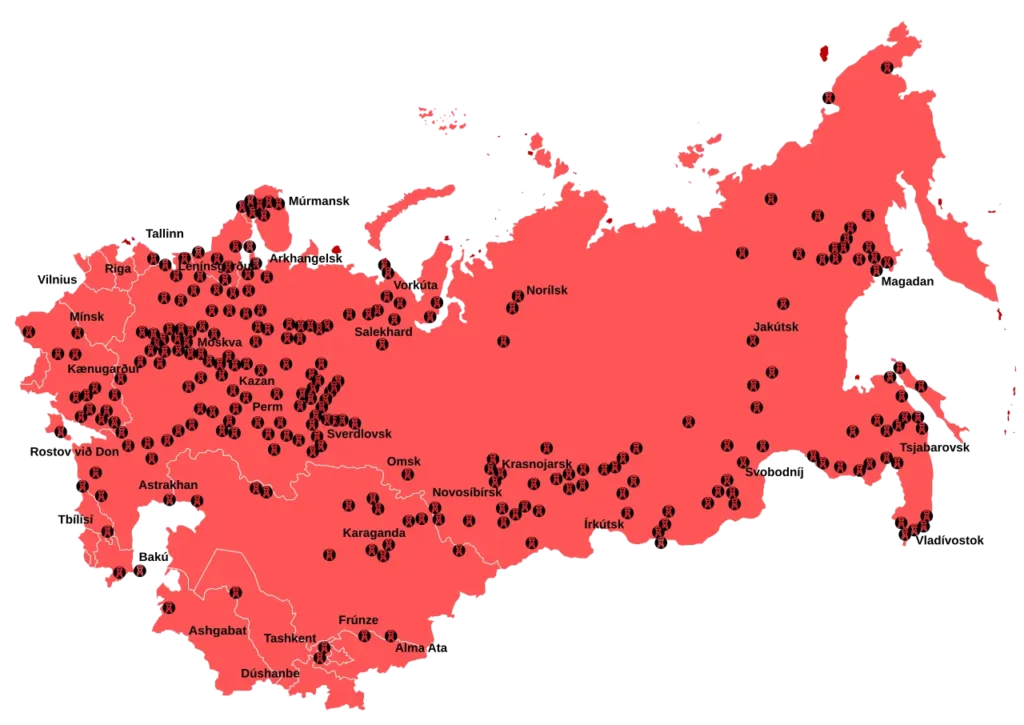
When speaking about Soviet repression, people often mention prisons, executions, and political trials. However, it is less widely known that within the Soviet Union there existed an entire “shadow country” — the Gulag system, which was barely visible on maps but encompassed millions of people.
What the Gulag Really Was

The “Gulag” was not a single camp. It was a vast network of hundreds of labor camps spread across nearly all regions of the Soviet Union — from Siberia to Kazakhstan and up to the Arctic Circle.
The camps were often located in places where normal settlement was nearly impossible: tundra, dense forests, and permafrost zones. For this reason, many of them remained hidden for years.
Camps That Became Cities
A lesser-known fact is that some Soviet cities originated from Gulag camps.
For example, Norilsk — today a large industrial city — was initially built entirely by prisoner labor. Tens of thousands of people worked in mines, factories, and infrastructure construction.
Many of them did not live to see the completion of the city.
Scientists and Engineers in the Camps
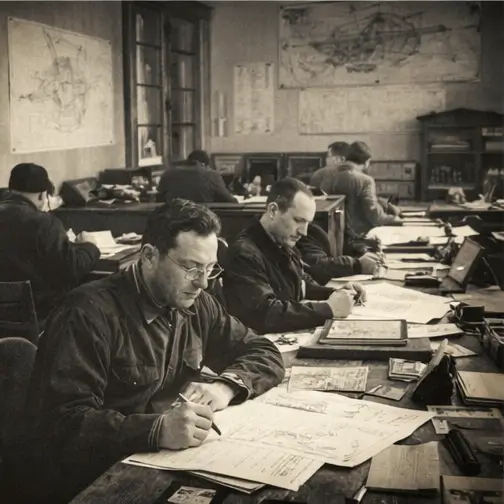
Not only peasants or political prisoners were sent to the Gulag. There were special camps where engineers, scientists, and designers worked.
These institutions were called “sharashkas.” People there developed aircraft, engines, and various technologies — essentially working under prison conditions. Part of Soviet aviation and military technology was created in these “closed laboratories.”
A Repressive System in Action
The Gulag camps were not just labor colonies — they were places of extreme harshness and violence. Prisoners worked in freezing conditions, often with insufficient food and almost no medical care. Hunger, disease, and exhaustion caused the deaths of thousands.
According to historians, millions of people passed through the Gulag system at different times, and hundreds of thousands — and by some estimates more than a million — died due to harsh conditions, executions, or other forms of violence.
Many camps were so isolated that prisoners had virtually no hope of return. Some projects — canals, roads, and mines — were completed at the cost of thousands of lives.
Gulag as Part of the Economy
The Gulag is often seen only as a system of punishment, but it was also an economic tool. Railways, canals, factories, and mines were built through prisoner labor.
Historians note that some Soviet industrial projects were carried out under such extreme conditions that free workers would not have agreed to work there.
Uprisings Rarely Discussed
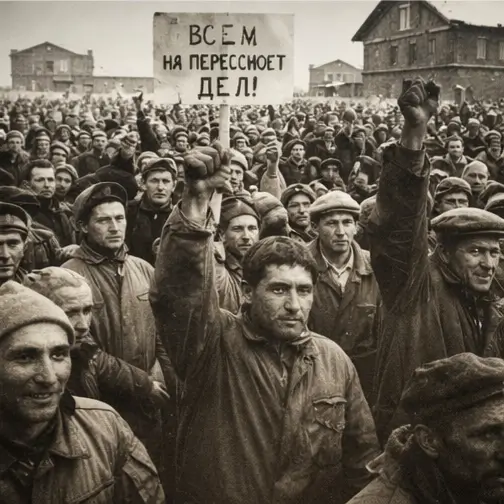
There were periodic uprisings in the Gulag camps, though Soviet propaganda rarely mentioned them.
In 1953, after Stalin’s death, prisoners in the Norilsk and Vorkuta camps organized mass strikes and protests. They demanded improved conditions and a review of their cases.
These protests became some of the first signs that the system was beginning to weaken.
The End of the Gulag
After Stalin’s death, some camps were closed, but the system was not abolished overnight. Many prisoners were only released in the mid-1950s.
The history of the Gulag is not just a story of repression — it is an example of how a state can create an entire world that officially seems not to exist.
Conclusion

The Gulag system was one of the most significant instruments of Soviet repressive policy. It combined penal, economic, and political functions and for decades had a major impact on society, the economy, and demographic processes.
The history of the Gulag shows the scale that state-controlled systems of coercion can reach when they are not limited by legal and humanitarian principles. Studying this system is important not only for deepening historical knowledge but also for understanding the importance of protecting human rights, the rule of law, and civil liberties.
Today, the Gulag is part of history, but its experience remains a powerful reminder of the consequences of unchecked concentration of power and the neglect of human dignity.
If you found the article interesting, share it with your friends and leave a comment.