Invisible Power: Who Really Controls the World?
When we talk about politics, we tend to think that everything is decided by elections, parliaments, and leaders. But reality is far more complex.
History shows us that the most important decisions are often made behind the scenes — where cameras don’t reach and the public cannot see.
1. Financial Power: When Money Shapes Politics
In the modern world, one of the strongest influences comes from financial institutions such as the International Monetary Fund and the World Bank.
👉 Example – The Greek Crisis (2010–2015)
When Greece fell into a severe economic crisis, it received assistance from international institutions.
But this aid came with consequences:
- Pension cuts
- Tax increases
- Sharp reductions in government spending
👉 Result:
The country’s economic policy effectively came under the influence of external forces.
2. Lobbying: Laws Not Always Written for the People
Lobbying often acts as the “invisible engine” of politics.
👉 Example – The United States and Corporations
Lobbyists in the U.S. Congress represent the interests of industries such as:
- Oil
- Pharmaceuticals
- Arms manufacturing
👉 For example:
Many experts believe that the gun lobby significantly influences legislation, which is why gun regulation is often difficult to change.
3. The Power of Media: Shaping Reality
Media does not just report events — it shapes reality.
👉 Example – The Iraq War (2003)
The war in Iraq began with the claim that the country possessed weapons of mass destruction.
- Many media outlets actively spread this information
- It was later revealed that such weapons were not found
👉 Result:
Public opinion was shaped in a way that increased support for the war.
4. Tech Giants: Power in the Digital Age
Today, power is shifting into the digital space.
👉 Example – The Cambridge Analytica Scandal
Cambridge Analytica used data from Facebook users.
- The data was used for political advertising
- The goal was to influence people’s behavior
👉 This scandal was linked to:
- The 2016 United States presidential election
- The Brexit referendum
👉 Conclusion:
Digital platforms can become powerful tools of political influence.
5. Intelligence Agencies and Covert Operations
One of the darkest sides of politics is secret operations.
👉 Example – Operation Ajax
In 1953, a coup took place in Iran involving the Central Intelligence Agency.
👉 Result:
- An elected government was overthrown
- The country’s political direction was changed
👉 This case is still discussed as an example of external interference in a country’s internal affairs.
6. Reality: One Center or Many Powers?
It is often said that “someone controls everything”.
The reality is more complex:
- There is no single center of power
- There are many powerful actors
👉 These include:
- States
- Corporations
- Media
- Technology platforms
Conclusion
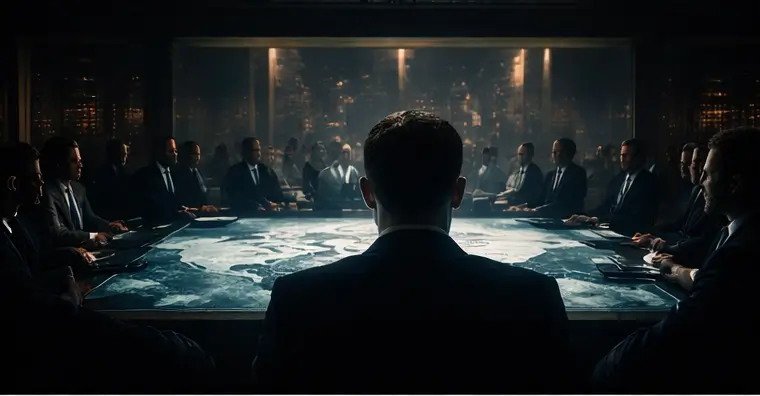
Modern politics is a complex network where power is distributed and often invisible.
Specific examples show that:
- Financial institutions shape economies
- Lobbying influences laws
- Media shapes reality
- Technology controls information
- Intelligence agencies shape history
👉 The key question remains:
To what extent do we control our own future — and to what extent do others control it for us?
P.S. The examples above mainly refer to relatively developed and institutionalized countries. It is easy to imagine how much stronger, more aggressive, and less restrained the efforts of authoritarian, totalitarian, or despotic states, media, and institutions can be when trying to expand their influence globally for their own goals.
If you found the article interesting, share it with your friends and leave a comment.