
Why Does the Internet Show You Exactly the Product You Were Just Thinking About?
You have probably experienced this at least once: you are talking to a friend about a pair of shoes you like, and a few minutes later, an advertisement for almost exactly those shoes appears on social media. Or you browse cars online, and suddenly YouTube, Facebook, or another website starts showing you advertisements for cars.
At that moment, a natural question comes to mind: “Was my phone listening to me?”
Sometimes the coincidence seems so precise that it can genuinely feel as if your smartphone or computer has read your mind. But the reality is usually much more interesting. Modern internet services often do not need to listen to our conversations to figure out what interests us. Every day, we leave behind so much digital information that algorithms can make surprisingly accurate guesses about our interests.
We Leave Behind Much More Information Than We Realize
Almost every action we take online can become a source of information. What we search for, which websites we visit, which videos we watch, how long we stay on a particular page, which advertisements we click on, what we buy, and, in some cases, where we have been — all of this can be used to select recommendations or advertisements that are more relevant to us.

According to Google’s official explanations, information such as search history, YouTube history, activity on websites and apps, and general location information can be used to personalize recommendations and advertisements.
For example, if someone searches for travel bags several times, watches videos related to travel, and visits online stores selling travel products, the system already has fairly strong signals that this person may be interested in travel or travel-related products.
It does not need to listen to your conversation.
How Does an Algorithm “Learn” What We Are Interested In?
Imagine that you want to buy a pair of running shoes.
On the first day, you search Google for a particular model. Then you visit several online stores and look at different shoes. You might even spend several minutes on one product page. Later, you watch a video about running on YouTube.
You never explicitly tell the internet: “I want running shoes.”
But from the algorithm’s perspective, your behavior is a fairly clear signal.
Google explains that personalized advertising can take into account previous searches, activity on websites and apps, location, and other information.
So when you see an advertisement for running shoes several hours later, it may seem as though the internet overheard your conversation. In reality, the system may simply have calculated from your previous activity that such an advertisement would probably be relevant to you.
The Most Interesting Part: Sometimes You Never Searched for That Product
This is where things become even more interesting.
Suppose you never searched for a particular television. You simply watch technology videos, read articles about electronics, and visit several electronics stores online.
The advertising system may also rely on information from other users whose behavior resembles yours. If people with similar online behavior frequently show interest in televisions, the system may decide that you could also be interested in them.
In other words, the algorithm is not only asking:
“What did this person search for?”
It is also trying to answer a broader question:
“What might this person be interested in?”
This is where one of the most interesting aspects of modern personalized advertising begins — prediction.
And What About Your Location?
Our online behavior is not limited to search queries.
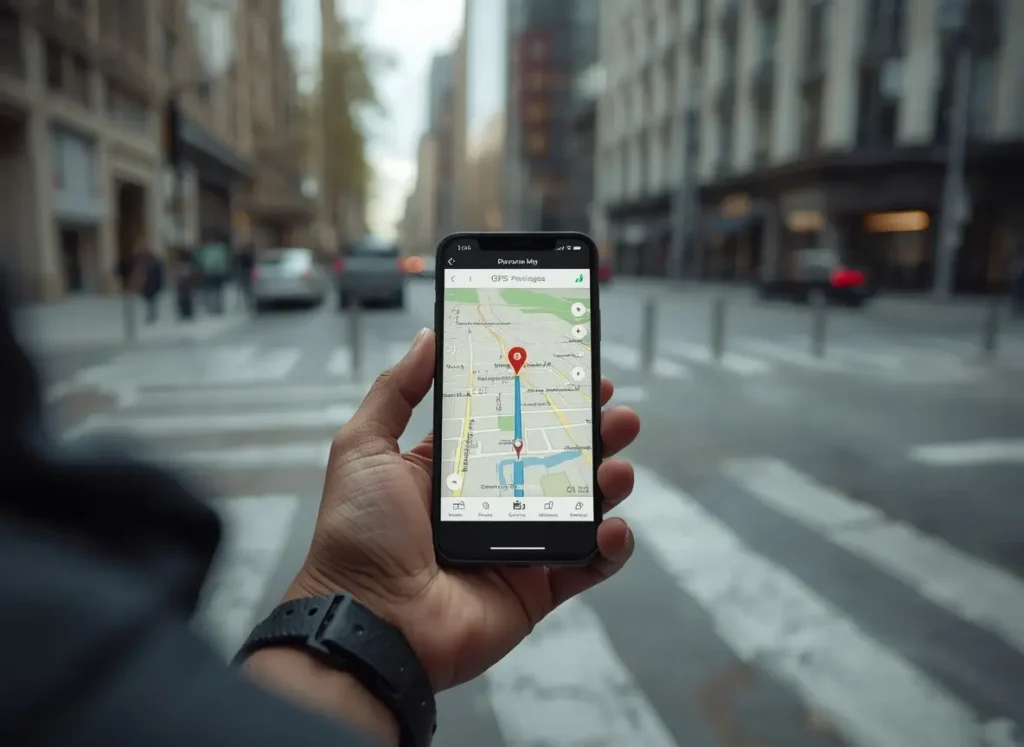
General location information can also be used to make advertisements more relevant. Google explains that it may determine the general area from which a person is searching and use that information to provide more relevant advertising.
For example, if someone searches for “restaurant” and the system knows the general area where the person is located, it makes sense to show restaurants nearby rather than restaurants in another country.
This does not necessarily mean that the system knows your exact address or is constantly tracking you. Different services use different types of information, and the specific data available depends on your device and account settings.
But even general location information can be enough to significantly change which advertisements you see.
Cookies — Small Files With a Big Role
Another term that often appears in this discussion is “cookie.”
Cookies are small pieces of data that websites and browsers can use to maintain sessions and provide various functions. Not every cookie exists for advertising. Some are necessary simply for a website to work properly.
However, tracking user behavior and connecting information between different websites and services has historically been an important part of the online advertising ecosystem.
Today, the system is more complicated than simply using cookies. Different types of identifiers, account-based information, device information, and other technologies can also be involved.
That is why modern advertising personalization does not depend on one single technology.
Google and Facebook Can Know What Interests You
When you see an advertisement on a social network, it is not always selected randomly.
Google explicitly states that personalized advertisements may use activity from Google services, including searches and YouTube history, as well as activity on websites and apps.
This does not mean that the system is literally “reading your mind.” It collects numerous signals and combines them to estimate which advertisements may be more relevant to a particular person.
That is why two people visiting the same website can sometimes see completely different advertisements.
But the Biggest Question Remains: Is Your Phone Listening to You?
This question has sparked countless discussions online for years.
People often say: “I was talking to a friend about airplanes, and then I saw advertisements for airplanes.”
Such experiences can certainly seem convincing. But the appearance of an advertisement alone is not proof that the phone recorded the conversation and used it for advertising.
There may be much more ordinary explanations.
Perhaps you had previously read an article about airplanes. Maybe you watched a related video. Perhaps your search history contained travel-related information. Maybe your location, behavior, or other advertising signals already indicated an interest in travel.
And then you noticed the advertisement.
That last detail is particularly important.
Why Does It Sometimes Feel Like an Advertisement Followed Our Conversation?
The human brain is very good at noticing coincidences.
If you see thousands of advertisements throughout the day and only one happens to match something you were recently talking or thinking about, that one is likely to stick in your memory.
But how many advertisements did you see before that which had nothing to do with your interests?
Probably dozens or even hundreds.
As a result, it can create a strong impression that the advertisement appeared because of our conversation, even though several independent signals may simply have lined up.
This does not mean that online tracking or data collection is imaginary. The use of data for personalized advertising is a real technological practice. But we cannot automatically conclude from a particular advertisement that our device listened to our conversation.
Modern Advertising Can Sometimes “Figure Out” More About Us Than We Realize

There is another interesting phenomenon here.
A person may not even realize that they are interested in a particular product.
For example, over the course of a month they may repeatedly search for travel information, look at airline tickets, read about hotels, watch travel videos, and browse travel photographs.
Then an advertisement for a suitcase appears.
They may think: “But I never searched for a suitcase.”
From the algorithm’s perspective, however, this can be a logical choice. A large number of signals point toward an interest in travel, and a suitcase is a product related to that interest.
Advertising systems do not always try to identify what you already want. They may also try to identify what you might want.
It Gets Even More Interesting When the Advertisement Appears on Another Device
Imagine that you search for a product on your computer and later see an advertisement for a similar product on your phone.
Different technological mechanisms can potentially be responsible, including services used under the same account or other advertising identifiers.
But here too, caution is important: the appearance of an advertisement on another device does not by itself prove exactly which piece of information was used to make that connection.
Modern advertising systems combine signals from many different sources.
Apple Changed the Rules in an Important Way
An interesting example in the privacy debate is Apple’s App Tracking Transparency framework.
Starting with iOS 14.5, apps have been required to ask for permission when they want to track a user’s activity across other companies’ apps and websites for advertising or to share that activity with data brokers.
Users can allow or deny this permission and can change their choice later.
This was an important change because it gave users a clearer choice about whether an app could connect their activity across different services.
However, this does not mean that advertisements disappear completely or that the internet can no longer use any information. Contextual advertising, for example, can still be based on the page or content a person is viewing at that moment.
How Much Control Do We Have Over Our Data?
Complete digital anonymity is difficult to achieve in the modern internet, but users do have some control.
Google users can review and manage some of the activity stored in their accounts, including parts of their search history, and can change personalized advertising settings.
Google’s My Ad Center also allows users to turn personalized advertising off. This does not mean that all advertisements disappear; rather, Google will no longer use information saved in the Google account and related activity to personalize advertisements in the same way.
On Apple devices, users can manage app tracking permissions through Settings > Privacy & Security > Tracking.
These settings do not completely eliminate the existence of data about us online, but they can give users more control.
So, Is the Internet Reading Our Thoughts?
No.
But sometimes it can certainly feel that way.
Modern internet services have access to so many signals about our behavior that they can sometimes make surprisingly accurate predictions about what might interest us next.
We search for information, watch videos, visit websites, click links, use apps, and leave behind other forms of digital traces. Each action may seem insignificant on its own, but when combined, they can create a surprisingly detailed picture of our interests and behavior.
So the next time you talk to a friend about something and see an advertisement related to the same subject a few minutes later, you do not necessarily have to assume that your phone was listening.
You may simply have left behind more digital information than you realized.
And that is one of the strangest paradoxes of the modern internet:
It may not need to listen to you in order to guess what interests you.
If you found the article interesting, share it with your friends and leave a comment.