
Why Aren’t the Bodies of Deceased Climbers Brought Down from Everest? – The Mountain’s Harshest Reality
The World’s Highest Peak and Its Unseen Side
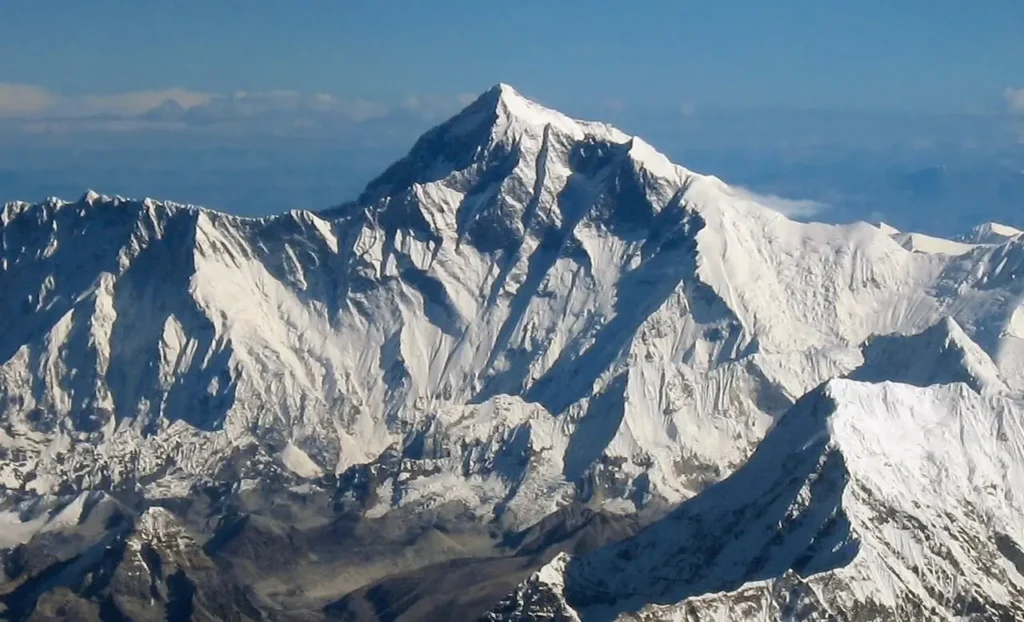
Every year, thousands of people dream of climbing Mount Everest ($8,848.86\text{ m}$), the highest peak in the world. For some, it is life’s ultimate goal; for others, a test of their own capabilities. However, Everest has another, much darker side.
It is not just a mountain covered in ice. It is a place where nature reminds humanity of its limits. Extreme altitude, acute lack of oxygen, unpredictable weather shifts, and severe physical exertion create one of the most hostile environments on Earth. That is why many wonder about a heavy question:
Why do some deceased climbers remain on Everest, and why can’t they be brought down?
The answer is far more complex than it seems at first glance.
The “Death Zone” — A Place Where the Human Body Slowly Shuts Down
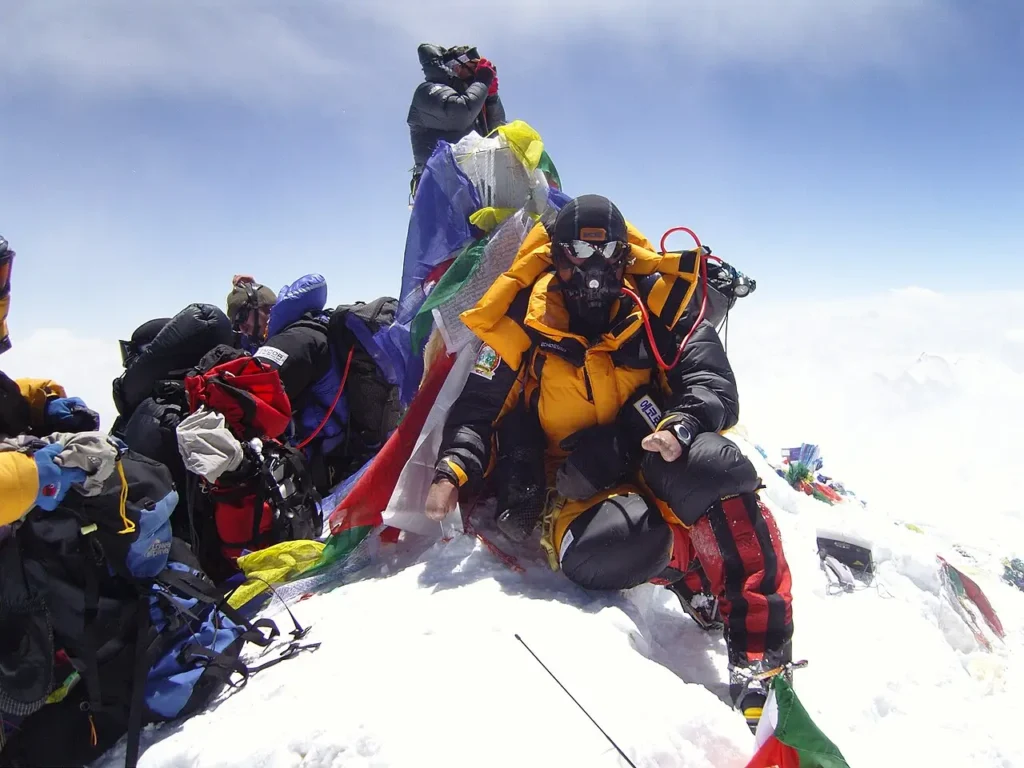
Above approximately $8,000\text{ meters}$, what climbers call the “Death Zone” begins. At this altitude:
- The amount of oxygen in the air is only about a third of that at sea level;
- Every single step requires immense energy;
- The body cannot recover; instead, it slowly deteriorates;
- Staying for an extended period is extremely life-threatening.
Under these conditions, even the simplest actions—such as taking off a backpack or putting on a glove—can become incredibly difficult. Therefore, climbers try to spend as little time as possible in the “Death Zone.”
Why Is Body Recovery One of the Hardest Tasks?
Many think it is just a matter of technology or willingness. In reality, the reasons are far more serious.
1. Immense Weight
Moving even a few people at high altitude is difficult. When you add heavy specialized equipment and the necessity of transporting a human body, the operation becomes exceptionally hazardous.
2. Oxygen Deficiency
Rescuers must work under the exact same conditions as the climbers. Often, even additional oxygen cylinders are limited.
3. Weather Shifts in Minutes
On Everest:
- High winds;
- Snow;
- Ice;
- Avalanche risks
can materialize within minutes. As a result, rescue teams often have a very narrow window of time to work safely.
4. The Lives of Other People
This is the most critical reason. If several rescuers put their own lives at serious risk to bring down a body, expedition leaders face a grim decision. One of the core principles of mountain rescue states:
No rescue operation should cause a new tragedy.
That is why every case is evaluated individually.
Does This Mean Bodies Are Never Recovered from Everest?
No, that is a common myth. In recent decades, numerous complex rescue and evacuation operations have been successfully executed. If a climber is at a relatively lower altitude, the weather is favorable, and the operation does not pose excessive risks, retrieving the body is possible. However, in the “Death Zone”—especially near the summit—such operations are far more complicated and dangerous.
How Expensive Is Such an Operation?
Rescue and evacuation efforts on Everest are considered some of the most difficult operations in the world. Sometimes, they require:
- A team of specially trained Sherpas;
- Extra oxygen supplies;
- Several days of grueling work;
- Complex logistics.
All of this can drive the cost of an operation up to tens of thousands of dollars or more, though the final amount depends on the altitude, weather, and complexity of the mission.
What Role Do Sherpas Play on Everest?
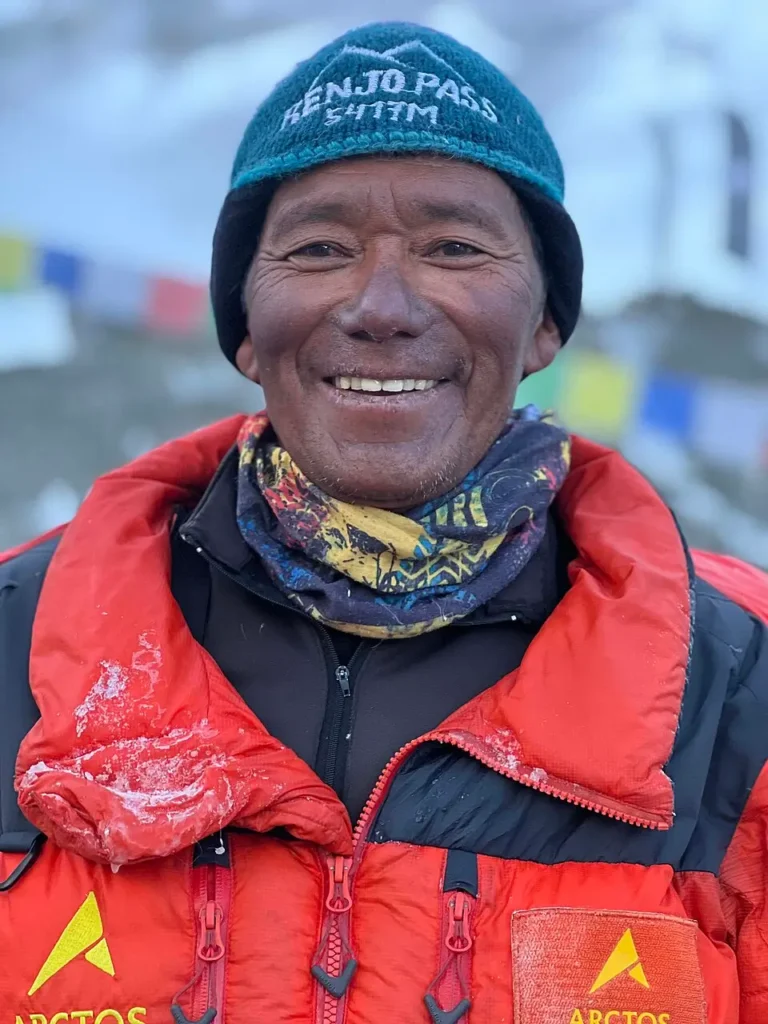
If you look back at the history of climbing Everest, you will quickly realize that talking about conquering this mountain is almost impossible without the Sherpas. The Sherpas are an ethnic group living in the Himalayan region of Nepal, whose centuries-old way of life is deeply connected to high-altitude environments. Despite popular belief, “Sherpa” is an ethnicity, not a profession. However, today the word is frequently used to describe the highly skilled mountaineers and guides who assist expeditions. On Everest, they perform the most grueling tasks:
- Fixing safety ropes;
- Carrying oxygen cylinders and other equipment;
- Setting up camps;
- Helping climbers navigate difficult sections;
- Frequently participating in rescue operations.
Many experienced mountaineers say that a successful expedition depends entirely on the professionalism of the Sherpas.
The Khumbu Icefall — One of Everest’s Most Dangerous Sections
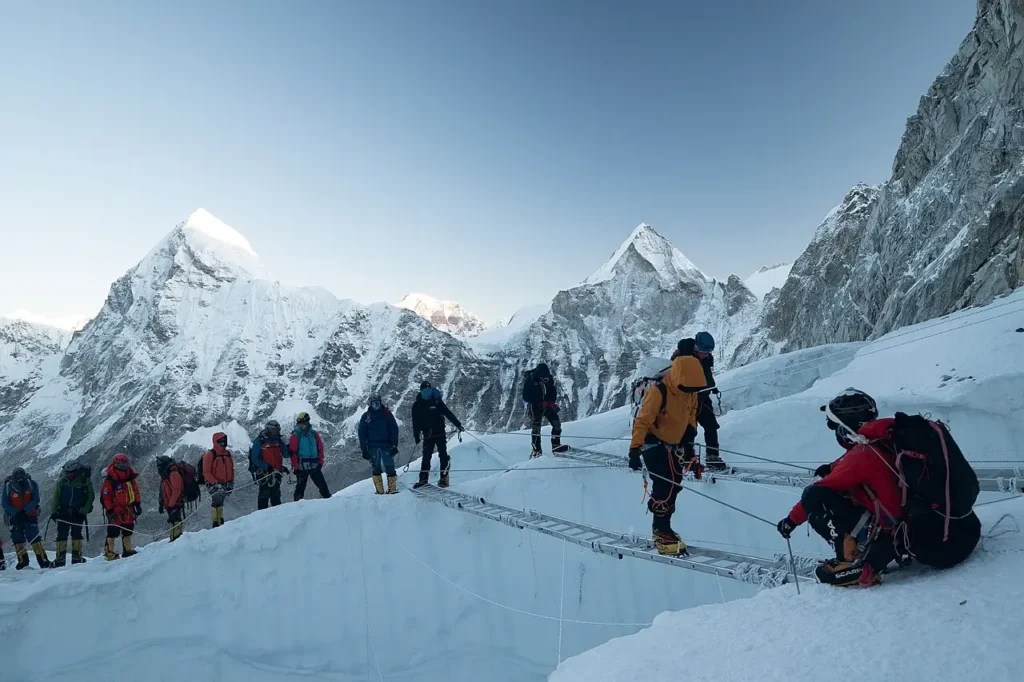
For expeditions taking the southern route, one of the most hazardous places is the Khumbu Icefall. Despite its name, it is not a waterfall of liquid water. It is a constantly moving, massive body of ice that:
- Is riddled with deep crevasses;
- Can shift at any moment;
- Moves several centimeters throughout the day.
To cross this section, climbers often use aluminum ladders stretched across deep ice chasms. This is where Sherpas work at the beginning of the season to safely prepare the route for other expeditions.
What Hazards Await Climbers?
Climbing Everest is not just a battle against the cold. The most common dangers include:
Oxygen Deprivation
At extreme altitudes, the brain and other organs no longer receive enough oxygen. This can lead to:
- Confusion;
- Loss of concentration;
- Poor decision-making;
- Altered states of consciousness.
High Winds
Sometimes wind speeds exceed 100 km/h. In such conditions, even maintaining balance becomes difficult.
Extreme Cold
Temperatures often plunge to between –30°C and –40°C, and the wind chill factor makes it even more severe.
Avalanches
The threat of avalanches is constantly present on certain sections of Everest. Therefore, expeditions monitor weather forecasts with extreme caution.
The Most Common Myths About Everest
There is plenty of unverified information circulating on the internet regarding Everest. Let’s clarify a few of these myths.
- Myth #1 — “There are hundreds of bodies on Everest.”Partially true. Historically, more than 300 people have died on the mountain. However, this does not mean all of them remain on the route today. Over the years, many bodies have been brought down or moved to other locations, while the locations of others remain unknown.
- Myth #2 — “Bodies are left behind intentionally.”No. If a safe recovery is possible, great efforts are often made. But in some cases, the operation is so dangerous that it places the lives of the rescuers at a much higher risk.
- Myth #3 — “Climbing Everest is just a matter of money.”An expedition is indeed very expensive. However, finances alone are not enough. Success requires:
- Years of experience;
- Physical conditioning;
- Altitude acclimatization;
- Technical skills;
- Making the right decisions.
How Do Climbers Prepare for Everest?
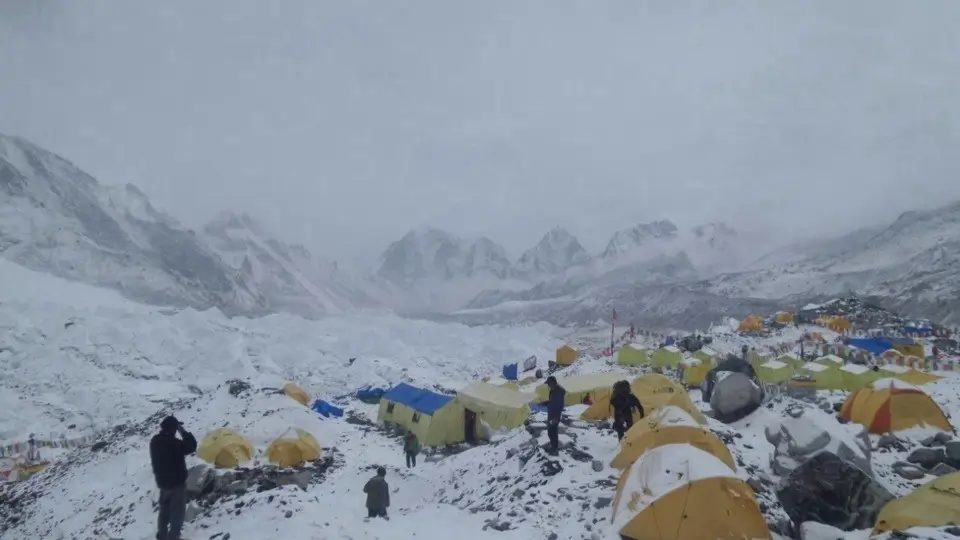
A successful ascent of Everest is often the culmination of years of preparation. Many mountaineers first conquer:
- 6,000meter peaks;
- Then $7,000meter peaks;
- And finally, 8,000meter}$ mountains.
Alongside this, they learn to navigate ice, work with ropes, cross glaciers, and recognize symptoms of altitude sickness.
Why Can’t One Stay on Everest for Long?
Many people assume that after reaching the summit, climbers spend a significant amount of time there. In reality, this almost never happens. Reaching the summit is only half the journey. Statistically, a significant portion of accidents occur during the descent, when:
- Energy is depleted;
- Oxygen supplies are running low;
- Concentration drops;
- The weather frequently deteriorates.
Therefore, experienced mountaineers live by one crucial rule:
The summit is only a success if you return safely.
How Has Everest Changed in Recent Decades?
When Edmund Hillary and Tenzing Norgay first reached the summit of Everest in 1953, it was considered one of humanity’s greatest achievements. Today, the situation is vastly different. Modern equipment, accurate weather forecasts, satellite communication, GPS systems, and commercial expeditions have made climbing Everest more accessible than ever. However, this has created new problems.
Overcrowded Routes
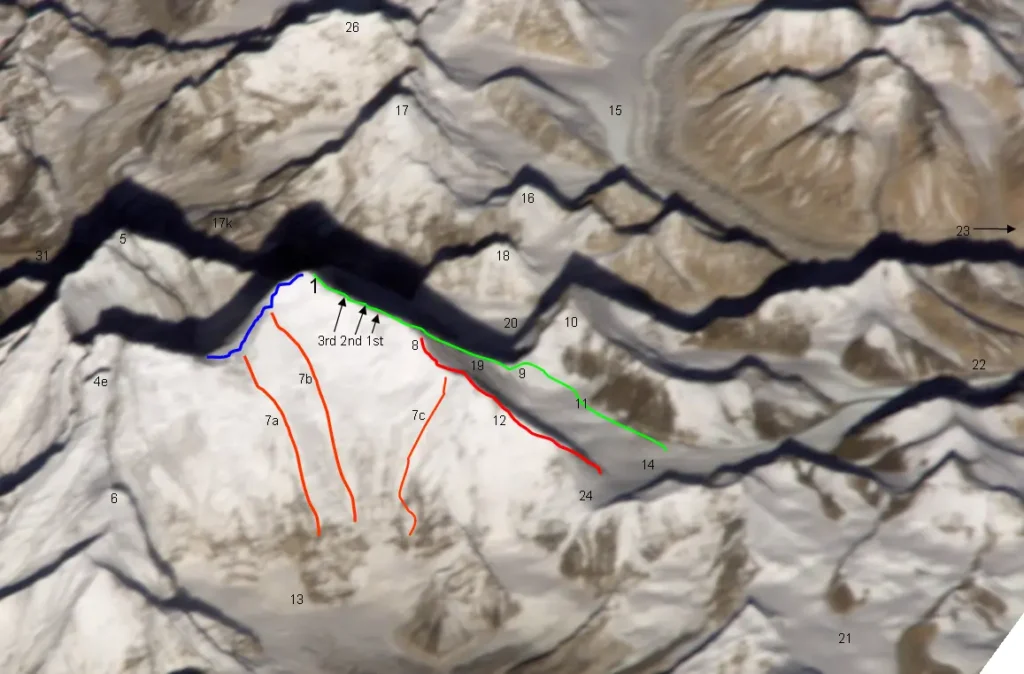
In 2019, one photo captured the world’s attention. It showed dozens of climbers standing in a single-file line on a narrow ridge, slowly inching toward the summit. This event demonstrated once again that nature is no longer the only primary danger on Everest—sometimes the issue is the sheer volume of people. When climbers wait in lines for too long:
- Oxygen consumption increases;
- People spend more time in the “Death Zone”;
- The risk of exhaustion and complications rises.
Climate Change Creates New Challenges
Scientists note that glaciers in the Himalayas are gradually changing. Melting ice has uncovered equipment and human remains that were buried under snow for years in certain areas. This circumstance presents new challenges for rescue and cleanup operations.
Everest Is No Longer Just a Climber’s Challenge
In recent years, the Nepalese government and various organizations have regularly conducted cleanup expeditions. They bring down from the mountain:
- Abandoned oxygen cylinders;
- Tents;
- Ropes;
- Other waste.
Some operations involve locating and recovering human remains, but this only happens when it can be performed safely.
What Does Everest Teach Us?
Everest is not just a geographical point. It reminds us that humanity is always limited in the face of nature. Victory here is not merely standing on the summit. True success is:
- A properly planned expedition;
- Responsible decisions;
- Team support;
- Returning safely.
That is why professional mountaineers often say:
“The summit is optional, but returning is mandatory.”
This phrase encapsulates the philosophy of Everest most accurately.
Conclusion
Everest is the world’s highest peak, but its true height is not measured in meters. Every expedition shows how powerful the human desire is to push past the limits of one’s capabilities. At the same time, the mountain reminds us that nature has its own rules, and ignoring them can lead to severe consequences. That is why it is sometimes impossible to recover the bodies of deceased climbers. This is not indifference or disrespect—it is often a harsh but necessary decision aimed at protecting the lives of others.
Reaching the summit may be one of human’s greatest achievements, but the true victory is only complete when a person returns home safely. This is why Everest remains not only the highest mountain in the world, but a symbol of human courage, dreams, and responsibility.
If you found the article interesting, share it with your friends and leave a comment.