Michelangelo — Titan of the Renaissance
In the history of art, there are a few names that have transformed not only their own era but the entire global culture. Among them, Michelangelo holds a special place — a man whose works continue to inspire awe to this day. He was a sculptor, painter, architect, and poet whose creativity exerted a monumental influence on the development of Western art.
Michelangelo is frequently referred to as the “Titan of the Renaissance.” His masterpieces — David, the Pieta, and the frescoes of the Sistine Chapel — have withstood the test of centuries and remain regarded as some of humanity’s greatest cultural treasures.
Childhood and Youth
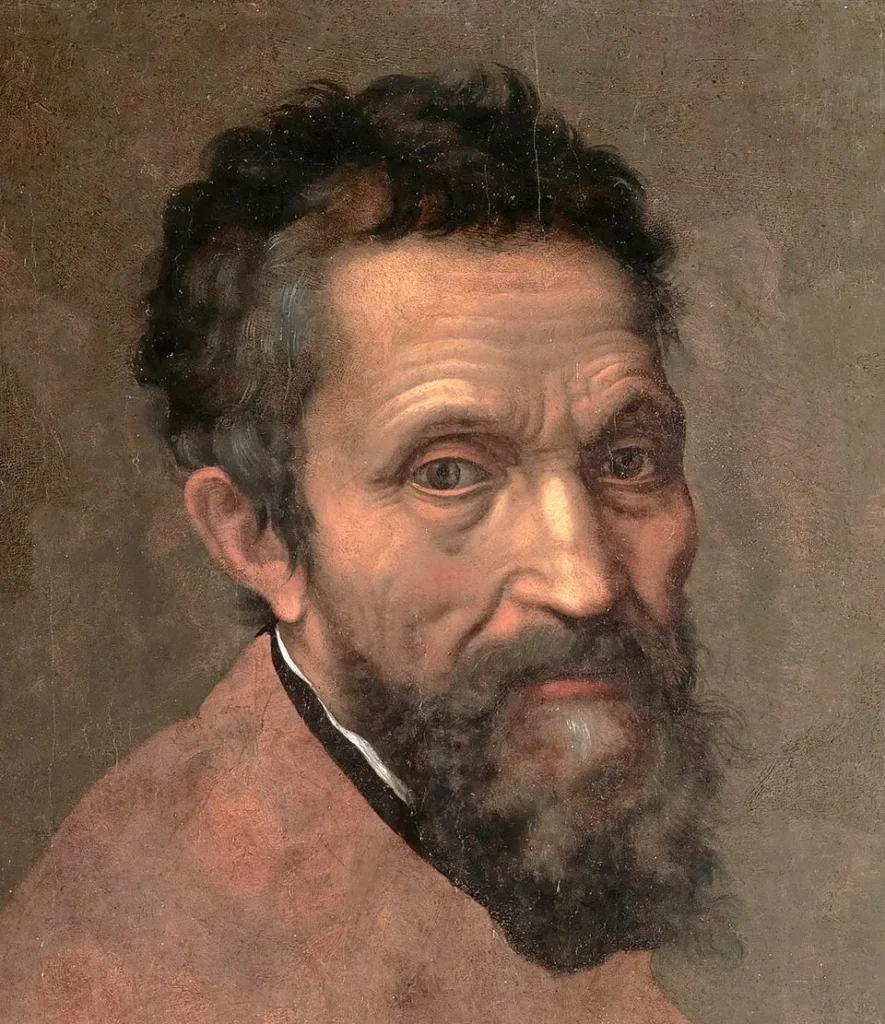
Michelangelo di Lodovico Buonarroti Simoni was born on March 6, 1475, in the small Italian town of Caprese, which is today named Caprese Michelangelo in his honor. His family belonged to an ancient, though impoverished, aristocratic lineage.
From early childhood, the future artist showed a deep interest in drawing and sculpture. Even though his father did not support this passion, the young Michelangelo decided to dedicate his life to art regardless.
At the age of 13, he entered the workshop of the renowned painter Domenico Ghirlandaio in Florence as an apprentice. This marked the official beginning of his professional career.
Florence and the Medici Family
Michelangelo’s talent was quickly noticed. Lorenzo de’ Medici, one of the most influential figures of that era, was particularly captivated by his capabilities.
In the Medici palace, the young artist rubbed shoulders with philosophers, poets, and scientists. This vibrant environment had a profound impact on his worldview and creative path.
It was during this period that he crafted his first well-known works, in which the hand of a future genius was already clearly visible.
The Pieta — The Sculpture That Astonished the World
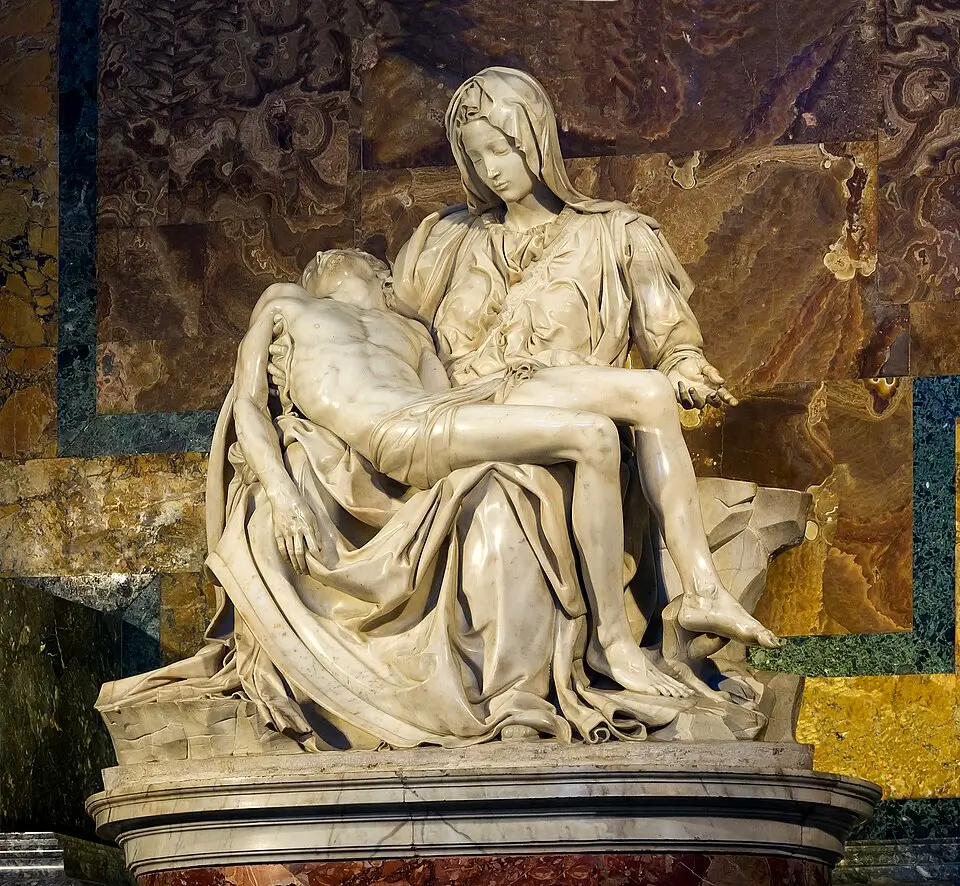
In 1496, Michelangelo moved to Rome. A few years later, he created the sculpture that would bring him pan-European fame.
The Pieta depicts the Virgin Mary holding the lifeless body of Christ in her arms.
The entire sculpture is carved from a single block of marble. To this day, art historians marvel at its astonishing realism, emotional depth, and technical flawlessness. Michelangelo was only 24 years old when he completed this masterpiece.
David — The Symbol of the Renaissance
In 1501, the Florentine government presented Michelangelo with a daunting challenge. He was tasked with working on a colossal block of marble that other sculptors had previously abandoned after failed attempts.
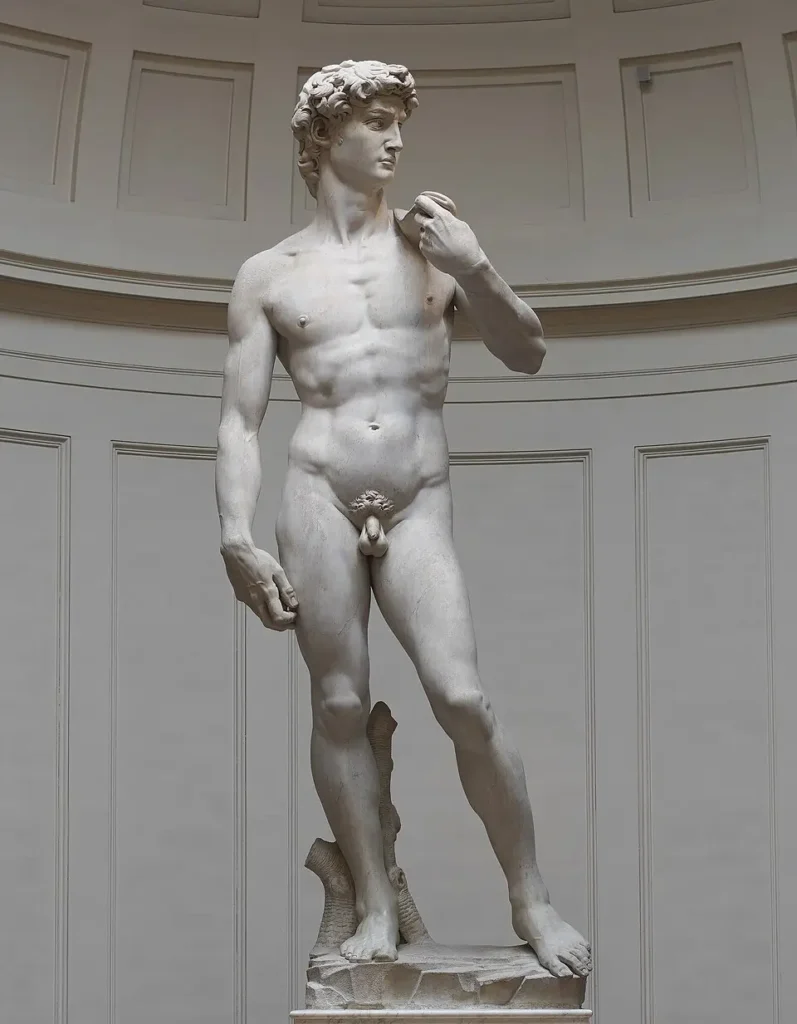
Following three years of intense labor, David was born — one of the most celebrated sculptures in world history.
Standing at over 5 meters tall, it portrays the biblical David right before his battle with Goliath, capturing the exact moment the hero closely observes his enemy. David became a symbol not just of master art, but of Florentine freedom and resilience.
Rivalry with Leonardo da Vinci
At the dawn of the 16th century, the cultural life of Florence was driven by two genius artists — Leonardo da Vinci and Michelangelo.
Both were working in the city at the same time and were constantly compared to one another. Their relationship was far from friendly. Nevertheless, it was this very fierce competition that birthed some of the greatest masterpieces of the Renaissance era.
Painting the Sistine Chapel Ceiling
In 1508, Pope Julius II requested Michelangelo to paint the ceiling of the Sistine Chapel in the Vatican.
Initially, the artist declined, as he considered himself primarily a sculptor rather than a painter. Ultimately, however, he accepted the assignment.
For four long years, he worked almost every single day on high scaffoldings. The final result was breathtaking.
The frescoes illustrate biblical scenes, including:
- The Creation of the World;
- The Creation of Adam;
- The Creation of Eve;
- The Great Flood;
- Prophets and Sibyls.
The most famous section is The Creation of Adam, where the nearly touching fingers of God and man have become one of the most iconic images in human history.

The Last Judgment
Years later, Michelangelo returned to the Sistine Chapel to create another grand-scale work.
The Last Judgment depicts the Second Coming of Christ and the final judgment of humanity. The fresco is massive in scale, incorporating hundreds of distinct figures. Its dramatic style, raw emotions, and precise anatomy left his contemporaries completely shocked.
Architect and Engineer
Michelangelo was far more than just a sculptor and painter. In the second half of his life, he became actively involved in architecture. His most famous undertaking was St. Peter’s Basilica.
The dome he designed left an indelible mark on world architecture and remains one of the primary symbols of the Vatican today.
Poetry and Private Life
It is a known fact that Michelangelo penned hundreds of poems and sonnets. His poetry touched upon themes of love, faith, art, and the inner depths of the human soul.
The artist was a rather private and solitary individual. He dedicated himself almost entirely to his work, often stating that art was the central purpose of his existence.
Final Years
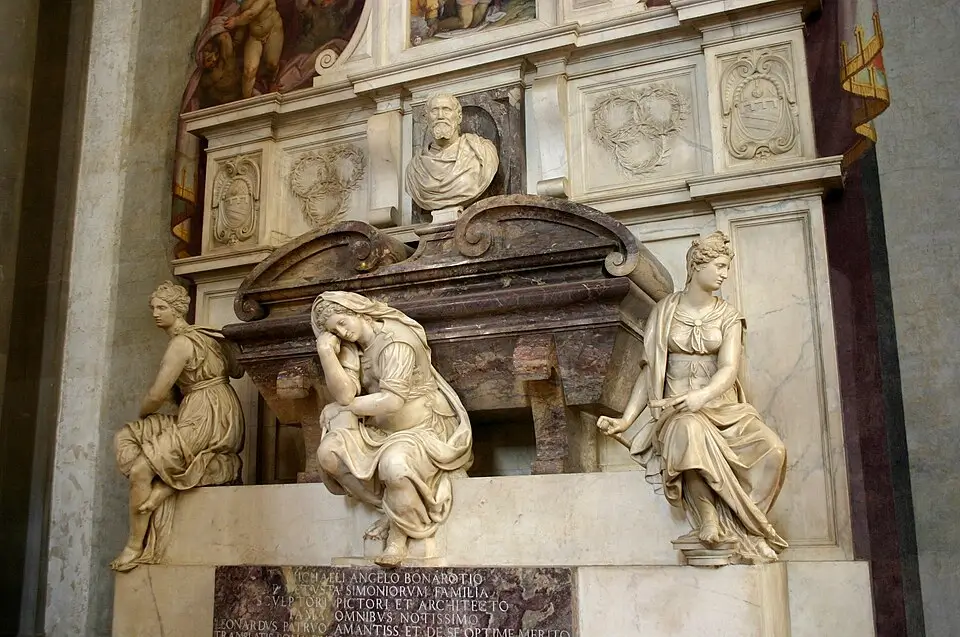
Even in the twilight of his life, Michelangelo remained actively working. He passed away on February 18, 1564, at the age of 88, which was considered an exceptionally long lifespan for that era.
His body was brought back from Rome to Florence and laid to rest in the Basilica of Santa Croce.
Michelangelo’s Legacy
Michelangelo’s body of work has left a monumental impact on the evolution of art. His creations continue to draw millions of visitors to this day.
He was a man who infused motion, emotion, and vital life into stone. His frescoes, meanwhile, are recognized as the pinnacle of Western painting.
Today, centuries later, David, the Pieta, the Sistine Chapel, and his other masterworks stand as timeless proof that Michelangelo was one of the greatest artists not just of the Renaissance, but of all human history.
Conclusion
Michelangelo’s life serves as a brilliant example of human creative boundaries. He was a genius who simultaneously reshaped sculpture, painting, architecture, and poetry. Today, his works still remind us that art is not merely about beauty — it is an expression of the human soul, faith, and imagination.
When we look at David or the frescoes of the Sistine Chapel, we see far more than just marble and paint; we witness human genius that has successfully transcended the boundaries of time.
The images used in the article are sourced from Wikimedia Commons and are in the public domain.
If you found the article interesting, share it with your friends and leave a comment.