The Mystery of the Lost Colony of Roanoke
There are many mysteries in human history, but this particular story from the American continent remains a living nightmare for historians and archaeologists alike. Imagine an entire settlement—men, women, and children—simply evaporating into thin air one day. No signs of a struggle, no bodies, only a single cryptic word carved into a wooden post.
This is the story of the Lost Colony of Roanoke, an enigma that has remained unsolved for over four centuries.
Hope of the New World: How It All Began
In 1587, under the patronage of Queen Elizabeth I and organized by Sir Walter Raleigh, 115 English colonists (90 men, 17 women, and 11 children) arrived on Roanoke Island (modern-day North Carolina, USA). Their goal was to establish the first permanent English settlement on American soil.
John White, a talented artist and cartographer, was appointed governor of the colony. Shortly after the settlement was established, White’s daughter gave birth to a baby girl named Virginia Dare—the first English child born in the Americas. The colonists looked to the future with hope, but reality proved to be far more brutal.

Forced Separation: 3 Years Across the Ocean
Life in the New World was harsh. Food supplies were running critically low, and relations with the local Native American tribes grew tenser by the day. Realizing they wouldn’t survive without help, the colonists begged Governor John White to return to England to secure emergency supplies, food, and weapons.
White agreed with a heavy heart, leaving behind his daughter, son-in-law, and newborn granddaughter. Before departing, he established a strict code with the colonists: If they were forced to leave the island, they were to carve the name of their destination onto a prominent tree or post. If they were fleeing from danger or an attack, they were to carve a cross above the name.
However, upon White’s arrival in England, a massive war broke out with Spain (the era of the Spanish Armada). The Queen requisitioned all ships for the military, leaving White stranded in England. He was unable to return to Roanoke for three long years.
Returning to an Empty Island and a Cryptic Word
On August 18, 1590—ironically, on his granddaughter’s third birthday—John White finally returned to Roanoke. From the ship, the crew spotted smoke rising from the island, sparking hope that the settlers were alive. But as they stepped ashore, a chilling sight awaited them.
The settlement was completely deserted. The houses had been dismantled, and high grass grew where a bustling colony once stood. There were absolutely no signs of combat, fire, or slaughter. It appeared as though the inhabitants had calmly packed their belongings and left.
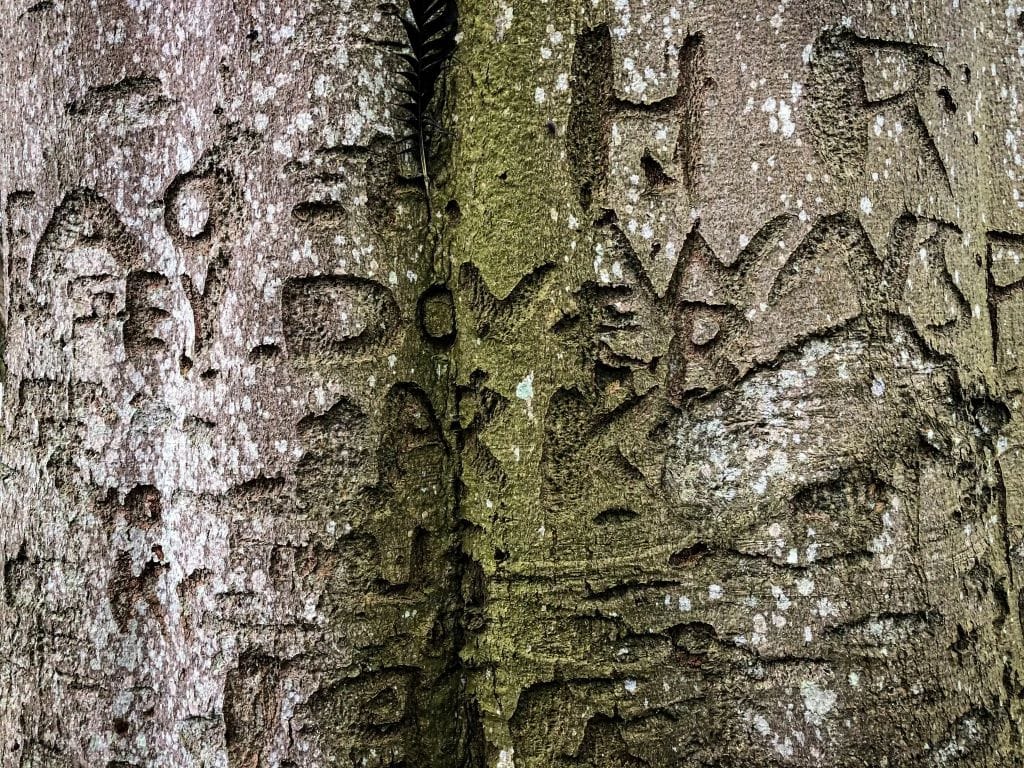
White immediately began searching for the prearranged signals. On one tree, he found the letters “CRO” hacked into the bark. And on a main post at the entrance to the settlement, carved in bold capital letters, was the mysterious word:
“CROATOAN”
Crucially, there was no cross carved above the word, indicating that the colonists had not left the island under duress or imminent danger.
What Did “CROATOAN” Mean?
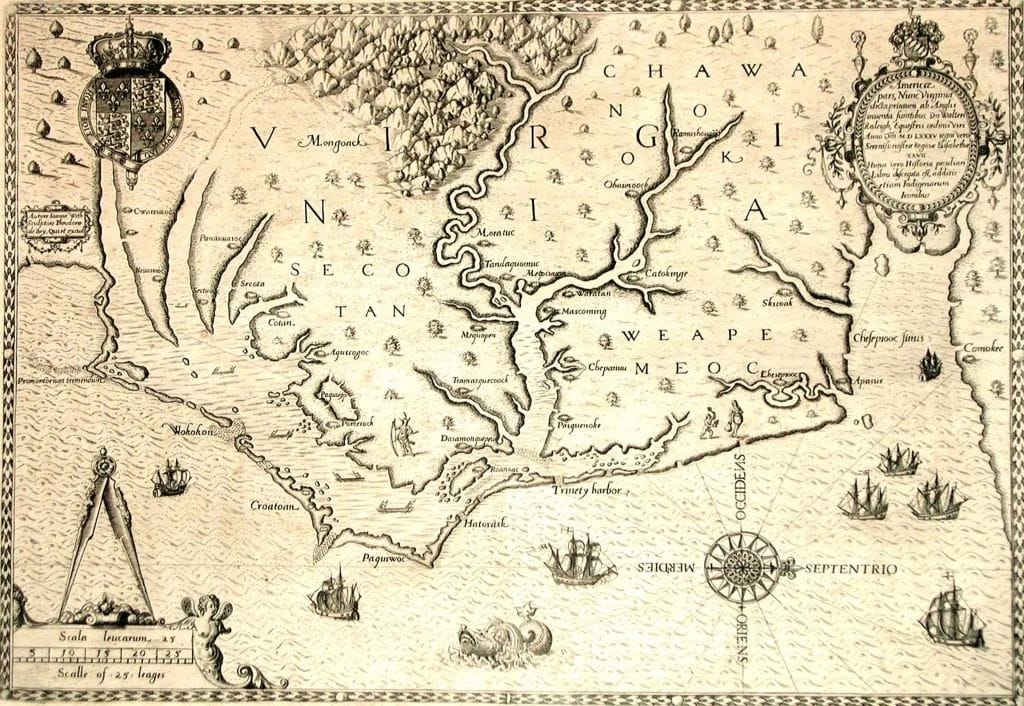
Croatoan was the name of a neighboring island (modern-day Hatteras Island), which was home to a friendly Native American tribe of the same name. Their chief, Manteo, had been a valuable ally to the English.
Logically, White wanted to sail immediately to Croatoan to search for his family. However, fate had other plans. A fierce storm battered the ships, causing them to lose their anchors, and the crew forced a desperate White to abandon the search and return to England. John White died years later, never knowing the fate of his family.
The Best Theories: Where Did the Colonists Go?
Over the centuries, this enduring mystery has spawned numerous theories, ranging from the highly scientific to the downright supernatural:
1. Integration with Native Tribes (The Most Likely Theory)
Most modern historians believe that driven by starvation and lack of resources, the colonists relocated to Croatoan Island and integrated with the local tribe. This theory is supported by later reports from 17th and 18th-century travelers who noted that some members of the local tribes possessed grey eyes, light hair, and spoke a dialect of English.
2. A Spanish Attack
The Spanish empire despised English attempts to colonize the Americas and actively searched for Roanoke to destroy it. However, Spanish historical records show no evidence that they ever discovered the location of the colony before it vanished.
3. Mass Disease or Famine
Some argue that a sudden epidemic or starvation wiped out the colony. Yet, this theory fails to explain why no bodies, skeletal remains, or graves were ever found on the island.
4. Supernatural and Conspiracy Theories
In popular culture (such as the TV series American Horror Story) and local folklore, “Croatoan” is sometimes regarded as a curse or an evil spirit that consumed the settlers. Some fringe theorists have even suggested alien abduction.
What Does Modern Science Say?
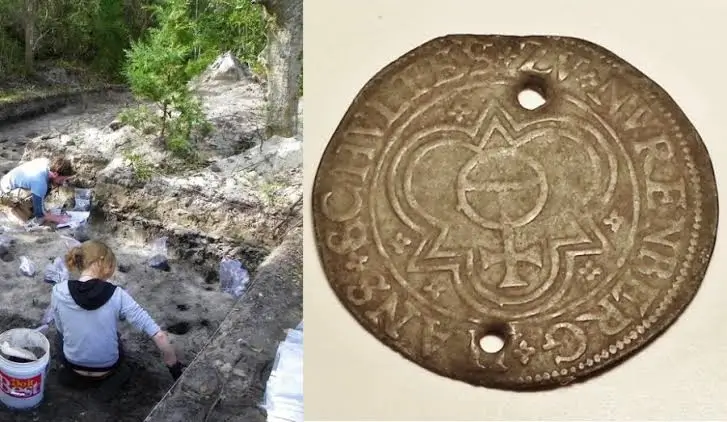
In recent years, The Lost Colony DNA Project has been analyzing the DNA of local Native American descendants in the region. Scientists are searching for English genetic markers that might link them to the lost settlers. Archaeological digs on Hatteras Island have also uncovered 16th-century English artifacts, including a gold signet ring, a sword hilt, and fragments of European pottery.
Despite these discoveries, the exact fate of the 115 people between 1587 and 1590 remains shrouded in mist. The Roanoke colony stands as a haunting reminder of how unforgiving and deeply mysterious the untamed New World could be.
If you found the article interesting, share it with your friends and leave a comment.