Secret Operations of the Cold War
Introduction
During the second half of the 20th century, the world was divided into two opposing camps. On one side stood the United States and its allies, and on the other, the Soviet Union. Although these two superpowers never engaged in a direct large-scale war against each other, their rivalry lasted for nearly half a century and became one of the most tense periods in human history.
This era became known as the “Cold War” because the struggle was fought primarily through politics, economics, ideology, intelligence operations, and military competition rather than direct battlefield confrontation. During this period, numerous secret operations were planned and carried out, many of which remained classified for decades before becoming known to the public.
How Did the Cold War Begin?
The roots of the Cold War emerged after the end of World War II. Although the Western Allies and the Soviet Union had fought together against Nazi Germany, their ideological differences became increasingly apparent after victory.
The Western nations supported democratic governments and capitalist economic systems, while the Soviet Union promoted communism and sought to expand its influence across the globe.
In 1946, Winston Churchill delivered his famous “Iron Curtain” speech, symbolically describing the division of Europe between East and West.
The Age of Espionage
One of the most important weapons of the Cold War was espionage. Both sides invested enormous resources in gathering information about their opponent’s military capabilities, technological developments, and political strategies.
The Soviet Union’s primary intelligence agency was the KGB, while the United States relied on the CIA.
Agents operated across the world, often under false identities and fabricated biographies. Some managed to conceal their true loyalties for decades.

The Cambridge Five — The Soviet Union’s Most Successful Spies
During the 1930s, Soviet intelligence recruited a group of students from the University of Cambridge in England.
These individuals later obtained influential positions within the British government and intelligence services. For years, they secretly passed highly sensitive information to Moscow.
Their activities proved so effective that Western intelligence agencies struggled for decades to understand how so much classified information was being leaked.
The Nuclear Arms Race
The use of atomic bombs in 1945 introduced the world to a terrifying new reality.
When the Soviet Union successfully developed its own nuclear weapons, an unprecedented arms race began. Both sides continuously sought to build larger and more powerful arsenals.
By the 1950s and 1960s, humanity had accumulated enough nuclear weapons to destroy civilization many times over.
The U-2 Incident
In 1960, an American U-2 reconnaissance aircraft entered Soviet airspace during a secret intelligence mission.
The aircraft was shot down by Soviet forces, and its pilot, Francis Gary Powers, was captured alive.
The incident triggered a major diplomatic crisis and revealed the extent to which secret surveillance operations were being conducted during the Cold War.
The Cuban Missile Crisis — The World on the Brink of Nuclear War
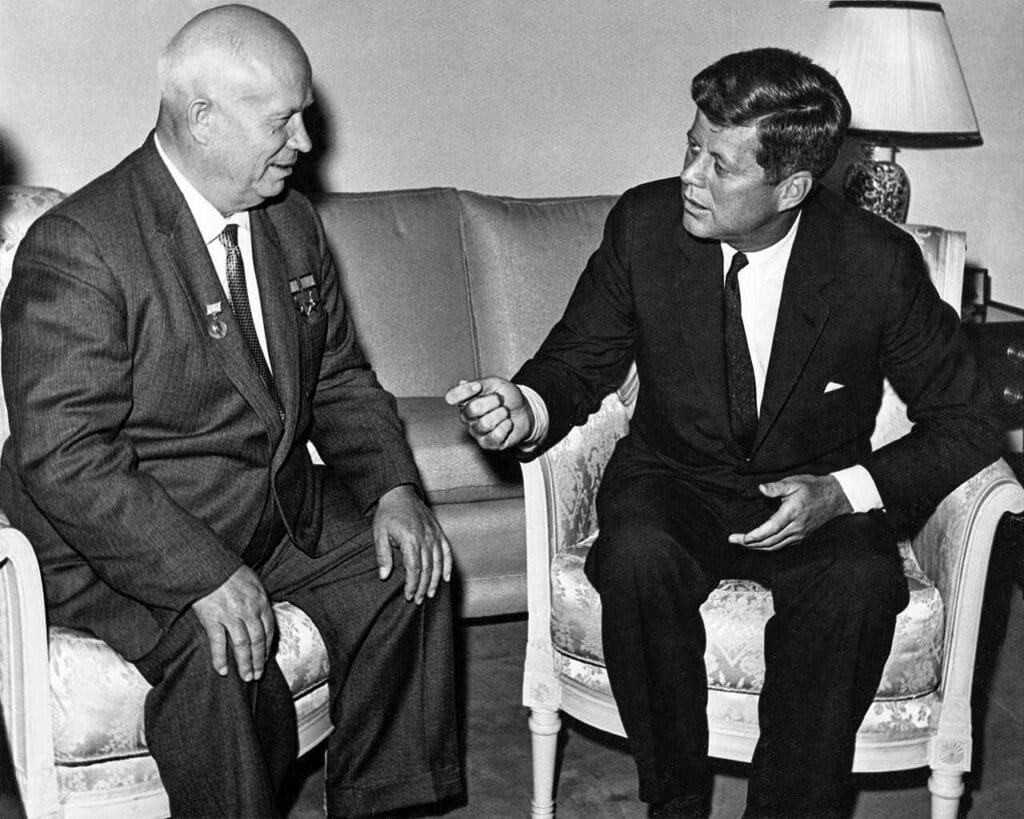
In 1962, American intelligence discovered Soviet nuclear missile installations in Cuba.
The discovery sparked what many historians consider the most dangerous confrontation of the Cold War.
U.S. President John F. Kennedy and Soviet leader Nikita Khrushchev engaged in intense negotiations over several tense days.
For a brief moment, the world stood on the edge of nuclear war. Eventually, a diplomatic agreement was reached, and catastrophe was avoided.
Many historians believe humanity has never come closer to a full-scale nuclear conflict than it did during October 1962.
The Berlin Wall — A Symbol of the Cold War
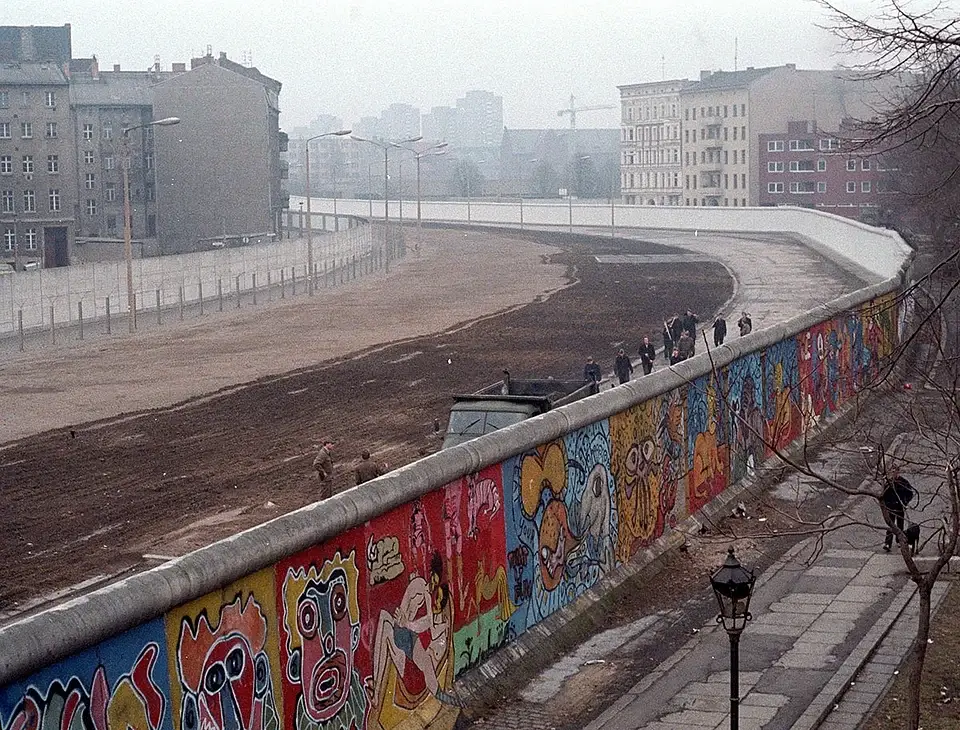
In 1961, the Berlin Wall was erected, physically dividing East and West Berlin.
For nearly three decades, the wall stood as one of the most powerful symbols of Cold War division.
Thousands of people attempted to escape from East Germany by crossing the barrier. Some succeeded, while others lost their lives in the attempt.
The fall of the Berlin Wall in 1989 became one of the defining moments signaling the end of the Cold War.
The Space Race

The Cold War rivalry extended beyond Earth itself.
In 1957, the Soviet Union launched Sputnik 1, the world’s first artificial satellite.
In 1961, Yuri Gagarin became the first human being to travel into space.
The United States responded with an ambitious space program of its own.
In 1969, during the Apollo 11 mission, Neil Armstrong became the first person to walk on the Moon.
The Space Race became a powerful demonstration of technological superiority and national prestige.
Secret Tunnels and Surveillance Operations
Both sides constantly sought ways to monitor their opponent’s communications.
One of the most famous intelligence operations involved the construction of a secret tunnel beneath Berlin. Through this tunnel, Western intelligence agencies intercepted Soviet military communications.
Although the operation initially appeared successful, it was later revealed that Soviet intelligence had known about it in advance.
Propaganda — The Invisible Weapon
During the Cold War, information became as important a weapon as tanks and missiles.
Radio broadcasts, newspapers, films, and television programs were extensively used by both sides to spread their ideologies and influence public opinion.
Winning the battle for hearts and minds became a crucial element of Cold War strategy.
How Did the Cold War End?

By the late 1980s, the Soviet Union was facing severe economic and political difficulties.
Soviet leader Mikhail Gorbachev introduced major reforms in an attempt to modernize the system, but the crisis had already become too deep.
In 1989, the Berlin Wall fell, and in 1991, the Soviet Union officially dissolved.
These events brought an end to nearly 45 years of global rivalry.
Conclusion
The Cold War was a period during which the world constantly balanced between peace and catastrophe. It was an era in which secret documents, spies, propaganda campaigns, and technological breakthroughs often shaped events more than conventional military battles.
Many Cold War operations remain partially classified even today, and some secrets may never be fully revealed. However, one fact is undeniable: the Cold War profoundly shaped modern international politics, technological development, and the world we live in today.
The images used in the article are sourced from Wikimedia Commons and are in the public domain.
If you found the article interesting, share it with your friends and leave a comment.