
Noah’s Ark — Myth, or Real Event?
The story of Noah’s Ark is one of the most famous and, at the same time, one of the most controversial narratives in human history. For thousands of years, this account has stood at the intersection of religion, history, archaeology, and science. For believers, it symbolizes divine power and salvation, while for researchers it represents a fascinating example of ancient flood traditions.

But did a global flood really occur? Did Noah’s Ark actually exist? And why do similar stories appear in cultures around the world? The search for answers to these questions continues to this day.
The Biblical Account
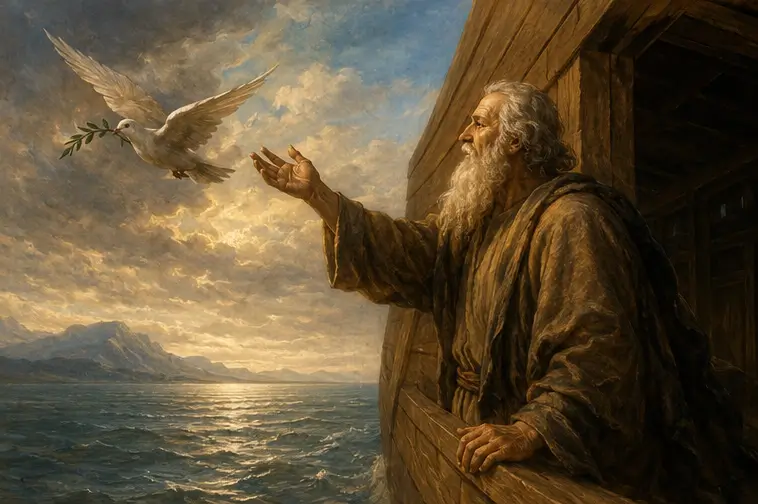
The story of Noah is described in the Book of Genesis. According to the Bible, human wickedness and violence had become so widespread that God decided to cleanse the Earth through a great flood.
The only righteous man was Noah. God commanded him to build a massive vessel—the Ark—in which he would shelter his family and representatives of various animal species.
According to the biblical account, rain fell for forty days and forty nights. The waters rose and covered the mountains, while the Ark floated safely above the flood. After many months, the water began to recede, and the vessel came to rest in the region of the mountains of Ararat.
Noah first released a raven and later a dove. Eventually, the dove returned carrying an olive branch, indicating that dry land had reappeared. Only then did Noah, his family, and the animals leave the Ark.
How Large Was the Ark?
The Bible even provides measurements for the Ark. Modern calculations estimate its dimensions at approximately 135 meters (443 feet) in length, 22–23 meters (73–75 feet) in width, and about 13–14 meters (43–46 feet) in height.
Such a structure would have been enormous by the standards of the ancient world. Some researchers argue that constructing a wooden vessel of this size was technically possible, while others question its stability and durability.
Flood Legends in Other Cultures
The story of Noah is not the only ancient flood narrative.
One of the closest parallels appears in the Epic of Gilgamesh, which predates the Bible by many centuries. In this Mesopotamian epic, the hero Utnapishtim receives a warning from the gods about an impending flood and builds a large vessel to save his family and animals.
Similar flood traditions can also be found in:
- Ancient Mesopotamia
- India
- China
- Greece
- Various indigenous cultures of the Americas
The existence of these widespread stories has led some scholars to suggest that they may preserve memories of a real catastrophic flood event in the distant past.
Mount Ararat and the Search for the Lost Ark
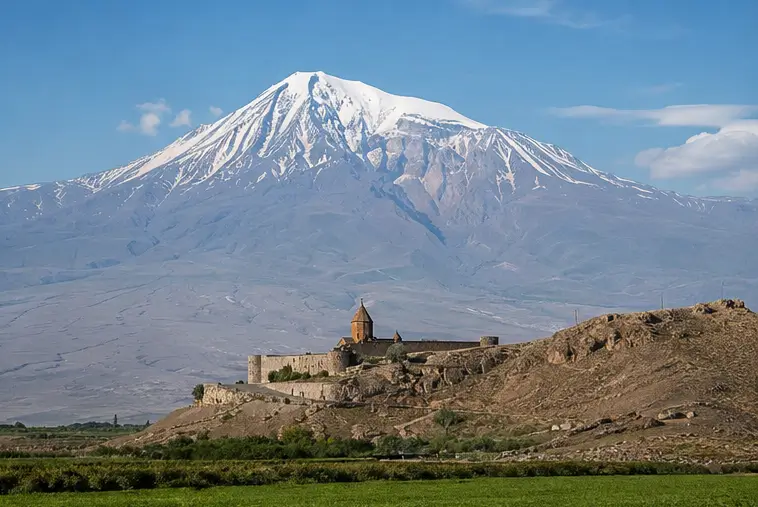
According to the Bible, the Ark came to rest in the mountains of Ararat. Today, this description is most commonly associated with Mount Ararat in eastern Turkey.
For centuries, explorers, researchers, and adventurers have attempted to locate evidence of the Ark on the mountain.
Some expeditions have claimed to discover unusual wooden structures trapped in ice. Others have pointed to satellite images that appear to show ship-like formations. However, none of these findings has provided conclusive proof accepted by the scientific community.
The Durupinar Formation
Since the 1980s, particular attention has been focused on the Durupinar Formation in Turkey.
This boat-shaped geological formation has dimensions that roughly correspond to those described for Noah’s Ark in the Bible.
Supporters of the theory argue that it could be the remains of the Ark. Most geologists, however, consider it a natural geological formation created by ordinary geological processes.

Could All the Animals Have Fit Inside?
One of the most frequently asked questions concerns the animals.
Critics point out that millions of species exist on Earth today, making it difficult to imagine how they could all fit aboard a single vessel.
Different religious scholars offer various explanations. Some suggest that the Ark did not carry every modern species but rather representative “kinds” from which later species developed.
Most scientists remain skeptical of this explanation, arguing that such an operation would have presented enormous logistical challenges.
Did a Global Flood Really Happen?
Modern geological research does not support the idea that the entire Earth was covered by water at the same time within the last ten thousand years.
However, there is substantial evidence for large-scale regional floods.
One well-known hypothesis involves the Black Sea. Some researchers believe that thousands of years ago, water from the Mediterranean Sea rapidly entered the Black Sea basin, causing a catastrophic flood in the region. Events of this nature may have contributed to the development of ancient flood legends.
Noah’s Ark in Culture and Art
For centuries, the story of Noah’s Ark has inspired artists, writers, and filmmakers.
The Ark is often viewed as:
- A symbol of survival
- A symbol of new beginnings
- An example of faith and obedience
- A representation of humanity’s relationship with nature
Museums around the world contain paintings, engravings, manuscripts, and other works dedicated to this enduring story.
Science and Religion
Noah’s Ark is one of the subjects where science and religion often approach the issue from different perspectives.
From a religious point of view, the story is fundamentally a matter of faith, and its significance does not depend solely on historical verification.
From a scientific perspective, no archaeological evidence has yet been discovered that conclusively proves the existence of Noah’s Ark.
At the same time, the widespread presence of flood legends across different civilizations remains a fascinating phenomenon that continues to attract the attention of historians, archaeologists, theologians, and researchers.
Conclusion
For thousands of years, Noah’s Ark has stood at the crossroads of religion, history, and mystery. Although definitive proof of its existence has not been found, the story continues to captivate people around the world.
It may be based on a real historical event, it may be a symbolic narrative, or it may contain elements of both. Whatever the case, Noah’s Ark remains one of humanity’s most influential and enduring stories, and its mystery continues to inspire exploration and debate to this day.
If you found the article interesting, share it with your friends and leave a comment.