
Vanished Masterpieces: The Most Mysterious Heists in Art History
The greatest creations of human genius have not always been just objects of admiration. Works of art have frequently become spoils of war, targets for criminal clans, and victims of mad ambitions. The disappearance of some of them remains one of humanity’s greatest puzzles to this day—a web woven from political intrigue, criminal brilliance, and mysticism.
In this article, we will tell you about two of the most massive and mysterious disappearances in art history, the tracks of which investigators are still fruitlessly searching for today.
The Amber Room: “The Eighth Wonder of the World” That Vanished During WWII
If there is a cultural treasure whose search has claimed the lives of dozens of researchers, detectives, and treasure hunters, it is the Amber Room.
History of Creation and Grandeur
Work began in the early 18th century in Prussia, but the room was ultimately gifted by the Prussian King Frederick William I to the Russian Emperor Peter the Great as a symbol of diplomatic friendship. In the Catherine Palace (near St. Petersburg), the room was further expanded and remodeled.
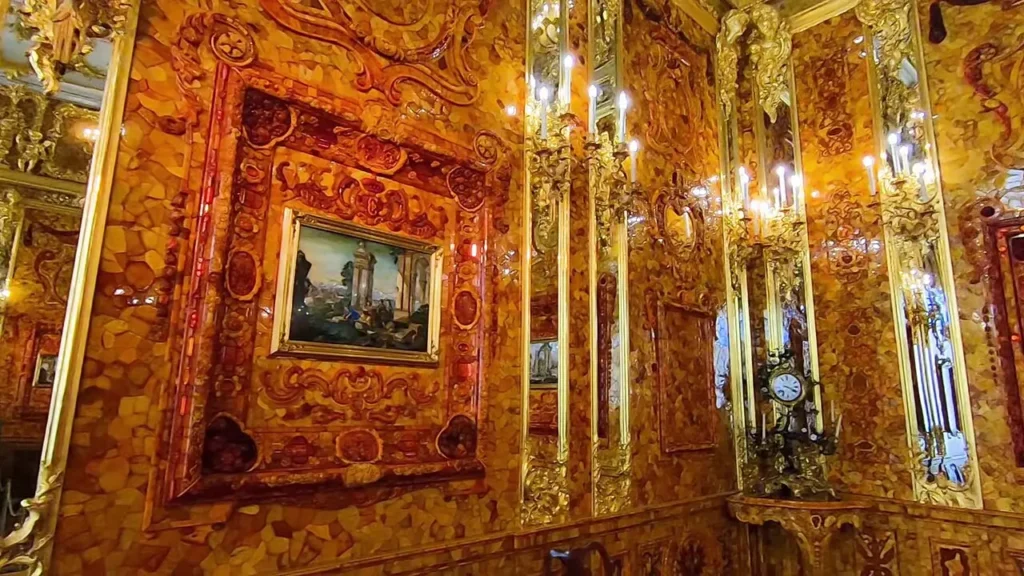
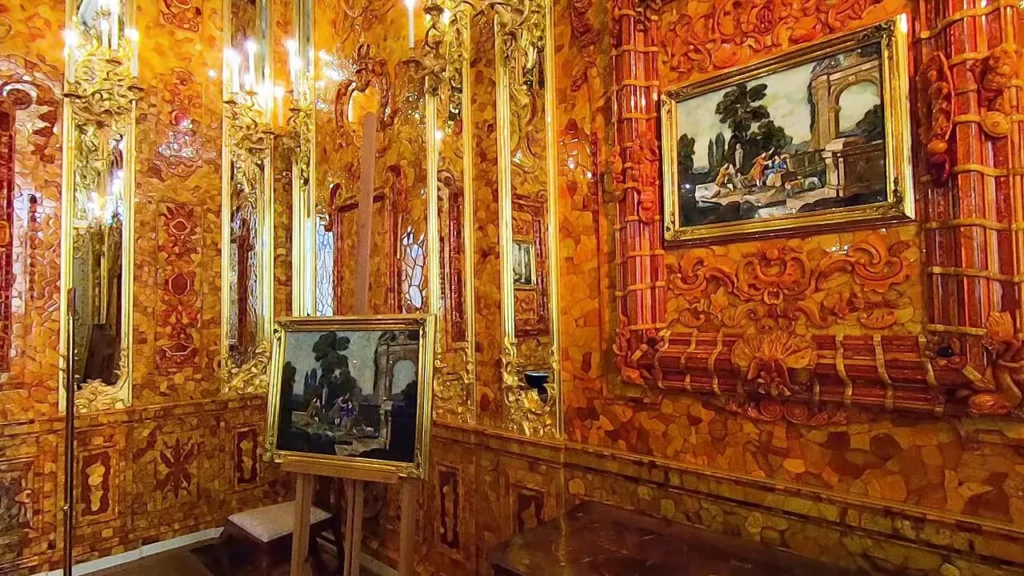
It was a space of about 55 square meters, entirely lined with natural amber panels, gold leaf, precious gems, and mirrors. When candles were lit in the room, the amber emitted a spectacular, warm, “fiery” glow, leading contemporaries to call it “The Eighth Wonder of the World.”

Nazi Loot and Disappearance
In 1941, when Nazi Germany invaded the Soviet Union, curators at the Catherine Palace attempted to hide the amber panels by pasting wallpaper over them. However, German soldiers, who were accompanied by art experts, easily saw through the ruse. They dismantled the room in just 36 hours, packed it into crates, and transported it to Königsberg Castle (present-day Kaliningrad) in Germany.
In 1945, as the Red Army approached Königsberg, the castle was heavily bombed. After this, all traces of the Amber Room vanished forever.
Main Theories: Where is the Treasure?
- The Fire Theory: According to the official Soviet version, a fire broke out during the bombing of Königsberg Castle, and due to its resinous structure, the amber burned away completely.
- Secret Bunkers: Many researchers believe that the Nazis moved the panels before the bombing and hid them in underground mines or bunkers across Germany, Austria, or the Czech Republic.
- The Sinking Theory: There is a belief that the crates were loaded onto the German ship Wilhelm Gustloff, which was sunk in the Baltic Sea by a Soviet submarine.
Mystical Fact: There is a legend about the “Curse of the Amber Room.” Several people associated with its search or its storage in Königsberg (including museum director Alfred Rohde and famous treasure hunter Georg Stein) died under strange and unexplained circumstances.
Today, an exact replica of the room has been restored in the Catherine Palace, but finding the original remains the ultimate dream of art detectives.
The Isabella Stewart Gardner Museum Heist: The Largest Art Theft in History
While the disappearance of the Amber Room is linked to the chaos of war, the event in Boston (USA) was the result of pure criminal brilliance (and the naivety of the museum’s security). This stands as the most expensive private heist in history, during which masterpieces worth over $500 million were lost.
The Fateful Night: March 18, 1990
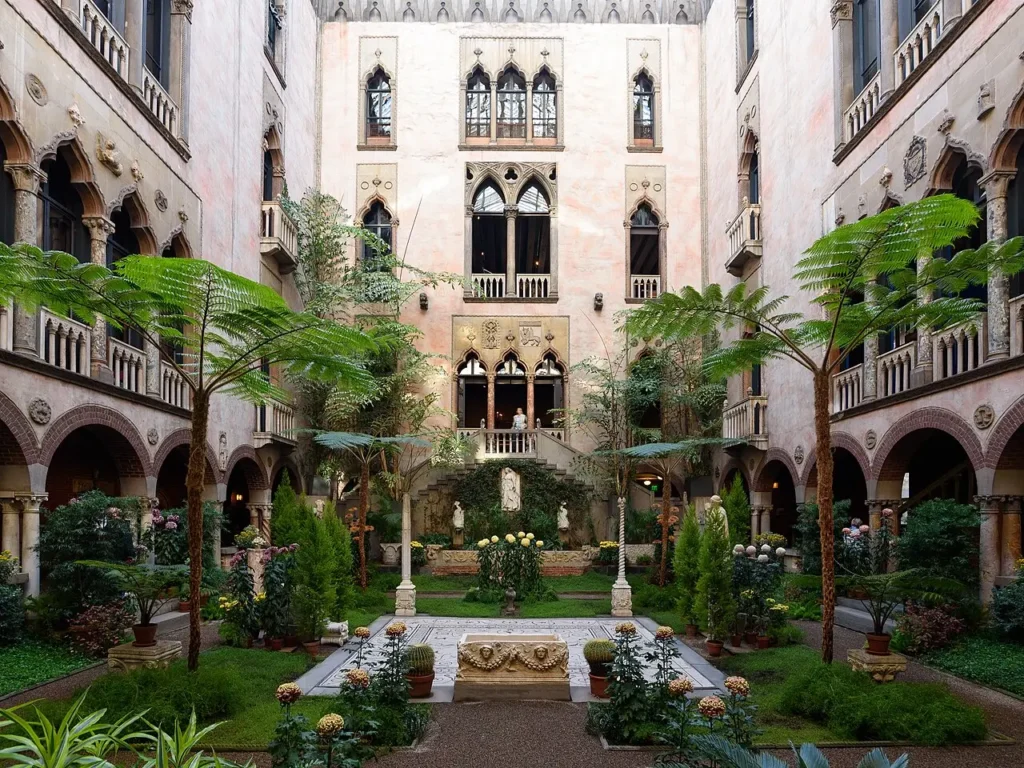
After celebrating St. Patrick’s Day, Boston was having a quiet night. At 1:24 AM, two men knocked on the side door of the Isabella Stewart Gardner Museum. They wore police uniforms and claimed they were responding to a disturbance in the courtyard.
The security guard breached strict museum protocol and let the “police officers” inside. Within seconds, the fake law enforcers handcuffed the guards, duct-taped their mouths, and locked them in the basement. The thieves did not use any weapons.
81 Minutes in the Museum and the Stolen Masterpieces
The perpetrators spent nearly an hour and a half inside the museum. They were in no rush and even took the security camera tapes, though the motion sensor data remained. In total, they stole 13 works of art.
Among them were true pinnacles of art history:
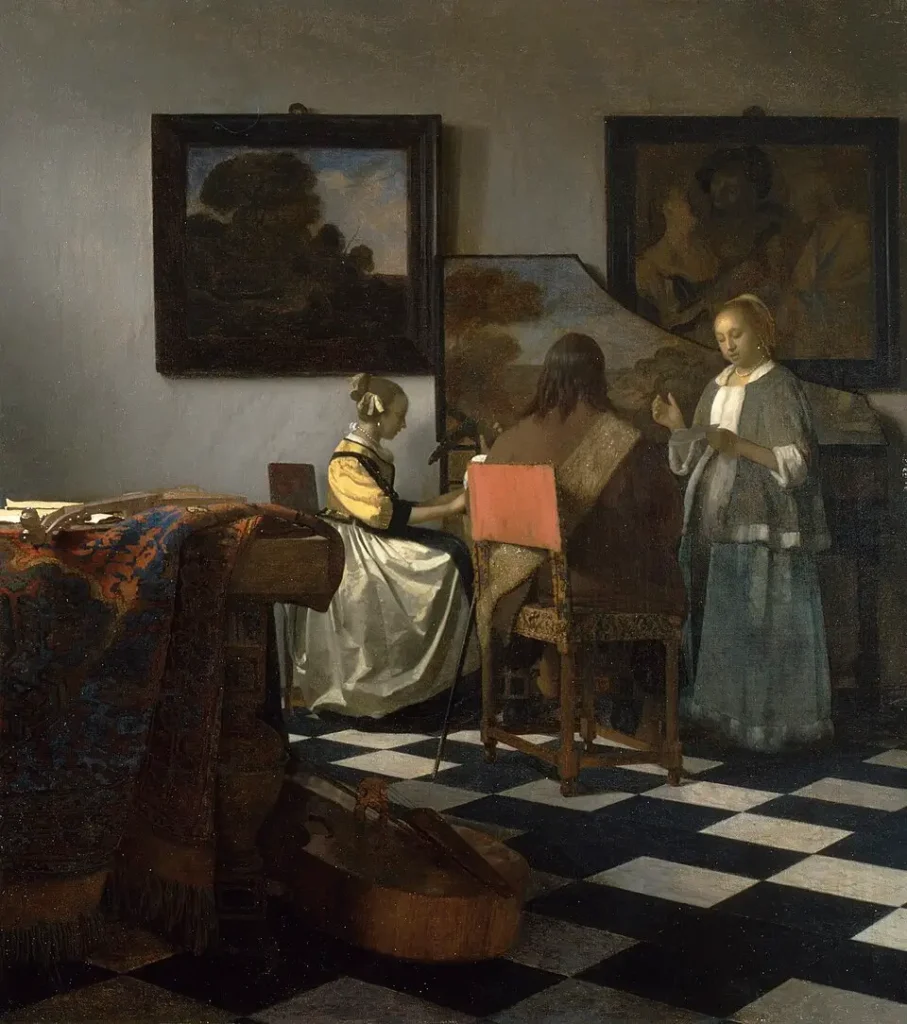
- Johannes Vermeer – The Concert: Only about 34 paintings by Vermeer are known to exist worldwide, making this loss catastrophic.
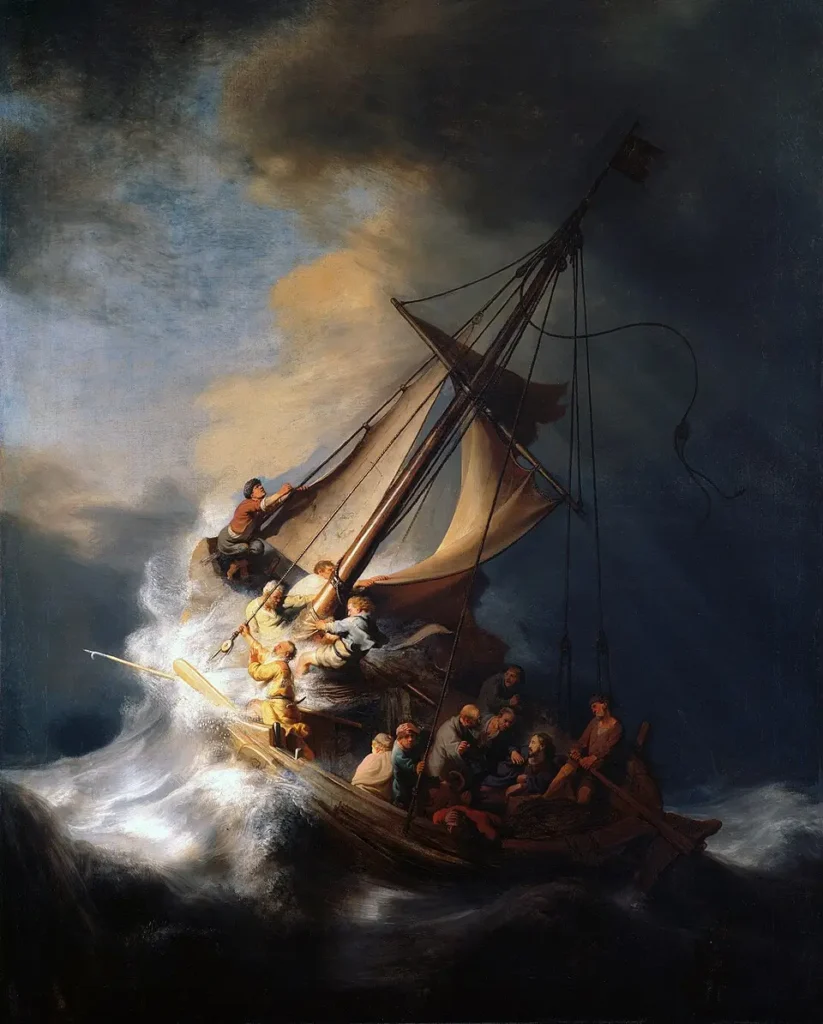
- Rembrandt – The Storm on the Sea of Galilee: The brilliant Dutchman’s only seascape. The thieves brutally cut it out of its frame with a knife.
- Édouard Manet – Chez Tortoni (At the Café Tortoni).
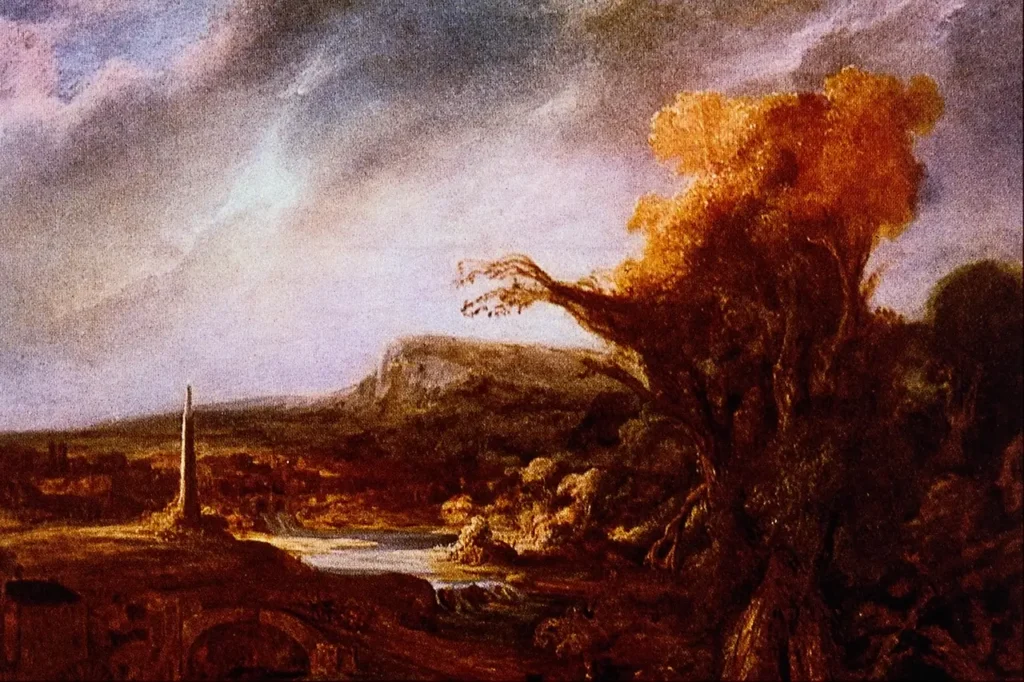
- Works by Degas and Flinck.
| Stolen Painting | Artist | Estimated Value |
| The Concert | Johannes Vermeer | $250,000,000+ |
| The Storm on the Sea of Galilee | Rembrandt | $100,000,000+ |
| Landscape with an Obelisk | Govert Flinck | $5,000,000+ |
The Investigation and Empty Frames
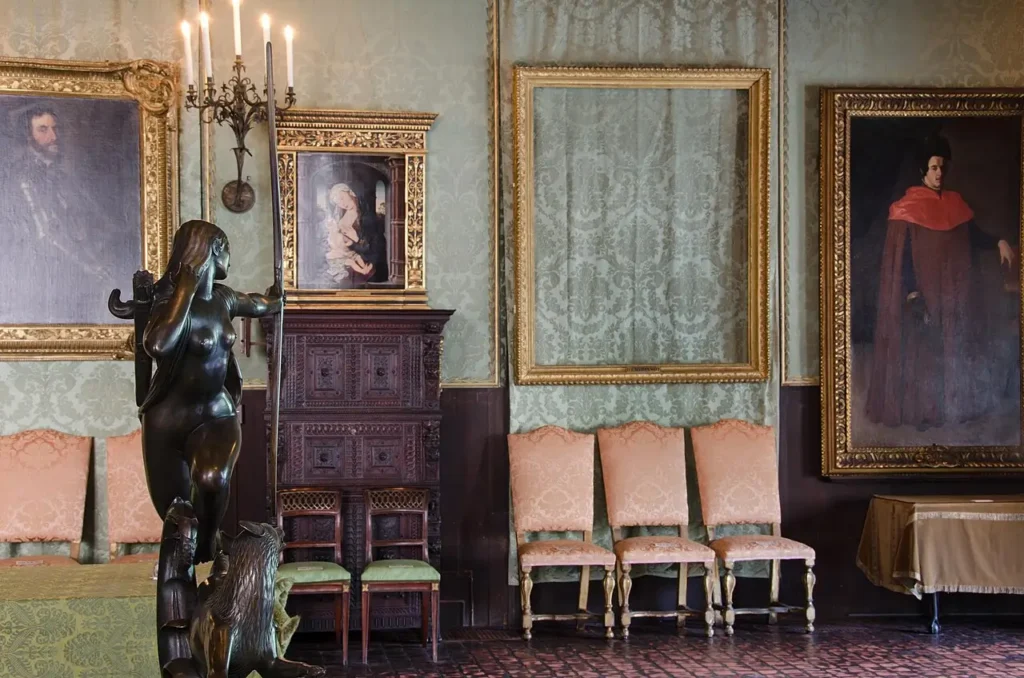
The Federal Bureau of Investigation (FBI) joined the case. Leads regarding the Irish mob, the Italian Cosa Nostra, and local petty thieves were checked. Several suspects were identified (including criminals Bobby Donati and Robert Gentile), but the paintings were never found. Many suspects died or were killed in clan turf wars, taking the secret to their graves.
The museum established a $10 million reward for any information leading to the safe return of the paintings, but to this day, not a single piece of art has resurfaced.
According to the will of the museum’s founder, Isabella Gardner, nothing in the gallery’s arrangement can be changed. Therefore, visitors arriving in Boston today are met with empty frames hanging on the walls exactly where the masterpieces once stood—as a symbol of both hope and a massive cultural tragedy.
Why is it Difficult to Sell Stolen Masterpieces?
A question is often asked: Why do thieves need paintings that they can never bring to an auction? According to art historians and criminologists, masterpieces of this caliber are stolen for several specific purposes:
- Black Market Currency: Mafia clans use paintings as collateral (guarantees) to secure large transactions when purchasing narcotics or weapons.
- Bargaining Chip with Justice: Criminals often save paintings for a “rainy day” so that in the event of a future arrest, they can demand a reduced sentence or immunity from the state in exchange for returning the artwork.
- Eccentric Collectors: The least likely, yet still viable theory suggests that the paintings are locked away in underground bunkers by billionaires who enjoy this beauty solely for their own eyes.
Even though decades have passed, there is no statute of limitations on these cases. International investigative agencies and art detectives continue their work because history shows that lost masterpieces are sometimes found half a century later, quite by accident, in an old attic or hidden behind a secret wall.
The images used in the article are sourced from Wikimedia Commons and are in the public domain.
If you found the article interesting, share it with your friends and leave a comment.