Joseph Stalin — The Man Who Changed the 20th Century (and the World)
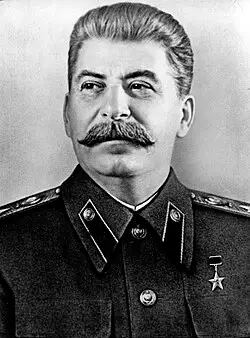
In history, there are figures whose influence is so immense that debates about them never end. One such person was Joseph Stalin — a leader who turned the Soviet Union into a superpower, but at the same time left one of the most controversial legacies in world history.
His name is associated with industrialization and victory in World War II, as well as a harsh political system, repression, and a rule based on fear.
But how did a simple man from Georgia become one of the most influential figures in the world?
Childhood — From Gori to the Center of an Empire
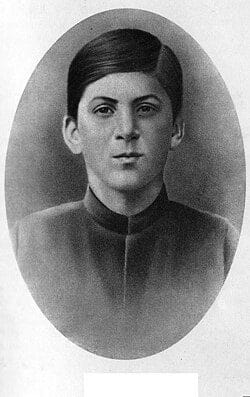
Joseph Stalin (born Ioseb Jughashvili) was born in Gori, Georgia, in 1878.
His childhood was not easy:
- He grew up in a poor family
- He faced violence and hardship at an early age
- He studied in a theological seminary, where his interest in politics and revolutionary ideas first began
During this period, he already started the path that would eventually lead him to the top of an empire.
Revolutionary — The Path to Power
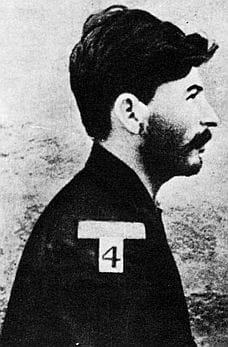
In his youth, Stalin joined the revolutionary movement and became part of the Bolsheviks, who sought to overthrow the Russian Empire.
His activities included:
- Underground organizations
- Propaganda
- Raising funds for the party
During this time, he adopted the pseudonym “Stalin,” meaning “man of steel.”
This name perfectly reflected his political style: strict, unyielding, and ruthless.
Path to Power — After Lenin
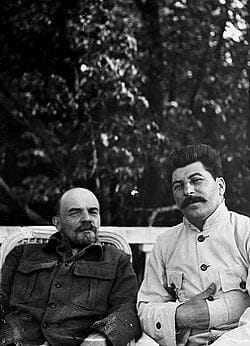
After the Russian Revolution, a Bolshevik government came to power, led by Vladimir Lenin.
After Lenin’s death, a struggle for power began. In this struggle, Stalin gradually gained the upper hand and eventually became the leader of the Soviet Union.
He was not the loudest politician — but he was the most strategic.
Transformation of the Soviet Union — Industrialization and Strength
One of Stalin’s main goals was rapid industrialization of the country.
As a result of his policies:
- Large factories and infrastructure were built
- Agriculture was reorganized through collectivization
- The Soviet Union became an industrial state
This process was fast and radical, dramatically transforming the country.
World War II — The Defining Test
World War II
When World War II began, the Soviet Union became one of the main participants.
Under Stalin’s leadership:
- The country initially faced severe difficulties
- It later managed to organize large-scale resistance
- Ultimately, it played a crucial role in the defeat of Nazi Germany
This was one of the most important and decisive periods of his rule.

Style of Rule — Power and Fear
Stalin’s rule is known for its strict control.
His system included:
- Persecution of political opponents
- Strong state control
- Censorship of information
- Administration based on fear
This period is often associated with both repression and large-scale reforms at the same time.
Personality and Myth — What Kind of Leader Was Stalin?

There are many different interpretations of Stalin:
Some see him as:
- A strong leader
- A builder of the state
- A key strategist in wartime victory
Others see him as:
- A symbol of authoritarian rule
- A figure responsible for repression
- The creator of a system based on fear
The reality is more complex — he was both at the same time.
Death and Legacy
Stalin died in 1953. After his death, the Soviet Union began a gradual shift in political direction.
His legacy remains debated to this day:
- On one side — the creation of a powerful state
- On the other — a heavy human cost
Conclusion — One of History’s Most Complex Figures
Joseph Stalin was a man who reshaped the world map and the balance of power.
He remains in history as:
👉 a strong organizer
👉 a ruthless politician
👉 and one of the most influential leaders of the 20th century
His story reminds us of one simple fact:
Power is always a double-edged sword — it builds and destroys at the same time.
The images used in the article are sourced from Wikimedia Commons and are in the public domain.
If you found the article interesting, share it with your friends and leave a comment.