
10 Most Shocking Facts About the Crusades Rarely Found in History Books
The Crusades are often portrayed in history as a centuries-long struggle between Christians and Muslims for the Holy Land. However, the real history is far more complex, contradictory, and sometimes horrifying. These wars involved not only kings and knights, but also peasants, children, merchants, clerics, and adventurers. They left their homes in search of faith, wealth, glory, or the forgiveness of sins.
The Crusades, fought between 1096 and 1291, would change the history of Europe and the Middle East forever. Yet, many facts surrounding these events remain unknown to most people to this day.
1. The First Crusaders Never Even Reached Jerusalem
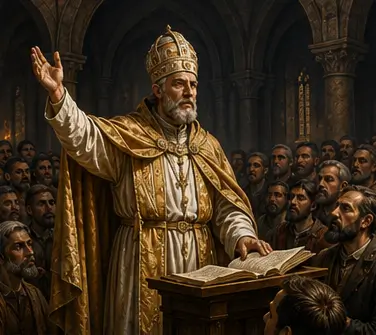
In 1095, at the Council of Clermont, Pope Urban II called upon Christians to liberate the Holy Land. Thousands of poor peasants, artisans, and ordinary citizens responded to this call. This event was later named the “People’s Crusade.” They lacked:
- Military training;
- Sufficient weapons;
- Provisions;
- Organized leadership.
Along the way, they frequently plundered villages, encountering resistance from the local population. When they entered Asia Minor, the Seljuk army almost completely destroyed them. Tens of thousands of people perished without ever setting eyes on Jerusalem.
2. After the Capture of Jerusalem, the City Was Covered in Blood
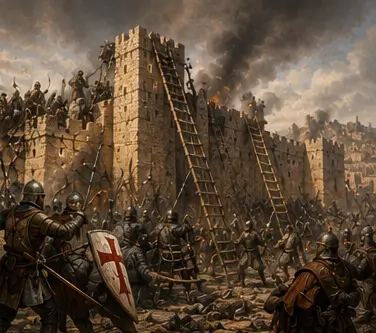
In 1099, the Crusaders captured Jerusalem. Even medieval Christian chronicles describe the terrible massacre that ensued in the city. The victims included:
- Muslims;
- Jews;
- A portion of Eastern Christians.
Some chroniclers wrote that the streets were filled with corpses and blood was everywhere. The frequently quoted phrase that “blood reached the knees of the horses” is likely a literary exaggeration rather than a literal fact, though it perfectly reflects the shock of contemporary authors.
3. The Crusaders Even Resorted to Cannibalism
This is one of the darkest episodes of the Crusades. In 1098, during the siege of the Syrian city of Ma’arra (Ma’arrat al-Numan), the besieged Crusaders almost completely ran out of food. Several Christian and Muslim chroniclers describe how desperate warriors used the bodies of the slain for food.
Historians still debate the scale of this event, but the majority of modern researchers agree that such instances did occur. It was a result of extreme desperation caused by starvation rather than a common practice.
4. Christians Sacked the Largest Christian City
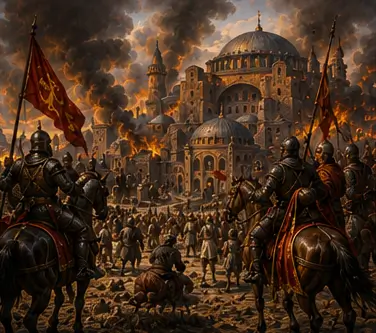
In 1204, the Fourth Crusade did not head toward Jerusalem at all. Influenced by the political and financial interests of Venice, the Crusaders captured the Byzantine capital, Constantinople. In the city, they:
- Plundered churches;
- Carried away thousands of manuscripts;
- Destroyed unique works of art;
- Looted gold, silver, and holy relics.
Many historians consider this one of the greatest tragedies in the history of Christian civilization. It was this event that significantly weakened the Byzantine Empire, which was ultimately conquered by the Ottomans in 1453.
5. The Children’s Crusade – History’s Most Tragic Episode
In 1212, a belief spread across Europe that the purity of children could achieve what armed knights could not. Thousands of adolescents from France and Germany set out for the Holy Land. According to legend, the sea was supposed to part before them. In reality:
- Many died along the way;
- Some fell victim to starvation;
- Others returned home;
- Some, according to sources, were deceived by Mediterranean slave traders and sold into slavery in North Africa.
Historians debate to what extent they were actually children—it is possible that many among them were poor young people and adolescents.
6. Saladin Was an Enemy of the Crusaders, but Was Renowned for His Chivalrous Honor
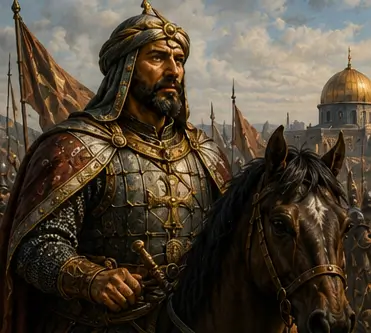
In 1187, Saladin defeated the Crusaders at the Battle of Hattin and reclaimed Jerusalem. Even many European chroniclers acknowledged that Saladin stood out for his exceptional honesty and nobility. He:
- Did not orchestrate a mass slaughter like the one in 1099;
- Allowed a large portion of the population to leave the city after paying a ransom;
- Freed some of the poor at his own expense.
This made Saladin one of the most respected rulers of the Middle Ages, both in the East and the West.
7. There Was Constant Conflict Among the Crusaders themselves
In movies, they are depicted as a unified force, but in reality:
- The French;
- The English;
- The Germans;
- The Italians frequently argued with one another.
Numerous military operations failed precisely due to these disagreements. At times, kings viewed each other as a greater threat than their actual enemy.
8. The Crusades Transformed Europe
The wars brought more than just destruction. Those returning to Europe brought back from the East:
- New spices;
- Sugar;
- Lemons;
- Rice;
- Portions of mathematical and medical knowledge;
- Scientific achievements of the Arabic world.
Trade developed significantly, strengthening Venice, Genoa, and other Italian cities.
9. The Crusades Also Created the Templars
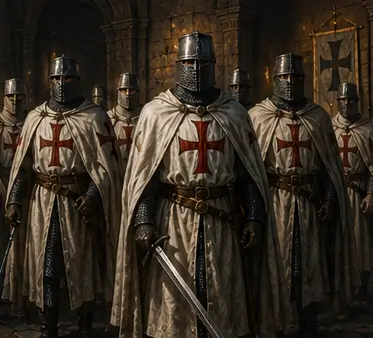
Following the First Crusade, the number of pilgrims heading to Jerusalem increased. To protect them, the Order of the Templars was formed, which later became one of Europe’s most influential military and financial organizations. Many legends exist about them:
- The Holy Grail;
- The Ark of the Covenant;
- Lost treasures;
- Secret tunnels;
- Alleged connections to the Freemasons.
However, most of these theories remain unconfirmed to this day and lack historical evidence.
10. The Crusades Ended Neither in Victory nor Complete Defeat
Following the fall of the city of Acre in 1291, Christians lost their last stronghold in the Holy Land. Nonetheless, the Crusades:
- Transformed Europe’s economy;
- Accelerated international trade;
- Strengthened the political influence of the Papacy for a certain period;
- Weakened the Byzantine Empire;
- Deepened the rift between the Christian and Muslim worlds, leaving scars that lasted for centuries.
Interesting Details Known to Few
- The Longest Siege: The siege of the city of Acre lasted for nearly two years (1189–1191).
- The Most Famous King: King Richard the Lionheart of England became so famous that legends were created about him during his lifetime. Despite this, he was unable to recapture Jerusalem.
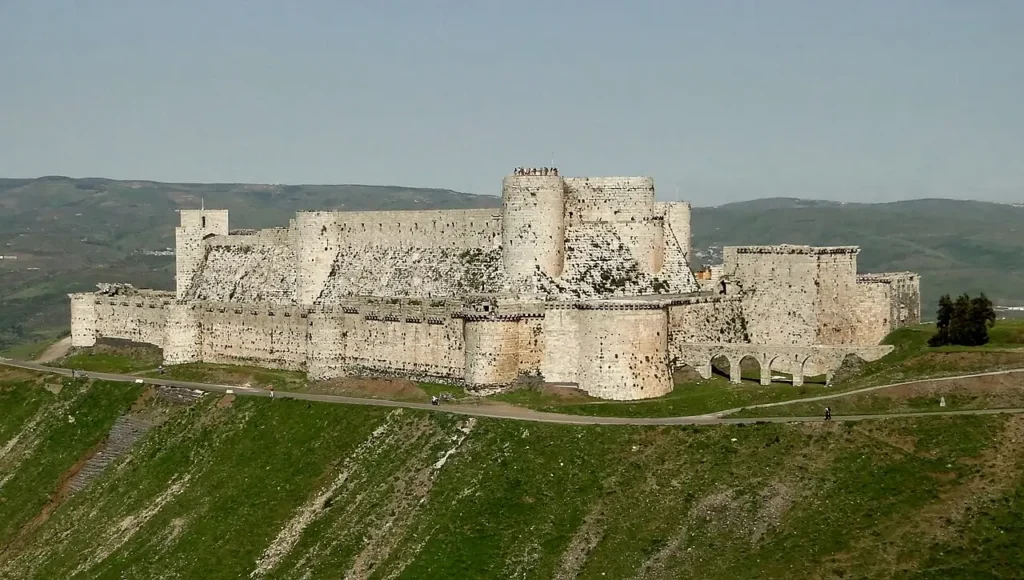
- The Strongest Fortress: Krak des Chevaliers, located in Syria, is considered one of the finest examples of medieval military architecture. Its massive walls and double defense system remained virtually impregnable for centuries.
- The Greatest Irony: During the Crusades, Christians repeatedly fought against other Christians, while Muslim states were also frequently at war with each other. This reminds us that conflicts cannot be explained by religion alone—behind them often lay politics, power, and economic interests.
Conclusion
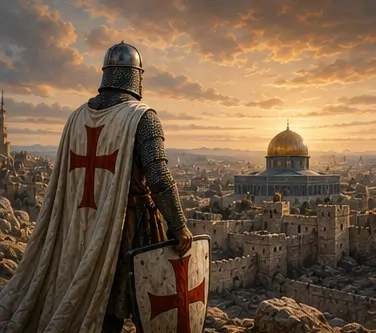
The Crusades were not merely religious wars. They represented a complex blend of faith, politics, economics, and human ambition. This era gave rise to heroes, tragedies, legends, and mysteries that continue to intrigue historians and history enthusiasts alike.
Many popular stories—such as the lost treasure of the Templars, the quest for the Holy Grail, or connections to secret societies—remain in the realm of legends and hypotheses to this day. However, the verified historical facts are enough to understand that the Crusades were one of the most dramatic and turning-point periods of the Middle Ages, the impact of which is still felt in the modern world.
If you found the article interesting, share it with your friends and leave a comment.