The “Dancing Plague” of 1518
An unexplained epidemic that engulfed Strasbourg
In the summer of 1518, one of the strangest and most terrifying events in Europe took place — people suddenly began dancing and could not stop. They moved through the streets for days and weeks, as if an invisible force controlled them. Some lost their minds, some collapsed from exhaustion, and some even died.
History preserved this event under the name “Dancing Plague” or “dance epidemic.” The incident took place in the city of Strasbourg, which at that time was part of the Holy Roman Empire and today belongs to France. Despite the fact that more than five centuries have passed since this event, scientists still cannot agree on what caused this strange epidemic.
How it all began
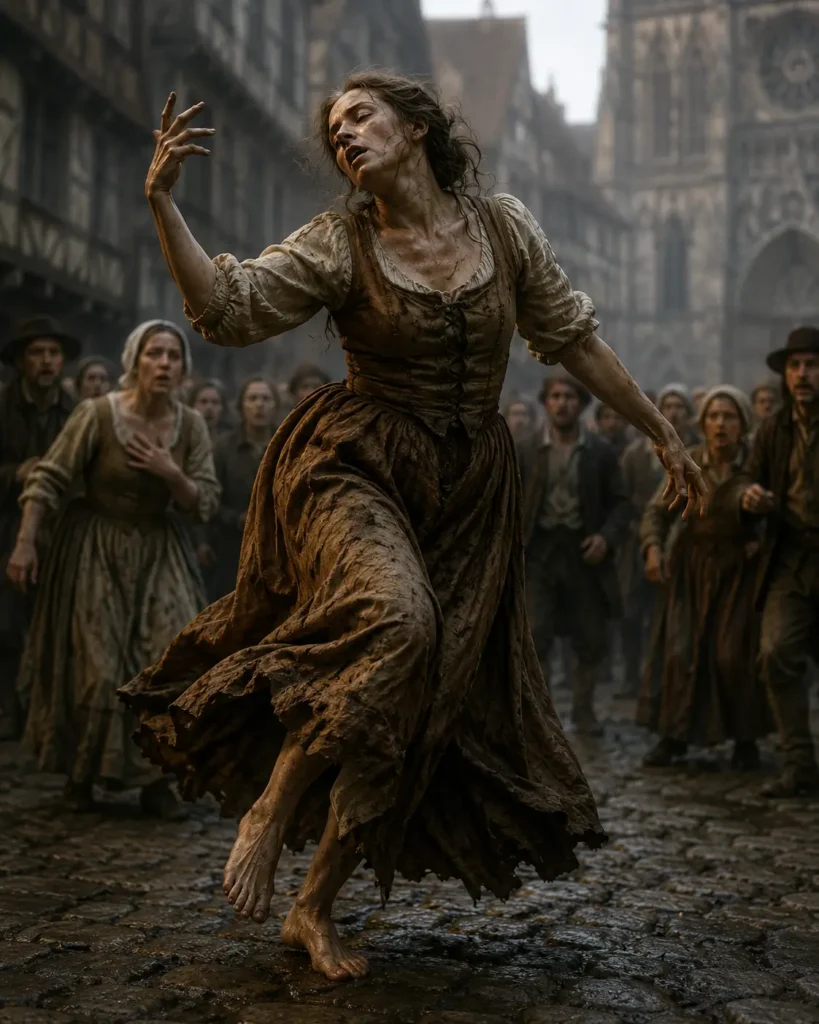
On July 14, 1518, on one of Strasbourg’s narrow streets, a woman named Frau Troffea. left her house and suddenly began to dance. At first this was considered an ordinary strange act, but the problem soon became more dangerous — the woman danced for hours and could not stop.
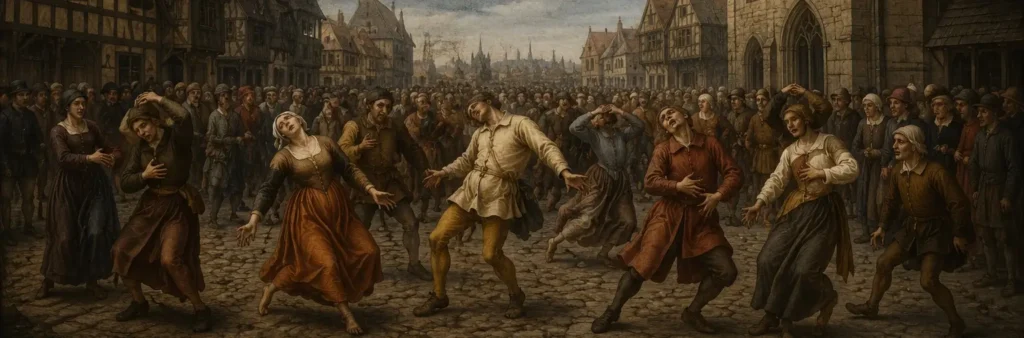
According to witnesses, she was so exhausted that she fell several times, but after a short rest she continued moving again. Within a few days, other people joined her. By the end of the week, dozens of citizens were already dancing, and after one month — hundreds. Some historical sources even mention up to 400 participants.
A dance that ended in death
This was not a cheerful festival or celebration. People were suffering pain. Their legs swelled, bleeding wounds appeared, some died from heart attacks, while others died from exhaustion.
Contemporary chronicles report that during the peak period, 10–15 people died per day. However, historians still debate how accurate these data are. Some researchers believe that the number of victims is exaggerated, though the fact remains — the event turned into real panic.
The strange decision of the city authorities

The rulers of Strasbourg could not understand what was happening. The medicine of that time explained diseases by “overheating of the blood” or the wrath of God. Doctors and the city council decided that the best solution was for people to dance until the end, so that the disease would be “driven out” of the body.
For this purpose, special stages were even built in the city. Musicians and professional dancers were hired, who “helped” the sick to dance.
The result turned out to be catastrophic — the epidemic spread even more.
When the epidemic ended
Several weeks later, the authorities changed their approach. The dancers were taken to the shrine of Saint Vitus. In medieval Europe, people believed that Saint Vitus punished people with strange movements.
Special rituals were performed for the sick — prayers, religious ceremonies, and purification processes. Strangely enough, after this the epidemic gradually began to disappear and by September it was almost over.
What could have been the cause?
The “Dancing Plague” of 1518 remains one of the greatest historical mysteries to this day. There are several main theories.
1. Mass psychosis and fear
Today, the most popular explanation is considered to be mass psychogenic disorder — the same as mass hysteria.
Strasbourg of that period was in a difficult condition:
- Famine
- Diseases
- Poverty
- Religious fear
- Expectation of wars and catastrophes
People lived under constant stress. According to historian John Waller, the psychological condition of the people may have caused collective trance and uncontrolled behavior.
2. Poisoned bread — the theory of ergotism

Another known version is ergotism — poisoning by a fungus that appears on rye bread.
This fungus contains substances that cause hallucinations, convulsions, and strange behavior. Some scientists think that the population of Strasbourg consumed exactly such bread.
However, this theory also has many opponents, because ergotism usually causes other symptoms as well, which are not seen in historical records.
3. Religious trance and superstitions
In the 16th century, Europeans lived in a strongly religious environment. Many believed that saints punished people. There was a belief that Saint Vitus could “curse” a person and make them start dancing.
Possibly, fear and collective belief had a strong influence on people’s behavior.
Similar cases in history
The Strasbourg case was not unique. In medieval Europe, similar “dance manias” were recorded in other cities as well, especially in the territories of Germany and France.
The most famous case occurred in 1374, when hundreds of people danced in cities located along the Rhine River. However, the epidemic of 1518 is the best documented case.
Why does this story still interest us today?
The “Dancing Plague” is not only a strange historical event. It shows us how powerful the following can be:
- Fear,
- Collective psychology,
- Stress,
- Public panic.
This story reminds us that the human mind sometimes causes reactions that even science cannot fully explain.
In the streets of Strasbourg in 1518, people truly danced until death — and to this day no one knows exactly why.
If you found the article interesting, share it with your friends and leave a comment.