
The First Computer Virus That Started as a Joke
How the history of cyber threats began with an innocent experiment
Introduction
Today, the term “computer virus” is automatically associated with cyberattacks, data loss, and global threats. However, it is interesting that the very first computer virus was not created to cause harm. On the contrary — it was written as a joke and for experimental purposes.
Creeper — A Harmless Virus
In 1971, when the internet did not yet exist in the form we know today, American programmer Bob Thomas created a program called Creeper. It ran on ARPANET — the network that later became the predecessor of the internet.
Creeper’s goal was to demonstrate that a program could:
- Run on one computer
- Move to another computer via a network
- Copy itself
At the time, this was a revolutionary idea.
Creeper did not delete files, damage systems, or steal information. Its only “behavior” was displaying a message on the screen:
“I’m the Creeper, catch me if you can!”
This message became legendary in the world of technology. The virus would appear on one computer, disappear, and then “jump” to another system.
The First Antivirus Appeared Immediately

Interestingly, the appearance of Creeper led to the creation of the first antivirus. Programmer Ray Tomlinson, who is also considered one of the creators of email, wrote a program called Reaper.
Reaper’s only purpose was:
- To find Creeper
- To remove it from the network
Thus, the history of cybersecurity began almost at the same moment the first virus was created.
Why Was Creeper Not Considered a Threat?
At that time:
- Computers were rarely connected to each other
- Data had little commercial value
- Programmers worked in open, academic environments
Creeper was more a product of technological curiosity than a real threat.
From Joke to Global Problem

Despite its harmless beginnings, Creeper demonstrated that:
- Programs can self-replicate
- Networks can be vulnerable
- Uncontrolled experiments may become threats in the future
These ideas later paved the way for malicious viruses, worms, and trojans that significantly changed the digital world.
Historical Significance
Today, Creeper is recognized as:
- The first computer virus
- The first network-based self-replicating experiment
- The beginning of the cybersecurity era
It reminds us that technological threats often start from harmless ideas.
Conclusion
Computer viruses represent one of the most controversial yet important phenomena in the technological world. Although today they are mostly associated with damage, financial loss, and cybersecurity risks, their existence is directly linked to the evolution of computer systems.
The emergence of early viruses showed that software could be not only a passive tool but also an active, self-replicating system capable of interacting with its environment. This discovery laid the foundation for concepts such as automation, network interaction, and the theory of artificial agents.
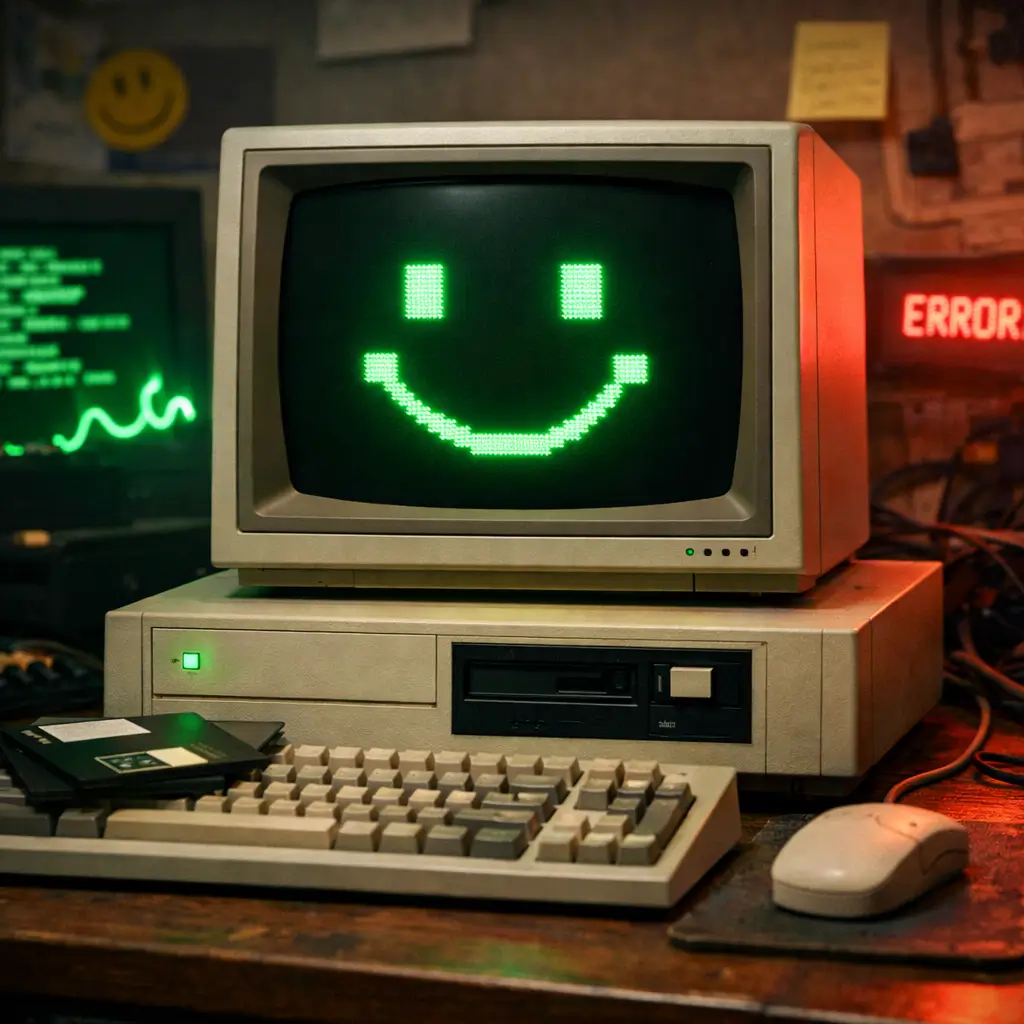
Viruses revealed that networks — once seen as symbols of progress — are, in fact, vulnerable systems. This led to the development of cybersecurity as a separate discipline, without which modern banking, state infrastructure, and the global internet could not function.
It is also important that viruses raised ethical questions in programming. Where is the line between experimentation and responsibility? Programs like Creeper clearly show that even well-intentioned code can lead to unexpected consequences.
At the same time, computer viruses became catalysts for technological innovation. Antivirus software, firewalls, network monitoring systems, and security protocols largely developed in response to virus threats. It can be said that digital security would not have reached its current level without them.
Computer viruses are not just a problem — they are invisible companions of technological progress, forcing us to constantly improve systems, strengthen security, and approach innovation responsibly.
The first computer virus was not evil. It was not created to cause harm, but for knowledge and experimentation. However, the story of Creeper teaches an important lesson:
Even the most harmless idea in technology can turn into a serious challenge in the future.
The roots of modern cybersecurity begin with a simple message:
“Catch me if you can.”
If you found the article interesting, share it with your friends and leave a comment.