The Man Who Survived Two Atomic Bombs
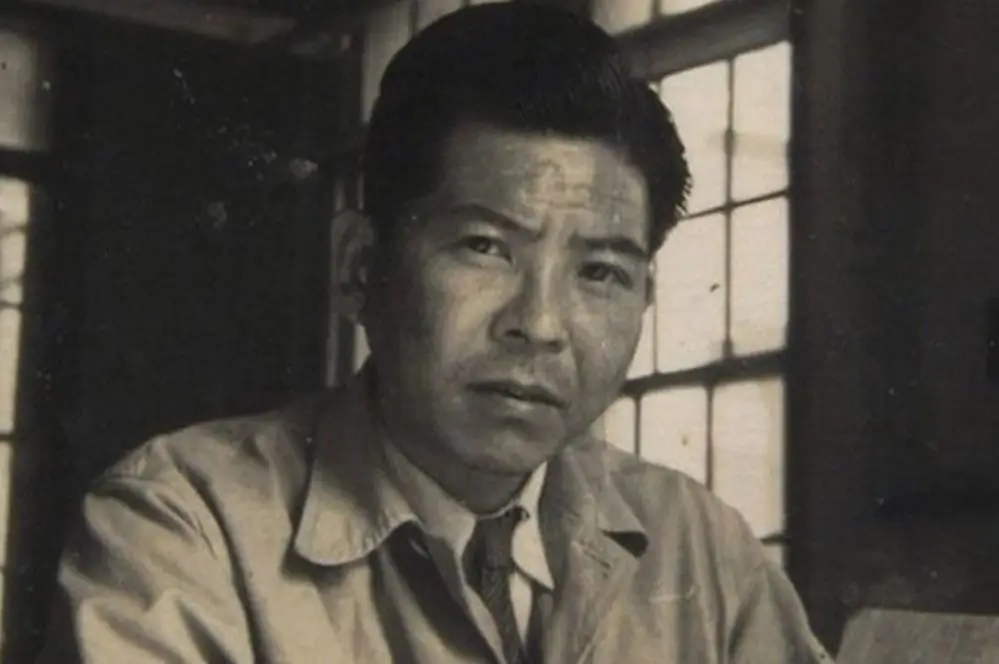
In August 1945, one of the most terrifying events in human history took place. At the end of World War II, the United States dropped an atomic bomb on the Japanese city of Hiroshima. Three days later, a second atomic bomb was detonated over Nagasaki. Tens of thousands of people were killed in the two cities, while survivors were forced to live for decades with the consequences of radiation exposure, burns, and other injuries. Yet among the stories of this tragedy is one particularly extraordinary case — that of a Japanese engineer who was in both cities when the atomic bombs were dropped and survived both attacks. His name was Tsutomu Yamaguchi.
Hiroshima — The First Explosion
In the summer of 1945, 29-year-old Tsutomu Yamaguchi worked for Mitsubishi Heavy Industries and was in Hiroshima on a business trip. On the morning of August 6, he was beginning what seemed like an ordinary working day, with no idea that his life would change forever within minutes. At approximately 8:15 a.m., an American B-29 bomber dropped the atomic bomb known as “Little Boy” on Hiroshima. Yamaguchi was not directly beneath the explosion, but he was close enough to experience its devastating force firsthand. He suddenly saw an extraordinarily bright flash in the sky, followed by a massive blast wave that threw him to the ground.
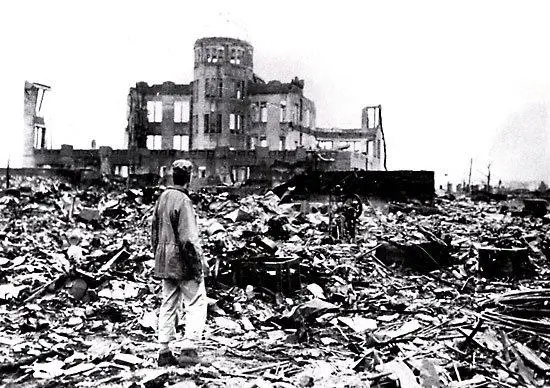
The explosion caused severe burns to Yamaguchi, particularly to the upper part of his body, while much of the city was destroyed within seconds. Buildings collapsed, fires broke out throughout the streets, and thousands of people were killed or injured. Despite his own wounds, Yamaguchi tried to find his colleagues among the survivors. He later recalled the horrifying scenes in Hiroshima — a devastated city, fires everywhere, and people desperately searching for help. He spent that night in Hiroshima, and the following day, despite his serious injuries, he decided to return to Nagasaki.
Nagasaki — An Unbelievable Repeat
Yamaguchi returned to Nagasaki on August 8. He was already suffering from severe burns, but the next day he went to work. He told his colleagues what had happened in Hiroshima and how a single bomb had virtually destroyed the city. His story sounded so unbelievable that it was difficult for some people to accept. But for Yamaguchi, this was not a theory or a rumor — he had been there and had witnessed the catastrophe himself.
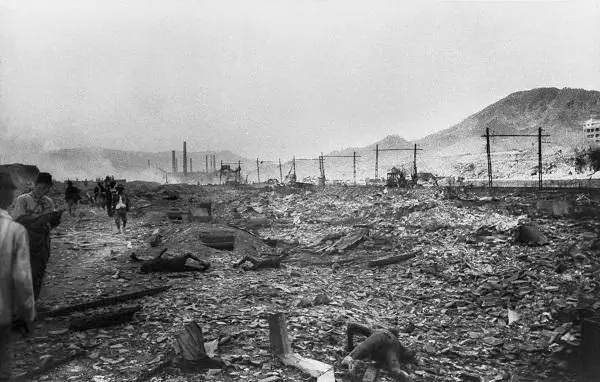
On August 9, 1945, at approximately 11 a.m., an American B-29 appeared over Nagasaki. This time, the target was the city of Nagasaki, and the aircraft was carrying the atomic bomb known as “Fat Man.” Yamaguchi once again found himself in the area affected by the explosion. Only three days earlier, he had experienced the destructive power of an atomic bomb in Hiroshima, and now the same nightmare was beginning for a second time. Another blinding flash lit up the sky, followed by a devastating blast wave. Yamaguchi survived again, although his body, already suffering from injuries sustained in Hiroshima, was subjected to even more trauma.
How Did He Survive?
When discussing Yamaguchi’s story, it is important to correct one common misconception. He was not at the immediate hypocenter of either atomic explosion. In both cities, he was located some distance from the point of detonation, which was one of the main factors that made his survival possible. The destructive effects of an atomic explosion decrease significantly with distance, while buildings and other physical barriers can provide some protection from the blast wave and thermal radiation. Nevertheless, the fact that one person found himself in the areas affected by two separate atomic bombings within only three days and survived both remains an extraordinarily rare occurrence.
After the Nagasaki bombing, Yamaguchi eventually ended up in a hospital. He had suffered severe burns and other injuries, but he was alive. At the time, he could not have known that his story would eventually become one of the most famous examples of the experiences endured by survivors of the atomic bombings. Within days, Japan announced its surrender and World War II came to an end, but for Yamaguchi, the war continued for many years in the form of physical consequences and memories.
Life After the Atomic Bombs
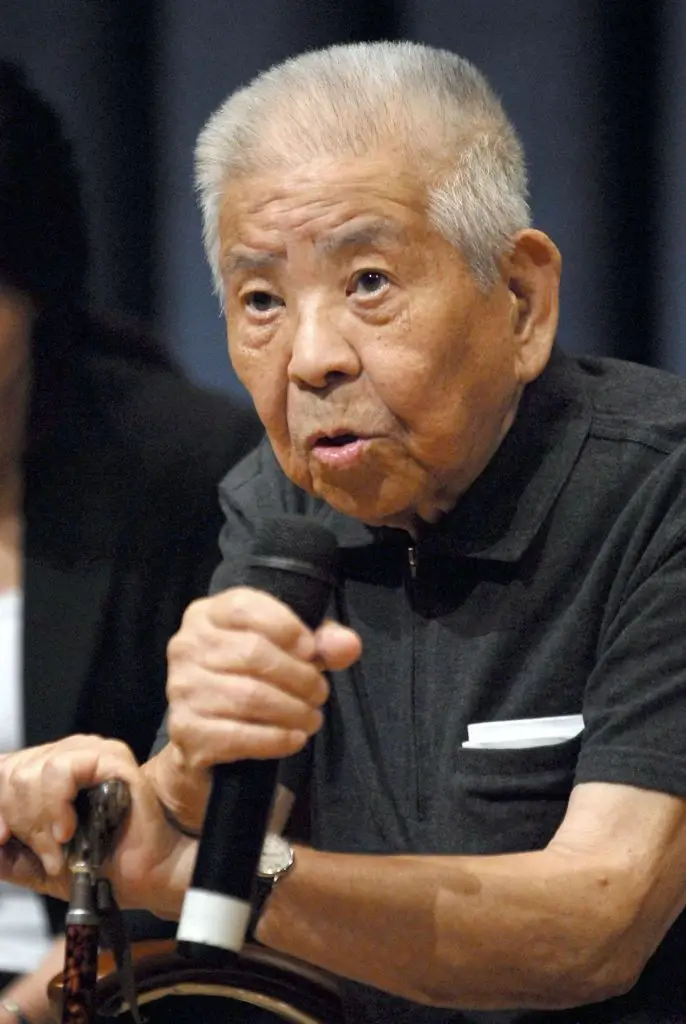
After the war, Yamaguchi returned to Mitsubishi and tried to resume an ordinary life. He started a family and raised children, although the consequences of his injuries and health problems remained with him for years. Interestingly, Yamaguchi did not speak extensively about his experiences for many decades. In postwar Japan, survivors of the atomic bombings often faced serious social and health-related difficulties, and many found it painful to revisit and describe what they had experienced.
During the final years of his life, Yamaguchi began speaking more openly about what he had witnessed in Hiroshima and Nagasaki. He wrote memoirs and took part in documentaries in order to pass his experiences on to future generations. His story was no longer simply the extraordinary account of one man’s survival — it became a warning about the consequences of nuclear weapons for people and entire cities.
Was He the Only Person to Survive Both Bombings?
Yamaguchi is often described as “the only person to survive two atomic bombings,” but this is not entirely accurate. There were other people who survived both the Hiroshima and Nagasaki bombings. Yamaguchi was one of the best-known among them, and the Japanese government officially recognized him as a “nijū hibakusha” — a person who was affected by both atomic bombings.
Therefore, a more accurate description of his story is this: Tsutomu Yamaguchi was one of the people who experienced and survived the atomic bombings of Hiroshima and Nagasaki. His story became the most famous example of this extraordinarily rare experience.
His Final Years and His Message
During the final years of his life, Yamaguchi became increasingly outspoken against nuclear weapons. A man who had personally experienced the consequences of two atomic explosions had a unique moral authority when speaking about the issue. He tried to show the world that nuclear weapons are not merely instruments of military strategy — behind their use are real human lives, families, and entire cities.
Tsutomu Yamaguchi died in Nagasaki on January 4, 2010, at the age of 93. He had lived for more than 64 years after the two days that changed his life forever. In August 1945, he found himself in two cities targeted by what were among the most destructive weapons in human history, yet he survived both.
Two Explosions and One Life
Tsutomu Yamaguchi’s story is so extraordinary that at first glance it sounds almost impossible to believe: one man, two cities, two atomic bombs, and only three days between them. Yet the most important part of his story is not simply that he survived. Yamaguchi spent the final years of his life speaking about the consequences of nuclear weapons and why the tragedies of Hiroshima and Nagasaki must never be repeated.
His life reminds us that behind every historical event are individual human beings. Behind the statistics are people who had families, plans, dreams, and ordinary lives — until a single explosion changed everything. Tsutomu Yamaguchi was one of the few people who survived two of the darkest days in human history and spent the rest of his life bearing witness to what he had experienced.
If you found the article interesting, share it with your friends and leave a comment.