Pablo Picasso — The Man Who Changed the Way We See Art
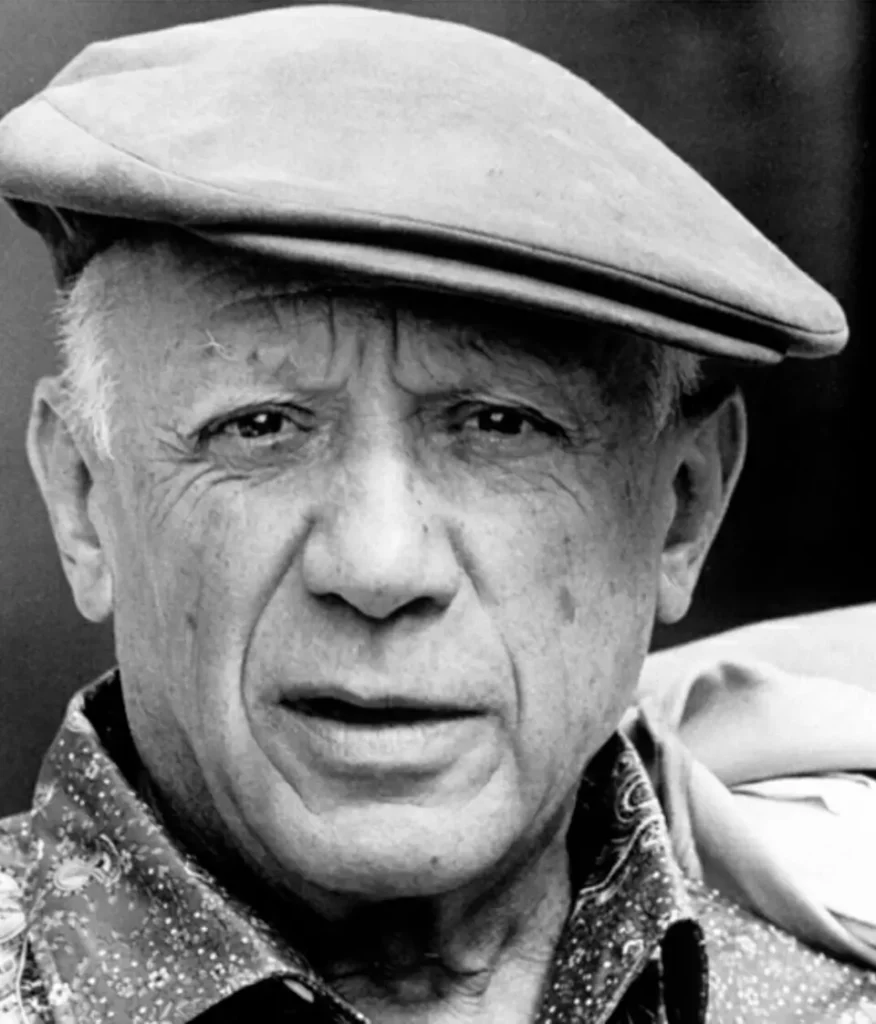
Pablo Picasso was more than just a famous painter. In the history of 20th-century art, his name stands alongside those of the people who gave the world not only new paintings, but an entirely different way of seeing things. Picasso gradually abandoned his devotion to realistic forms and developed methods of depicting people, objects, space, and movement that challenged artistic rules that had been established over centuries. His life unfolded against the backdrop of almost an entire century of history — political changes in Spain and Europe, two world wars, the Spanish Civil War, the birth of avant-garde art, and the rapid development of the art market. Picasso’s work passed through many stages: from his Blue and Rose Periods to Cubism, influences of Surrealism, neoclassical works, sculpture, ceramics, and politically charged art. His career became one of the most remarkable stories in modern art.
The Child Who Began Drawing at an Early Age

Pablo Ruiz Picasso was born on October 25, 1881, in Málaga, Spain. His father, José Ruiz Blasco, was an artist and art teacher, so Pablo entered the world of art practically from childhood. The family later moved to Barcelona, where the young Picasso began studying at an art academy. His early works were highly traditional, and he possessed exceptional technical skill. This creates one of the most fascinating contradictions in Picasso’s story: the man who was capable of producing excellent academic paintings according to traditional rules would later become one of the artists who challenged those very rules. By the late 1890s, he had become part of Barcelona’s avant-garde circles, and in 1900 he first traveled to Paris. A few years later, Paris became the central city of his life.
Paris and a Dark Period of His Life

Picasso’s youth was not simply a story of success. In 1901, his close friend Carlos Casagemas died by suicide. The tragedy had a profound effect on the young artist. At the same time, Picasso was struggling financially and living a difficult life in Paris. His paintings gradually became dominated by cold blue tones. This marked the beginning of what is now known as his “Blue Period.” Picasso’s paintings featured poor and homeless people, lonely figures, blind men, mothers, and children. Their bodies often appear thin and exhausted, while their faces convey sadness. The Picasso Museum in Paris notes that Casagemas’s death and Picasso’s own experience of poverty had a significant influence on the melancholy world of this period.
The Blue Period is particularly interesting because Picasso did not use color simply as an aesthetic choice. Blue became a means of expressing mood. In a self-portrait from this period, the young Picasso presents himself as a much older, tired, and thoughtful man. It is almost as though the artist was attempting to portray not only the suffering of other people but also his own inner state. Yet this period did not last forever. A few years later, his paintings became filled with warmer colors, and his artistic world began to change.
The Rose Period — From Sadness to a New World
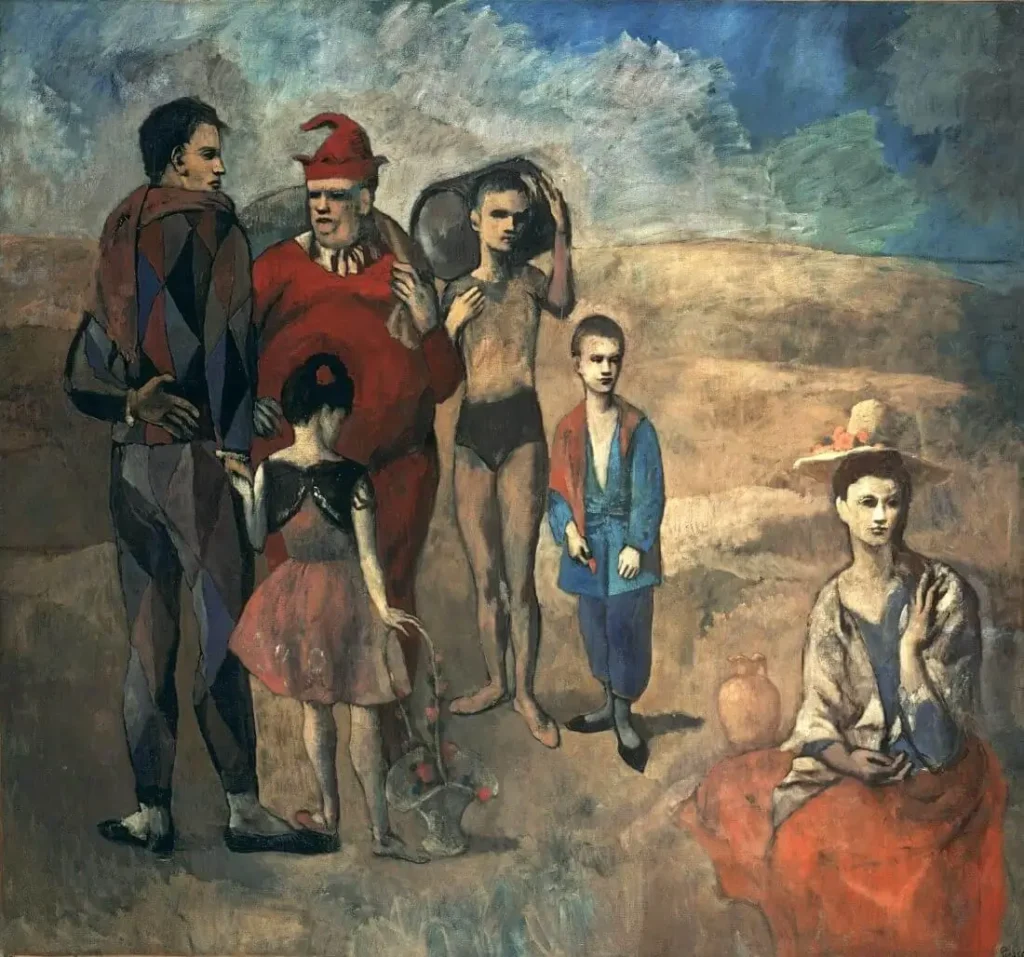
Around 1904–1905, new colors appeared in Picasso’s work. Instead of blue, pink, orange, and other warm tones became dominant. His paintings increasingly featured circus performers, acrobats, and harlequins. This became known as the “Rose Period.” It would be too simple to describe this change merely as a shift in color. Picasso’s art was becoming increasingly complex, and he was attempting to reveal the inner condition of his subjects rather than simply their outward appearance. During this period, he met collectors and important figures in the art world, including Leo and Gertrude Stein, whose circle had an important influence on the young artist’s career.
For Picasso, Paris was more than a place to live. It was an enormous laboratory where art from different periods, countries, and cultures came together. He visited museums, studied other artists, and constantly searched for new forms. This search eventually led him to one of the most radical paintings in modern art — a work that would help change the direction of 20th-century art.
Les Demoiselles d’Avignon — The Painting That Confused Everyone
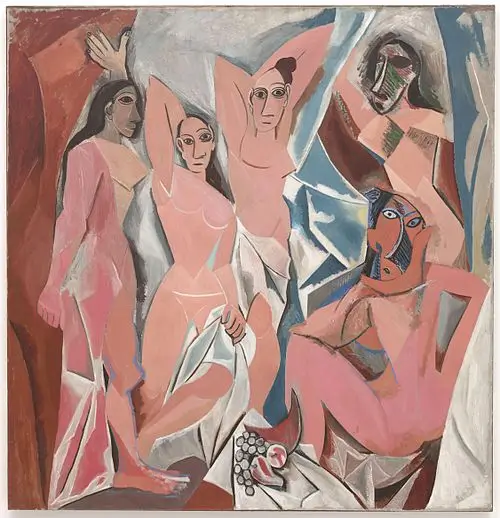
In 1907, Picasso created a work that is now considered one of the most important turning points in modern art — Les Demoiselles d’Avignon, or “The Young Ladies of Avignon.” The painting depicts five women, but their bodies and faces completely reject traditional ideas of beauty. The figures are composed of sharp angles and overlapping planes. Even the perspective seems to have broken apart: different parts of the body appear to be viewed from different angles at the same time.
Picasso worked on this painting for months. He produced numerous preparatory sketches and drawings in which he repeatedly changed the composition. The original concept was significantly different from the final version. Interestingly, the figure on the left side was originally intended to be a man, but Picasso ultimately transformed this figure into a woman as well. The final work was so radical that when it was first shown, many artists and critics were shocked. Later, it came to be regarded as one of the crucial turning points in modern art.
The history of the painting becomes even more interesting when we consider its influences. Picasso was interested in European art, ancient Iberian sculptures, African masks, and Oceanic art. Today, these influences are discussed more carefully and critically, particularly because some of these objects reached Europe through colonial systems. Picasso reworked forms from different sources to create his own artistic language. For this reason, Les Demoiselles d’Avignon is not simply a painting — it is also a complex example of cultural exchange, artistic experimentation, and the breakdown of traditional European artistic rules.
How Cubism Was Born

After Les Demoiselles d’Avignon, Picasso went even further. He was joined by the French artist Georges Braque, and their collaboration became one of the most important events in modern art. Both artists attempted to create images in which an object would not be shown from only one viewpoint. They began breaking forms apart, using geometric planes, and combining different perspectives within a single work. This was the development of Cubism, which became one of the most influential artistic movements of the 20th century.
The idea behind Cubism may appear simple at first, but it was revolutionary. Traditional painting generally attempted to show an object as it would appear from one specific viewpoint. Cubism sought to bring different perspectives together. A face, for example, could appear both from the side and from the front at the same time. A table could be presented from several different angles. Instead of reproducing the “correct” appearance of an object, the artist attempted to reveal its structure. This was no longer simply a photographic representation of reality — it was a reconstruction of reality.
Picasso and Constant Change
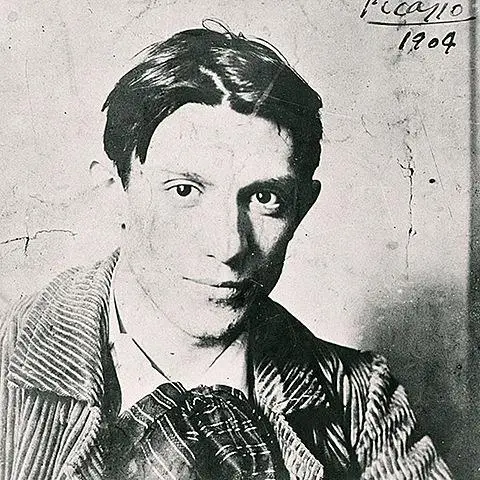
One of Picasso’s most important qualities was that he was never satisfied with simply repeating his own style. Once he had achieved success in one direction, he often began experimenting again. This is why Picasso’s work cannot be placed neatly into a single artistic style. After Cubism, his art changed again. He became involved in theater and ballet projects, later explored neoclassical influences, became associated with Surrealism, and experimented with sculpture, ceramics, prints, and drawing. Different Picassos seem to exist side by side throughout his career.
This is one of the most fascinating aspects of his work. If we look only at a few of his most famous paintings, we might think Picasso always painted geometrically fragmented people. In reality, his work was much broader. His career lasted for roughly seven decades, during which he worked not only in painting but also in sculpture, ceramics, engraving, and drawing. The Metropolitan Museum’s collection demonstrates the extraordinary diversity of his work through paintings, sculptures, ceramics, and graphic works from different periods.
Picasso and the Women in His Life
Picasso’s personal life is one of the most complicated parts of his biography. Several important women were part of his life, and many of them also became subjects of his art. Picasso frequently painted women with whom he had close relationships, but their appearances changed dramatically depending on the period. The same person can look completely different in different Picasso works. This was partly because Picasso was often more interested in expressing his inner perception of a person than simply reproducing their physical appearance.
These relationships were not simple romantic stories. Picasso’s private life has been the subject of considerable debate and criticism, particularly because of his treatment of some of his partners. For this reason, it is impossible to discuss Picasso’s art without acknowledging his personal life, although it would also be too simplistic to explain every change in his art solely through his relationships. His portraits of women often reveal how the artist’s own ideas about people, the body, love, and himself were changing.
Guernica — When Art Screams Against War
In the second half of the 1930s, civil war was raging in Spain. The bombing of the Spanish town of Guernica in 1937 had a profound impact on Picasso. Against the backdrop of these events, he created one of his most famous works — Guernica. According to the Picasso Museum’s biographical material, the Spanish Civil War had a powerful influence on his work, culminating in Guernica in 1937.

Guernica is not an ordinary war scene. It does not depict one specific battle or military hero. Instead, we see shattered bodies, frightened faces, a mother holding her child, animals, and a chaotic space. The black, white, and gray palette gives the work an atmosphere resembling a newspaper photograph or a wartime document. Yet Picasso did not simply create a direct illustration of one particular event — he transformed the suffering caused by war into a universal symbol.
That is precisely where the power of Guernica lies. A viewer does not need to know the entire history of the Spanish Civil War to understand it. Someone standing before the painting can see fear, death, and human tragedy without knowing the political details or historical dates. This is why Guernica gradually became one of the most recognizable symbols of opposition to war.
Picasso and Politics
Picasso’s political position cannot be fully understood without considering the final decades of his life. In 1944, he joined the French Communist Party. His political identity must be understood within the context of a Europe struggling with the consequences of war and fascism. At the same time, his political views were not always simple or easily defined, and his art was much broader than the ideology of any single political party.
For Picasso, art increasingly became not only a means of personal expression but also a way of expressing a position on society. His works connected with themes of peace and his Guernica are among the best-known examples. Yet his art never became merely political propaganda — experimentation, form, and personal vision always remained central to it.
How Picasso Became a Living Legend

By the 1930s, Picasso was already an internationally recognized artist. His works appeared in exhibitions, books were written about him, and collectors sought out his paintings. His reputation became so great that Picasso himself became a cultural symbol. What is particularly interesting is that even after achieving enormous success, he continued experimenting. As he grew older, he maintained an extraordinary level of activity. He painted, created prints, made sculptures, and produced ceramics. His work continued to evolve.
In 1961, Picasso married Jacqueline Roque and moved to Mougins, France. He remained active during the final years of his life. Age did not appear to be a reason for him to stop creating. On April 8, 1973, Picasso died in Mougins, France. He left behind an enormous artistic legacy that extended far beyond painting.
Why Is Picasso Still Important?
Picasso’s importance lies not simply in the fact that he created many famous paintings. His greatest achievement was showing audiences that art does not have to reproduce reality exactly as the eye sees it. A person can be represented with a fragmented face; a single object can be shown from several viewpoints at once; colors do not have to correspond to reality; and a painting does not need to depict a battlefield directly to become one of the most powerful works about war.
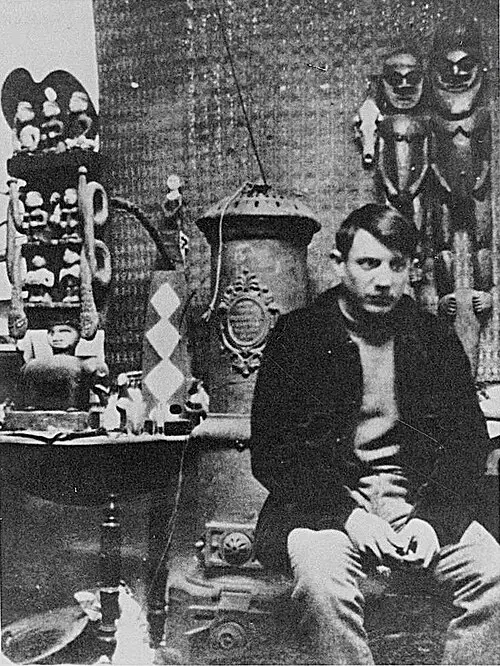
Throughout his life, Picasso repeatedly changed his artistic language. For this reason, studying his career is, in many ways, also a study of 20th-century art. From the sorrowful figures of the Blue Period to the radical forms of Les Demoiselles d’Avignon, from the birth of Cubism to Guernica and the experimental works of his final years, his career reveals a man who was never satisfied with his own past.
Perhaps the most fascinating part of Picasso’s story is precisely this: he did not try to become the artist people expected him to be. Whenever he mastered one style, he searched for another; whenever he learned an artistic rule, he looked for a way to break it. That is why Picasso’s story is not simply the story of a genius. It is the story of a man who asked art a fundamental question: Does the world really have to look in a painting exactly as our eyes see it?
His entire career seems to offer one great answer:
No.
Picasso proved that sometimes, in order to see the world more clearly, you have to break it apart.
The images used in the article are sourced from Wikimedia Commons and are in the public domain.
If you found the article interesting, share it with your friends and leave a comment.