The First Council of Nicaea — What Was Actually Decided in 325?
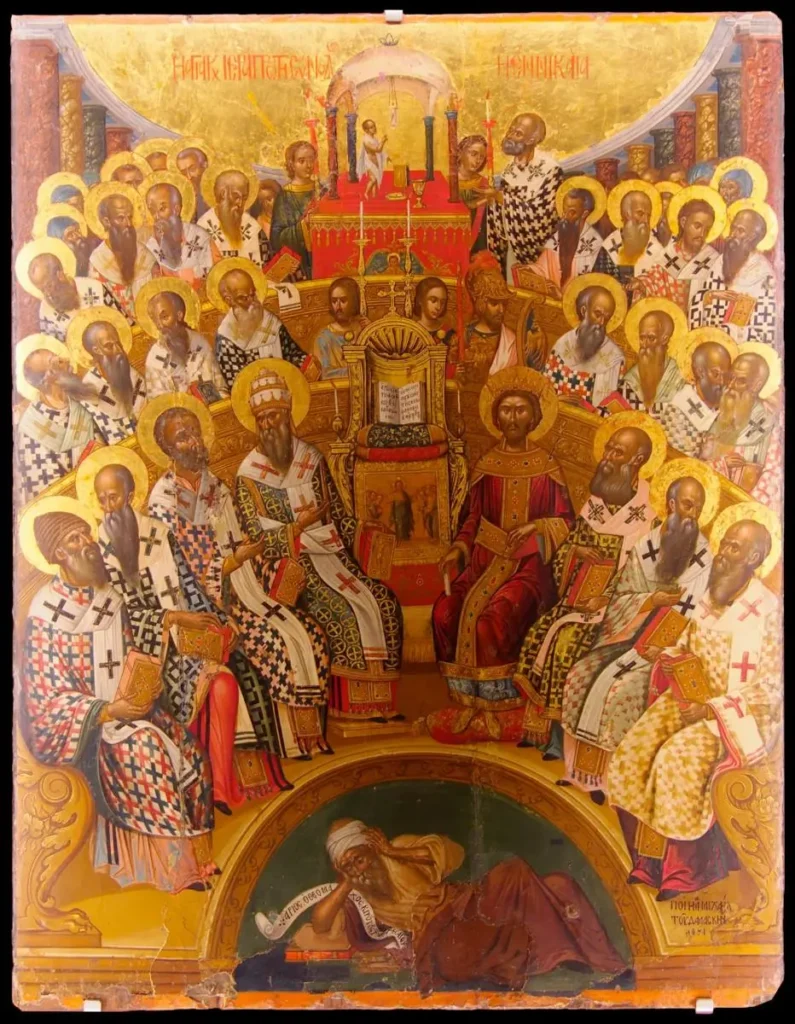
In 325, one of the most important councils in the Christian world took place in Nicaea, a city of the Roman Empire located in what is now Turkey. The bishops, convened by Emperor Constantine the Great, sought to resolve issues that had caused serious divisions within Christian communities. The main dispute concerned the nature of Jesus Christ and his relationship with God the Father, although other matters important to the unity of the Church were also discussed.
Over the centuries, numerous myths and misconceptions have developed around the Council of Nicaea. It is sometimes claimed that this was where the books to be included in the Bible were decided, or that the emperor created the fundamental doctrines of Christianity according to his own political interests. The reality is considerably more complex and interesting: the council sought to resolve an intense theological dispute concerning an already existing Christian faith, but its decisions also gave rise to further controversies.
What actually happened at Nicaea? Why did the question of Christ’s nature become so important? What role did Constantine the Great play, and what decisions did the council make? To answer these questions, we need to return to the beginning of the fourth century, an era when Christianity was moving from a period of persecution toward the center of the empire’s political life.
Christianity: From Persecution to Imperial Recognition
At the beginning of the fourth century, the Roman Empire covered an enormous territory. Christian communities already existed in various parts of the empire, although their circumstances were not always the same. Christians were sometimes able to practice their religion peacefully, while at other times they faced persecution and pressure from the authorities. A particularly difficult period began during the final years of Emperor Diocletian’s rule, when large-scale persecution of Christian communities intensified from 303 onward.
The situation began to change in the early fourth century. In 312, Constantine the Great defeated his rival Maxentius at the Battle of the Milvian Bridge. This victory was later given special religious significance in Christian tradition. The precise development of Constantine’s relationship with Christianity remains a subject of historical research, but it is clear that he gradually supported the Christian Church and significantly improved its position.
In 313, Constantine and Licinius, the emperor in the eastern part of the empire, reached an agreement commonly known as the Edict of Milan. This policy helped expand religious freedom for Christians within the empire and created an opportunity for confiscated property to be returned. It is important to note that Christianity had not yet become the Roman Empire’s sole state religion. That happened later, in 380, during the reign of Emperor Theodosius I.
For Constantine, religious peace was not merely a matter of personal faith. Governing an enormous empire required the maintenance of political stability. Serious disagreements within Christian communities threatened both the unity of the Church and the public order that the emperor wanted to preserve.
It was in these circumstances that the need arose for leaders of the Christian world to gather in a common council, discuss important issues, and attempt to establish a unified position.
Who Was Emperor Constantine the Great?
Constantine the Great was one of the most influential rulers in the history of the Roman Empire. He was born around 272 and was proclaimed emperor in 306, following his father’s death. Over the following years, he consolidated his power through prolonged struggles against his rivals. In 324, after defeating Licinius, he became the sole ruler of the empire.
Constantine’s reign brought transformative changes to the history of Christianity. He granted privileges to the Church, supported the construction of churches, and established active relations with Christian bishops. In 330, he ceremonially inaugurated the empire’s new capital, Constantinople. The city later became one of the most important political and religious centers of the Byzantine Empire.
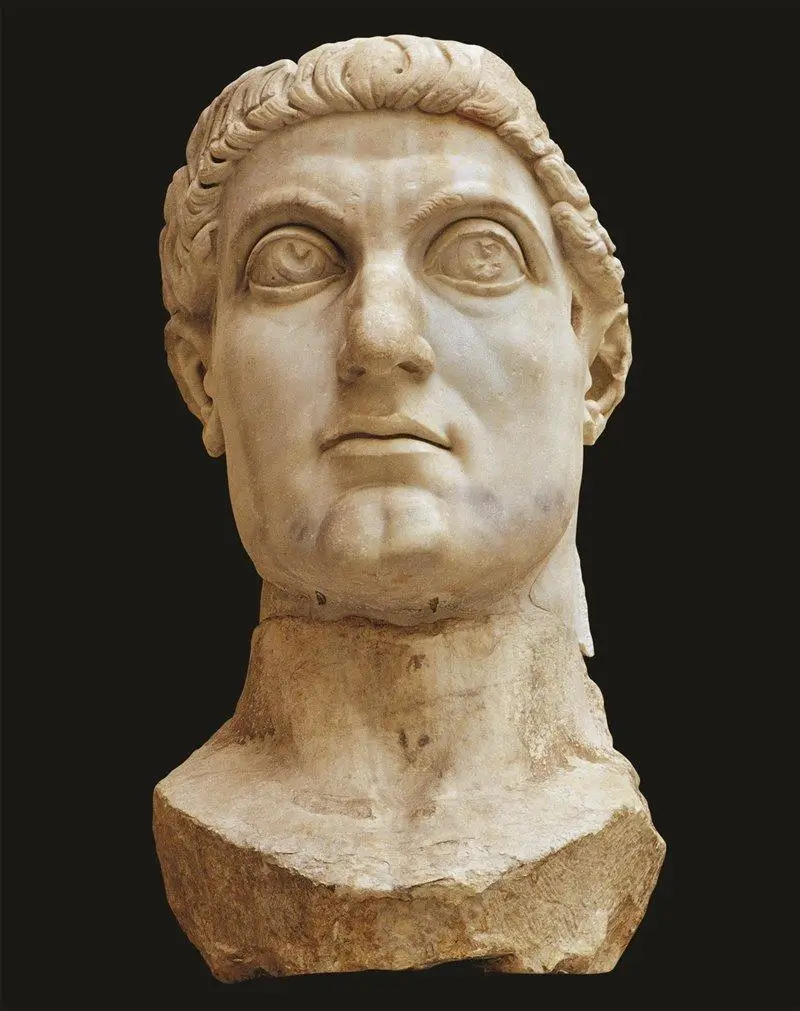
However, Constantine’s role extended beyond protecting Christianity. He sought to resolve religious disputes throughout the empire, and convening the Council of Nicaea served this purpose. The emperor was not a theologian in the same sense as the bishops, but he could organize the council, support its participants, and help ensure that its decisions were implemented.
One important distinction must be kept in mind: convening a council and politically supporting its decisions does not mean that Constantine created Christian doctrine from scratch. Debate over the divinity of Christ had existed long before the emperor intervened. The Council of Nicaea gave this dispute an official form with significance across the empire.
Assessing Constantine’s personal religious beliefs and motives also requires caution. Historians consider his political interests, his growing association with Christianity, and the Roman ideas of his time together. His reign demonstrates how religion and imperial politics became intertwined during the fourth century.
Arius and Alexandria — The Dispute That Spread Throughout the Church
One of the main reasons for convening the Council of Nicaea was a theological conflict that began in Alexandria and gradually spread to other regions of the Christian world. At the center of the dispute were two important figures: Arius, a presbyter of the Church of Alexandria, and Alexander, the bishop of that city.
Arius was born around 256 and was active in Alexandria in the early fourth century. He sought to explain the relationship between God the Father and Jesus Christ. According to his teaching, the Son was distinct from the Father in the sense that the Father was the only source without a beginning, while the Son received his existence from the Father. In Arius’s view, the Son was not equal to the Father in terms of eternity and essence. This position is commonly known as Arianism.
One nuance is essential here: Arius did not deny Christ’s importance or regard him as an ordinary human being. The dispute was much more complex. The question was whether the Son could be truly divine while also existing in a way distinct from the Father, as a being created or brought into existence by him. Arius’s opponents believed that this explanation did not adequately express Christ’s divine status.
Alexander of Alexandria argued that the Son of God could not be placed among created beings. In his view, Christ existed eternally with the Father and shared his divine nature. For Alexander, this was not merely a theoretical question. According to Christian belief, human salvation comes through Christ, making a correct understanding of his nature crucial.
The conflict gradually intensified. The internal dispute within the Church of Alexandria was discussed in other cities, bishops supported different positions, and the controversy eventually attracted the emperor’s attention. Christian communities had already spread across a vast territory, so a problem in one region quickly developed into a crisis affecting the wider Church.
Among Arius’s opponents, Athanasius of Alexandria held a particularly important place. At the time, he was still a young deacon accompanying Alexander. He later became bishop of Alexandria and, over several decades, one of the most influential defenders of the Nicene faith. His writings remain an important source for understanding how supporters of the Nicene position viewed the controversy.
However, the historical picture should not be reduced to a conflict between just two individuals. The Christian world of that time was diverse, and bishops held differing views about terminology, the interpretation of Scripture, and the divinity of Christ. One of the Council of Nicaea’s principal tasks was to address these disagreements.
Why Was the Question of Christ’s Nature So Important?
To a modern reader, it may seem strange that Christians in the fourth century argued so intensely over a few words or complex theological formulations. For Christians of that period, however, these questions concerned the foundations of their faith.
According to Christian doctrine, there is one God, and Jesus Christ is the Son of God, who came into the world as a human being and is central to humanity’s salvation. The central question was: What does it mean to call Christ the Son of God? Is he, like the Father, eternal and truly God, or did his existence begin through the Father’s will?
If Christ is a created being, how can he possess the divine status attributed to him in Christian worship? Conversely, how should the distinction between the Father and the Son be explained without undermining Christian monotheism? These were the questions that theologians of the time sought to answer.
Behind the dispute lay not only the interpretation of particular passages of Scripture but also the long development of Greek-speaking Christian thought. Christians used concepts such as “essence,” “nature,” and “person” to express biblical faith more precisely. These terms cannot always be equated directly with their modern philosophical or everyday meanings.
The Council of Nicaea was therefore more than an administrative meeting. Its participants sought to formulate a statement that, in their view, would clearly defend Christ’s divine nature and define the boundaries of the Church’s faith.
The Council of Nicaea — Who Participated, and How Did It Proceed?
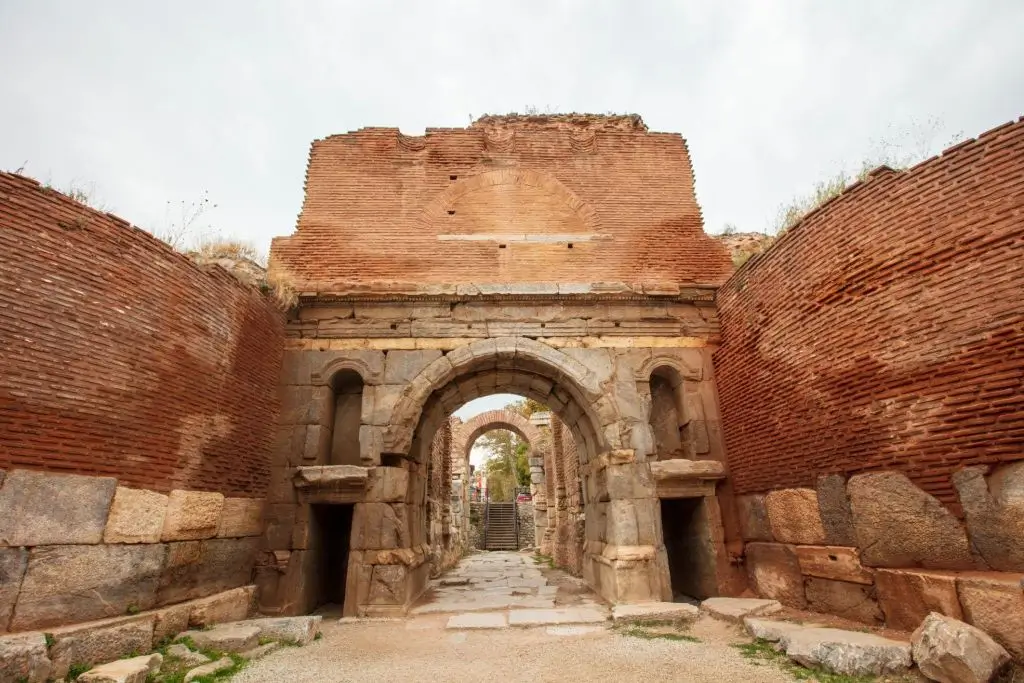
The council took place in 325 in Nicaea, a city in Bithynia, in the northwestern part of Asia Minor, in what is now Turkey, near the modern city of İznik. Its location was relatively convenient for bishops arriving from the eastern regions of the empire.
The exact number of participants has not been definitively established. Church tradition often gives the figure of 318 bishops, although historians also consider other estimates. Ancient sources record different numbers, so 318 should be regarded as the traditional figure rather than an indisputably confirmed statistic. Bishops from various regions of the Roman Empire participated, including Egypt, Syria, Palestine, Asia Minor, and the western provinces. Representatives of Christian communities outside the empire were also associated with the council, including Aristakes, a bishop of Armenia, and Stratophilus, bishop of Pityus (modern-day Bichvinta, or Pitsunda).
Some participants had personally survived the preceding period of persecution. Among them were people who had endured physical suffering during religious persecution. This reminds us that only a few years earlier, some of those attending the council had witnessed the persecution of Christians; now, with the emperor’s support, they were gathering to discuss the future of the entire Church.
Not every detail of the council’s proceedings has survived. We do not possess a complete, verbatim transcript recording every participant’s speech and every debate. Historians therefore rely on documents adopted by the council, letters written by participants, and later ecclesiastical histories. These sources provide important information, although their authors had different aims and perspectives.
Constantine supported the council’s work and was interested in ensuring that its decisions were implemented. Nevertheless, the theological discussions took place with the participation of the bishops. Recognizing the emperor’s political influence does not mean that every religious decision was determined solely by his personal will.
The Main Decision — The Nicene Creed
The council’s most important outcome was the adoption of a statement of faith known as the Nicene Creed. Its purpose was to resolve clearly the dispute over the nature of Christ.
The Creed affirmed faith in one God, the Almighty Father, and in Jesus Christ, the Son of God. Particular importance was given to the following description of Christ: he is “begotten, not made” and “of one substance” with the Father. These words were directed against the Arian position because they rejected the idea that the Son of God had begun to exist in the same way as ordinary created beings.
The Nicene Creed brought together several fundamental claims about Christ: he is the Son of God, begotten of the Father; all things were made through him; and for humanity’s salvation he became incarnate, suffered, rose again, and will return to judge the living and the dead. The text adopted by the council was relatively short, but each of its key formulations must be understood in the context of the theological dispute.
It is particularly important to note that the Creed adopted in 325 is not exactly the same text that many Christian churches recite in their liturgies today. The Niceno-Constantinopolitan Creed used by modern churches is known in a more extensive form and is traditionally associated with the Second Ecumenical Council held in Constantinople in 381. The history of its text and development is a subject of specialized research.
This distinction matters because the Council of Nicaea is sometimes credited with every statement that appeared in the Creed at a later stage. Historical accuracy requires us to distinguish the original Nicene text from its subsequent development.
7. What Does the Word “Consubstantial” Mean?
One of the most important words in the Nicene Creed is the Greek term homoousios, usually translated into English as “consubstantial” or “of one substance.” It expresses the idea that the Son of God shares the same divine essence as the Father and is not a being with a different, created nature.
The choice of this word was not accidental. Arius’s opponents wanted a formulation that would prevent Christ from being understood merely as the highest of created beings or as a being whose essence differed from the Father’s. By using the term “consubstantial,” the council defined the Son’s divine status as equal to that of the Father.
The term also created certain difficulties. Some Christians of the time feared that this formulation might be understood as denying the distinction between the Father and the Son. Others believed its use was necessary to refute Arian teaching. As a result, a single term became the central symbol of a theological dispute.
Debate continued after the Council of Nicaea over how “consubstantiality” should be interpreted and how both the unity and the distinction between the Father and the Son should be expressed. In the following decades, theologians such as Athanasius of Alexandria and the Cappadocian Fathers — Basil the Great, Gregory the Theologian, and Gregory of Nyssa — worked on these questions.
What Happened to Arius and His Followers?
The Council of Nicaea’s decision had serious consequences for Arius. The council rejected his teaching, and several propositions associated with Arius were explicitly condemned at the end of the Creed. These included the claims that there was a time when the Son of God did not exist, or that he came into existence from nonexistence.
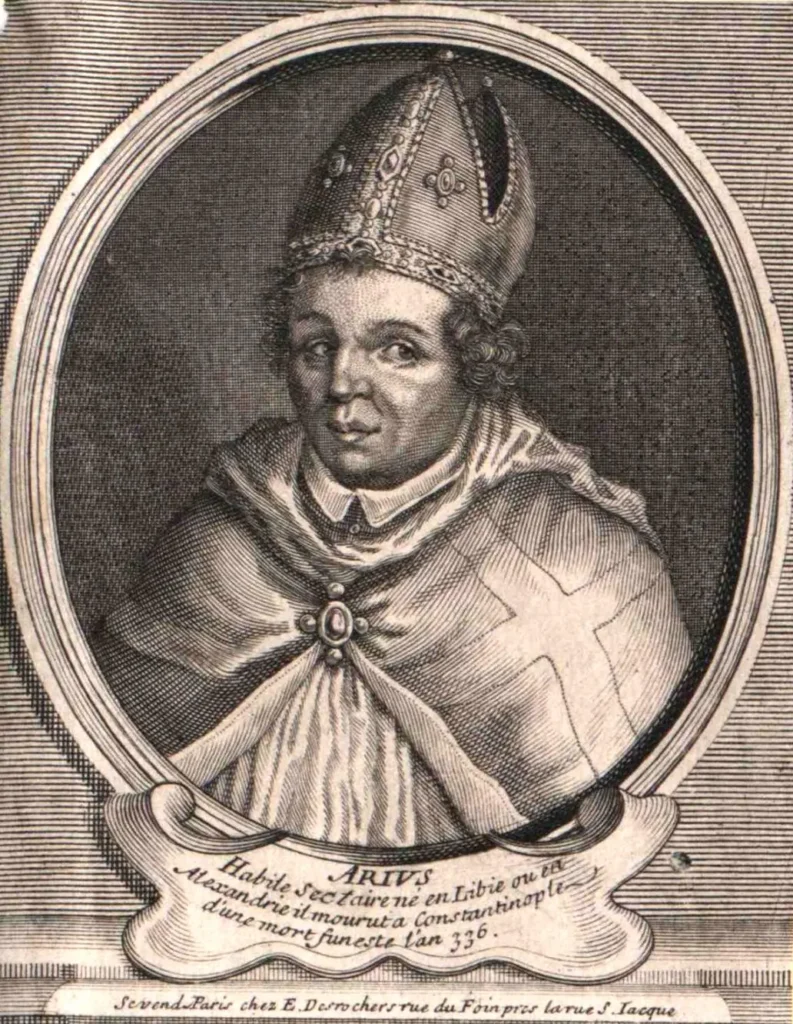
Arius and some of his supporters were excommunicated. Emperor Constantine also ordered Arius’s exile. However, it is important to distinguish between these two measures: ecclesiastical excommunication concerned a person’s status within the Church, whereas imperial punishment represented intervention by the state authorities.
One might assume that the dispute ended after the council’s decision, but the opposite occurred. Various forms of Arian teaching continued to spread, and conflicts among bishops and influential figures at the imperial court persisted.
Constantine’s own attitude also changed over time. He later considered the possibility of reconciling Arius with the Church, although Arius’s return to Alexandria did not take place. Arius died in Constantinople in 336, one year before Constantine himself died.
The events that followed the council demonstrate that even a decision supported by the emperor could not guarantee immediate religious unity. The theological differences were deeply rooted, and resolving them took decades.
Did the Council of Nicaea Decide Which Books Would Be Included in the Bible?
One of the most widespread claims about the Council of Nicaea is that in 325 the bishops decided which books should be included in the Bible, while deliberately destroying or concealing the remaining texts. This idea also appears in popular books and films, but the historical sources do not provide sufficient grounds to support it.
The surviving decisions of the First Council of Nicaea contain no evidence that the council approved a definitive list of biblical books. Its principal theological concern was the relationship between Christ and God the Father. The council also discussed the celebration of Easter and other matters of ecclesiastical order.
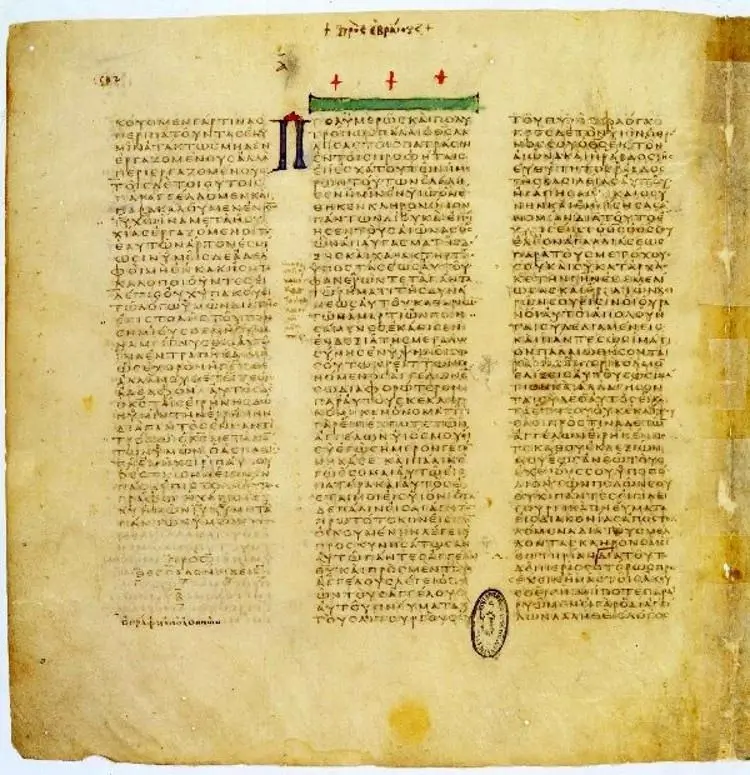
The formation of the biblical canon was a much longer historical process. Different Christian communities read, copied, and used sacred texts in worship. Gradually, a consensus developed about which books expressed the faith of the apostles and should be accepted more broadly.
An important source for this process is the Easter letter written in 367 by Athanasius, bishop of Alexandria. It lists the 27 books of the New Testament in the same composition recognized today by most Christian traditions. However, this does not mean that the contents of the biblical canon were established simultaneously and uniformly in every Christian community.
There are also differences among Christian traditions regarding the composition of the Old Testament. The Orthodox, Catholic, and Protestant Bibles do not have exactly the same number of Old Testament books, and the status of certain books differs among them.
Why, then, is the biblical canon associated with the Council of Nicaea? One reason is that the council became a turning point in Christian history. As the Church and imperial authorities developed closer relations, later changes were often linked to the broader historical processes of this period. Over time, this connection gave rise to a misconception in some popular accounts: that every major Christian decision had been made at Nicaea.
The historical evidence presents a more interesting picture. The formation of the Christian Bible was not the result of a single decision made at a secret council. It was a centuries-long process involving theological debate, worship practices, the circulation of manuscripts, and the experiences of different Christian communities.
What Else Was Decided at the Council of Nicaea?
Although the question of Christ’s nature was the council’s principal subject, its participants also had to address other problems concerning the life of the Church.
One such issue was the date of Easter. Christian communities of the time followed different practices. Some churches in Asia Minor planned their Easter observance according to a tradition linked to the date of the Jewish Passover, regardless of the day of the week, while other churches attached particular importance to Sunday.
The council sought to encourage a more coordinated practice for celebrating Easter among Christian communities. However, popular accounts sometimes present with excessive precision details that have not been fully preserved in the historical sources. It is therefore more cautious to say that the Council of Nicaea helped promote a common practice than to claim that every rule used in modern calendars was established completely and all at once at the council.
The council also adopted a collection of ecclesiastical regulations traditionally comprising 20 canons. These rules concerned the organization of the Church, the appointment of bishops, ecclesiastical discipline, and relations among local churches.
For example, one canon provided for the participation of several bishops in the ordination of a bishop. Other rules concerned ecclesiastical courts and the status of clergy. Such decisions show that the council was not concerned solely with theological debates; it also sought to address the practical matters involved in the Church’s everyday administration.
Ecclesiastical disputes in different regions were also considered. Some of these problems concerned how to deal with people who had renounced their faith during periods of persecution, or how to restore ecclesiastical unity after a schism.
Thus, the significance of the Council of Nicaea was expressed in several ways: it established an official position on Christ’s nature, helped develop common ecclesiastical practices, and laid down certain rules for the governance of the Church.
Why Did the Conflict Continue After the Council?
The decisions of the Council of Nicaea left a significant mark on Church history, but their adoption did not mean that every Christian immediately accepted the Creed. Disputes continued in different parts of the empire over the following decades, and emperors sometimes supported different ecclesiastical groups.
The situation became even more complicated after Constantine’s death. His successors adopted different religious positions at different times. Some rulers supported bishops who opposed the Nicene formulation, creating political and ecclesiastical difficulties for its supporters.
Athanasius of Alexandria was exiled several times, and his ecclesiastical activities were repeatedly restricted. Nevertheless, he remained one of the most active defenders of the Nicene Creed. His writings played an important role in preserving the council’s formulation for later generations and in developing a deeper explanation of its meaning.
Over time, Christian theologians refined the terminology used to describe the relationship between the Father and the Son. The Cappadocian Fathers were particularly important in this process, helping to develop the doctrine of the Trinity during the second half of the fourth century. Their writings drew a clearer distinction between the concept of one divine essence and that of three persons.
The Second Ecumenical Council, held in Constantinople in 381, reaffirmed the Nicene faith and played an important role in the development of the doctrine of the Trinity. This is why the Creed commonly used in modern Christianity is often called the Niceno-Constantinopolitan Creed.
The history of the Council of Nicaea demonstrates that the formation of religious doctrine is often a lengthy process. A council can represent a decisive turning point, but interpreting and accepting its decisions requires the work of later generations, further debate, and historical change.
The Historical Significance of the Council of Nicaea
The First Council of Nicaea marked a new stage in the history of Christianity. It was the first ecumenical council to bring together bishops from different regions of the empire to discuss common issues. Its significance lies not only in the Creed it adopted; the council also changed the relationship between the Church and the state.
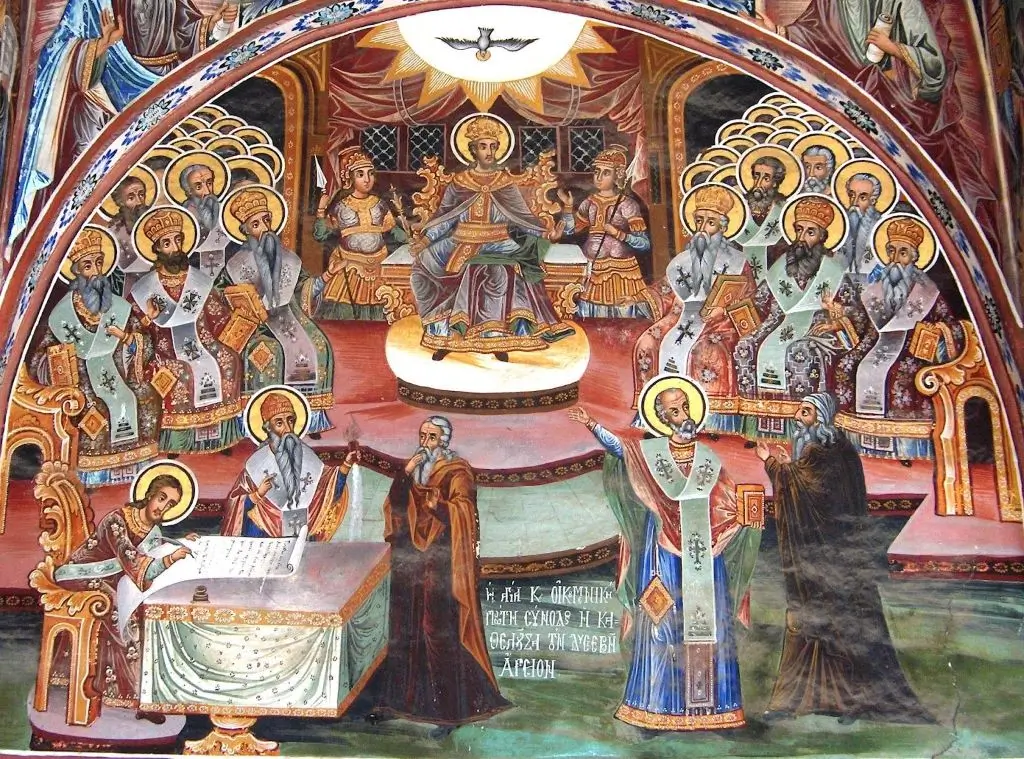
In the early centuries of Christianity, ecclesiastical matters were generally discussed within local communities and at regional councils. Nicaea demonstrated that, with imperial support, it was possible to organize a much broader gathering and adopt decisions that could become important points of reference for the entire Christian world.
At the same time, the council raised new questions. What authority did the emperor have to intervene in religious disputes? How could unity be achieved when theological views differed? And what happens when political power is used to enforce a decision made by the Church?
These questions were not limited to the fourth century. Issues concerning the relationship between religion and the state, freedom of belief, and doctrinal unity have continued to be relevant in different historical periods.
The legacy of the Council of Nicaea remains alive today. Catholic, Orthodox, and many Protestant churches regard the Nicene faith as one of the most important foundations of Christian doctrine. Although these churches differ significantly on other matters, the Nicene formulation concerning Christ’s divinity occupies a central place in their shared heritage.
The Council of Nicaea was therefore more than an ancient religious gathering. It became an event that shaped the subsequent development of Christian theology, the practice of Church organization, and the place of religion in the political life of the Roman Empire.
Conclusion — A Council That Changed the History of Christianity
The First Council of Nicaea took place in 325, but its influence continued for centuries. The participants sought to resolve a dispute over the nature of Christ that threatened the unity of the Church. They adopted a Creed recognizing Christ as consubstantial with the Father and established important rules for ecclesiastical life.
History, however, proved much more complicated than the adoption of a single decision. Conflict continued after the council, various forms of Arius’s teaching persisted, and Christian theology underwent significant development over the following decades. Athanasius of Alexandria and other theologians played a major role in the eventual establishment of the Nicene Creed, while the Council of Constantinople in 381 added a new stage to this process.
One of the most important lessons of the Council of Nicaea is that historical facts are often more interesting than the myths surrounding them. The council did not approve a definitive list of biblical books, nor did it create the entirety of Christian doctrine from scratch. In a specific historical context, it sought to resolve an intense theological dispute and protect the unity of the Church.
For this reason, the Council of Nicaea remains a subject of interest to historians, theologians, and scholars of religion. It demonstrates how a complex theological question can become an event that affects not only religion but also imperial politics, culture, and the history of future centuries.
Sources Used and Recommended
The following historical sources and studies are useful for supporting the factual basis of this article:
- Documents of the Council of Nicaea — the Creed, canons, and surviving letters concerning the council. A collection of documents in English.
- Athanasius of Alexandria — his writings on the Council of Nicaea and the Arian controversy.
- Eusebius of Caesarea — information about the life of Constantine the Great and the history of the Church in the fourth century.
- Philip Schaff, History of the Christian Church, Volume III — a historical overview of the Council of Nicaea and the period that followed it; the chapter on the Council of Nicaea.
- Encyclopaedia Britannica, “Council of Nicaea” — an overview of the council’s historical circumstances and decisions; a historical encyclopedia article.
This article distinguishes between historical accounts of the council, the tenets of Christian belief, and myths that emerged later. On disputed details, particularly the exact number of participants and specific episodes in the council’s proceedings, it takes into account the limitations of the historical sources rather than making definitive claims.
The images used in the article are sourced from Wikimedia Commons and are in the public domain.
If you found the article interesting, share it with your friends and leave a comment.