
Deepfake — How Artificial Intelligence Deceives Us and How to Recognize a Fake Reality
Imagine watching a video of a well-known person on social media. They are standing in front of a camera, speaking in their familiar voice and making a statement that could cause a major public controversy. The video looks realistic, the voice sounds natural, and the facial expressions appear convincing. There is just one problem: the person never actually said those words. The video was created or altered using artificial intelligence.
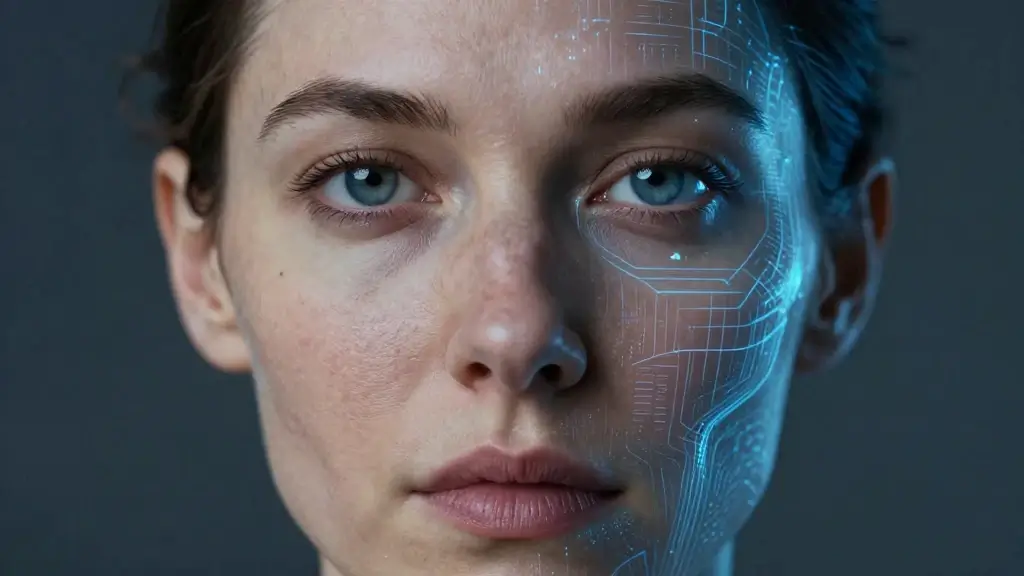
This is no longer something found only in science fiction. Advances in artificial intelligence have made it possible to create images, videos, and voices that can closely resemble genuine recordings. This technology is known as deepfake. It offers new opportunities for filmmaking and education, but it also creates serious challenges involving personal security, fraud, and the reliability of information.
What is a deepfake? How does the technology work, what is it used for, and how can we distinguish genuine recordings from artificially generated content?
What Is a Deepfake, and Where Did the Technology Come From?
The term deepfake combines two English expressions: deep learning, a branch of artificial intelligence, and fake, meaning something false or fabricated. It refers to digital content in which a person’s face, voice, or other characteristics have been generated or altered using artificial intelligence so that the result resembles an authentic recording.
Deepfakes became particularly visible in 2017, when videos involving face-swapping began circulating online under this name. However, the underlying ideas had been developing for much longer. Computer graphics, digital image processing, and machine learning evolved over many years before their combination made realistic fake videos and audio more accessible.
In the past, realistically altering a person’s face required considerable time, specialized knowledge, and expensive software. Today, many tools are much easier to use. Some can generate new images or audio from a photograph or a short voice sample.
It is important to understand that not every image created using artificial intelligence is a deepfake. Creating an entirely fictional character, for example, does not automatically mean that a real person has been misrepresented. The defining feature of a deepfake is its ability to portray a real person or event in a way that suggests something happened or was said when it did not.
How Does Deepfake Technology Work?
Deepfakes are created using artificial intelligence models that learn patterns from large amounts of data. This data may include facial images, video footage, voice recordings, and speech samples. By processing such information, a system can learn how a face looks from different angles, how expressions change during speech, and what characteristics distinguish a particular voice.
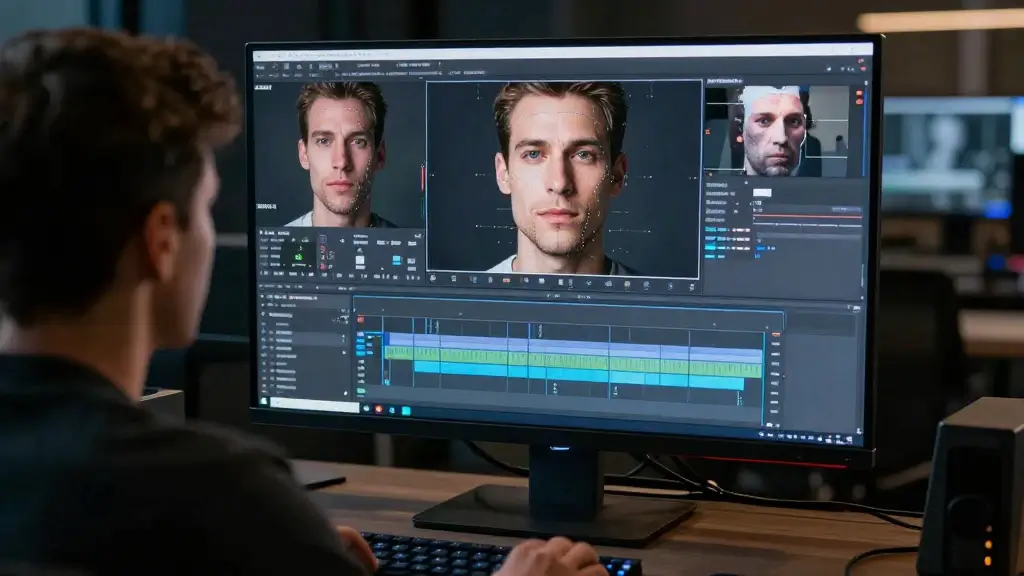
In face-swapping, a system may learn how to align the facial features of two different people. It can then place one person’s face into another person’s video, attempting to match the lighting, head movements, and expressions. More advanced methods can also generate entire videos from a text prompt or description.
Voice cloning works in a similar way. Artificial intelligence learns a person’s vocal tone, intonation, speaking rhythm, and other acoustic characteristics. It can then generate new sentences that sound like the person. Some systems can work with relatively short audio samples, although the quality of the result depends on the available data, the model, and the technology being used.
Another important technique involves synchronizing lip movements with speech. A person’s mouth movements in a video can be modified to match new audio. This can create the impression that the person is saying words they never actually spoke.
Not all deepfakes are created in the same way. Some alter only a face, others imitate a voice, while some generate an entire video artificially. For this reason, there is no single method that can reliably identify every deepfake.
How Is Deepfake Technology Used for Beneficial Purposes?
Deepfakes are often associated with risks, but the technology also has legitimate applications. To assess it fairly, we must distinguish between what the technology can do and the purposes for which people use it.
In the film industry, digital facial manipulation and changes to actors’ appearances have been used for years. New artificial intelligence methods can make some of these tasks easier. They can help portray a character at a different age, create visual effects, or modify an actor’s appearance in complex scenes. However, using a real person’s face or voice also raises questions about consent and intellectual property rights.
The technology offers interesting opportunities in education as well. Digital reconstructions of historical figures can make educational material more engaging and visual. However, viewers must be informed that such presentations are modern reconstructions rather than authentic historical recordings. They cannot replace historical sources and should never be presented as genuine evidence.
Voice synthesis and digital avatars can also be useful when adapting videos into different languages, creating virtual assistants, or helping people who have difficulties with speech. In some cases, a synthesized voice can help someone continue communicating.
Deepfake technology is therefore not inherently harmful. Its value depends largely on consent, transparency, and a clear distinction between genuine recordings and artificially created material.
Deepfakes and Fraud: When a Fake Voice Sounds Like Someone You Know
One of the most significant risks associated with deepfakes is fraud. In the past, a scammer might have relied on a fraudulent message or fake online profile. Today, criminals may contact a victim using a voice that closely resembles someone they know.
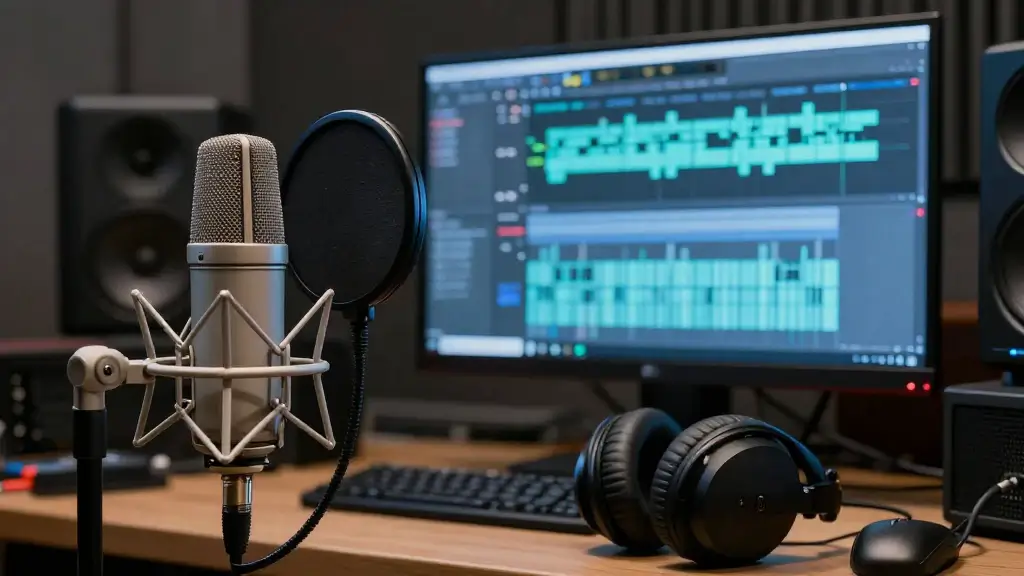
Imagine the following situation: someone calls and claims that your child or another family member has been involved in an accident and urgently needs money. The voice sounds familiar, the conversation is emotional, and the caller insists that there is very little time. Frightened, the recipient may transfer money without stopping to verify the story.
The US Federal Trade Commission (FTC) warns consumers that scammers may use even a short audio sample found online to imitate the voice of a family member or another familiar person. A common tactic is to create emotional pressure, demand immediate action, and insist that the victim keep the situation secret.
Similar threats exist in business. A criminal might imitate an executive’s voice and instruct an employee to transfer money or disclose confidential information. If an organization lacks clear procedures for verifying such requests, a familiar voice can increase the likelihood of a costly mistake.
The main danger is not simply the accuracy of the technology. Scammers exploit people’s emotions and trust. When someone is frightened or believes a loved one needs help, they may not take the time to verify the information.
For this reason, if someone using a familiar voice asks you for money, particularly while insisting that you act immediately, verify the request independently. End the call and contact the person directly using a number you already know. If they cannot be reached, try contacting another family member. A prearranged family code word can provide an additional safeguard, although it should not replace other security measures.
Source: US Federal Trade Commission — Scammers Use Fake Emergencies to Steal Your Money.
Fake Videos and Disinformation
Deepfakes become particularly problematic when they are used to manipulate public opinion. Artificial intelligence can generate a video in which a politician, celebrity, or other public figure appears to make a statement they never actually made.
If such a video spreads rapidly on social media, viewers may mistake it for an authentic recording and share it with others. By the time the fabrication is exposed, the original video may already have reached thousands or even millions of people.
The problem is not limited to the spread of false information. A genuine recording may also be dismissed as fake, while the existence of deepfakes can make people suspicious of almost any video they dislike. This undermines trust in the media and in digital evidence more broadly.
When checking information, it is therefore important to examine not only the video itself but also its origins. Who published it first? Is a complete version available? Have reputable news organizations reported on it? Are the statements in the video consistent with other verified facts?
A video’s high view count, numerous comments, or strong emotional reactions do not prove that it is authentic.
How Can We Recognize a Deepfake?
Several years ago, people often looked for unnatural facial movements, unusual blinking, or a mismatch between lip movements and speech when trying to identify fake videos. Such signs can still appear in some recordings, but modern technology continues to improve. Relying exclusively on visual details is therefore not a reliable approach.
First, verify the source. If a video attributes an important statement to a well-known person, look for the person’s official account, the full interview, or coverage by reputable news organizations. If the recording appears only on unfamiliar accounts, that is a reason to be cautious.
Second, look for the original version. Reverse image search can sometimes help establish whether a frame from the video appeared earlier in a different context. For video footage, checking several different frames separately may be useful.

Third, examine the context. A video may be genuine while its description or accompanying text is false. For example, a real statement may have been made at a different time or concerned an entirely different subject. It is therefore important to verify not only the authenticity of the recording but also whether it is being presented accurately.
Fourth, independently verify suspicious requests. If someone asks for money, passwords, or confidential information through a video call or voice message, do not assume that a familiar face or voice proves their identity. Use a separate communication channel and contact the person independently.
Fifth, use technical detection tools, but do not treat their results as conclusive proof. Some tools analyze images, audio, or video for signs of artificial generation. However, their accuracy varies, and video compression, editing, and other modifications can affect their results.
The US National Institute of Standards and Technology (NIST) examines approaches to reducing the risks associated with synthetic content, including provenance verification, digital labeling, watermarks, and automated detection. No single method provides a complete guarantee in every situation.
Why Can’t an AI Detector Protect Us on Its Own?
At first glance, the solution seems simple: if artificial intelligence can create fake videos, another AI system should be able to detect them. In reality, the task is much more complicated.
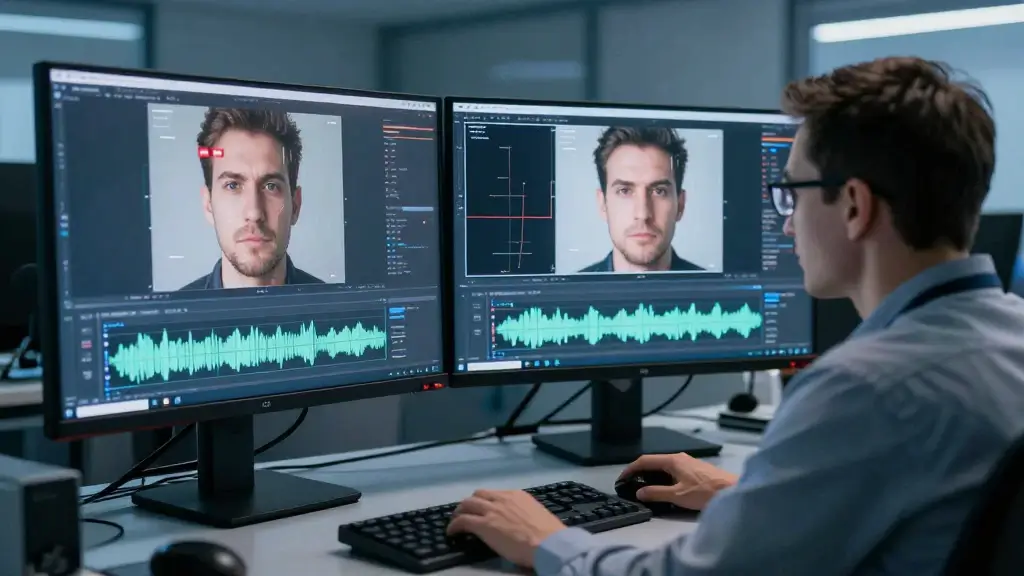
Deepfake detection systems look for characteristics that may indicate artificially generated or manipulated content. But as generation methods improve, those characteristics also change. In addition, video compression, poor image quality, lighting conditions, or audio processing can make detection more difficult or produce misleading results.
Русский
Even a high probability score from a detection system does not mean that a video is definitely fake. Likewise, if a system classifies a video as genuine, that alone does not establish its authenticity. Automated assessments should be treated as additional evidence, not as a final verdict.
A more reliable approach combines several methods: checking the source, finding the original file, examining the context, conducting technical analysis, and consulting a specialist when necessary. Important decisions should not depend solely on the output of a single program.
Deepfakes, Privacy, and the Law
Another important issue is the use of a person’s image or voice without their consent. A deepfake may portray someone as engaging in an activity that never occurred, damage their reputation, or violate their privacy. Non-consensual sexual deepfakes can be particularly harmful.
The consequences extend beyond the fact that the video is artificial. Victims may experience harassment, blackmail, professional difficulties, or prolonged psychological distress. It is therefore important not to share such material, not to use it to humiliate someone, and to report it to the relevant platform if it appears online.
Legal approaches differ from country to country. Some jurisdictions have specific rules addressing the unlawful use of a person’s likeness or voice, fraud, defamation, or the non-consensual distribution of intimate material.
In the European Union, Article 50 of the Artificial Intelligence Act establishes certain transparency obligations, including disclosure requirements for certain AI-generated or manipulated content that qualifies as a deepfake. The precise application of these rules depends on the Act’s requirements, relevant exceptions, and applicable dates. According to the European Commission, the relevant transparency obligations began applying on August 2, 2026.
Source: European Commission — Guidelines on AI Transparency Obligations.
However, the existence of laws does not automatically eliminate the problem. The speed at which content spreads, differences between national legal systems, and the difficulty of identifying the original creator remain significant challenges.
What Does the Future Hold?
Deepfake technology is likely to continue advancing. Generating videos and voices may become faster, cheaper, and more accessible. At the same time, methods for verifying the origin of digital content, detecting artificial manipulation, and labeling generated material will continue to improve.

In the future, digital certificates and technical mechanisms that indicate where and how content was created, who modified it, and whether it changed after publication may become more widespread. However, these mechanisms cannot solve every problem. Not every device or platform will use them, and the absence of provenance information does not automatically mean that a recording is fake.
Meanwhile, deepfake technology may become increasingly common in filmmaking, gaming, translation, virtual communication, and education. Its development does not mean that all such applications are harmful. The central challenge will be protecting people’s rights, distinguishing creative uses from deception, and maintaining access to reliable information.
Society needs more than powerful detection tools. It also needs media literacy: the ability to check sources, understand context, and verify suspicious claims. Technology can help, but responsible decision-making will continue to require human judgment.
Conclusion — Can We Believe Everything We See?
Deepfake technology demonstrates that, in the digital age, a person’s face, voice, and movements can be imitated so convincingly that distinguishing a genuine recording from artificially generated content becomes difficult. The technology creates new opportunities in art, education, and communication, but it also increases the risks of fraud, disinformation, and privacy violations.
The solution is not to distrust everything, nor is it reasonable to assume that every unusual video is fake. A more sensible approach is to learn how to verify information, pay attention to its origins, and avoid making impulsive decisions under emotional pressure.
When we see a familiar person in a video or hear their voice, that should no longer be the only reason to believe everything presented to us. In the digital world, it is becoming increasingly important to ask not only what we see and hear, but also where the information came from and whether reliable evidence supports its authenticity.
If you found the article interesting, share it with your friends and leave a comment.