
The History of Israel — From Ancient Kingdoms to a Modern State
There are places in the world whose significance far exceeds their size or population. Israel is one such country. Located on the eastern coast of the Mediterranean Sea, this state has a history spanning thousands of years, connecting ancient civilizations, religions, empires, wars, and human lives. Jerusalem is situated here—a city of profound spiritual significance to Judaism, Christianity, and Islam. The same land witnessed events that had an enormous influence on Jewish identity, the emergence of Christianity, and the historical development of the Middle East.

However, the history of modern Israel is not limited to ancient kingdoms and sacred places. It is also a story of state formation and national self-determination, closely connected to the fate of Palestinian Arabs. Understanding Israel therefore requires knowledge of both the Jewish people’s centuries-long experience and the historical memory of Palestinians, as well as the unresolved political issues that remain relevant today.
A Land Where Ancient History Meets the Modern World
Israel is located in the Middle East, along the eastern coast of the Mediterranean Sea. Its territory is relatively small, but its natural environment is remarkably diverse. The Mediterranean coastline lies to the west, wetter regions are found in the north, and the Jordan Valley and the Dead Sea basin extend along the east. The southern part of the country is occupied by the Negev Desert, which covers a substantial portion of Israel’s territory.
The historical importance of this land is largely connected to its geographical location. Since ancient times, trade and military routes linking Africa, Asia, and the Mediterranean world have crossed the region. In different eras, Egyptian pharaohs, Assyrians, Babylonians, Persians, Greek states, and the Roman Empire all sought control over it.
For this reason, the history of the local population cannot be understood solely as the history of one people or one state. Over the centuries, people of different origins and religions lived here, political boundaries changed, and rulers succeeded one another.
Modern Israel represents the latest chapter in this multilayered history. Questions concerning its territory and borders, however, remain among the most complex issues in Middle Eastern politics.
Ancient Israel — Kingdoms That Left a Deep Mark on Historical Memory
The history of ancient Israel is connected to the formation of the Jewish people, their religious traditions, and the political entities that existed in the ancient Near East. Evidence about this period comes from biblical texts, archaeological discoveries, and written sources produced by other ancient civilizations.
According to biblical tradition, Saul became the first king of the united Kingdom of Israel, while the reigns of David and Solomon are associated with the kingdom’s strengthening and the growing importance of Jerusalem. David’s name is particularly closely linked to the city, which became the kingdom’s political center during his reign. Biblical tradition, in turn, associates Solomon’s reign with the construction of the First Temple in Jerusalem.

One important point must be considered when examining this history: the Bible is a fundamental source of Jewish religious and cultural tradition, but not every event described in it can be confirmed to the same degree through historical methods. Historians therefore study biblical accounts alongside archaeological evidence and other written sources.
When examining the second half of the tenth century BCE and the centuries that followed, researchers investigate the development of political entities in the region, the extent of their power, and their relations with neighboring states. The existence of the ancient Kingdom of Israel is supported by various historical sources, although some details concerning its early rulers remain subjects of scholarly debate.
According to the traditional chronology, the united kingdom divided into two parts after Solomon. The Kingdom of Israel emerged in the north, while the Kingdom of Judah developed in the south, with Jerusalem as its capital. The two states had distinct political histories, but they also shared religious and cultural traditions.
In the eighth century BCE, the Assyrian Empire conquered the northern Kingdom of Israel. Later, at the beginning of the sixth century BCE, the Babylonian Empire became a dominant power in the region. In 586 BCE, the Babylonians captured Jerusalem and destroyed the First Temple. Part of Judah’s population was deported to Babylon.
These events became one of the most significant turning points in Jewish history. The destruction of the Temple, exile, and loss of the homeland had a lasting influence on the development of religious tradition and collective memory.
Why Is Jerusalem a Holy City for Three Religions?
Jerusalem is one of the world’s most remarkable historical cities. Its significance is partly explained by the fact that it is a meeting point for the spiritual traditions of three major monotheistic religions: Judaism, Christianity, and Islam.
For Judaism, Jerusalem is an exceptionally important holy city. The First and Second Temples stood here and occupied a central place in Jewish religious life. The Western Wall, associated with the ancient Temple complex and also known as the Wailing Wall, is one of the most important Jewish places of prayer. After the Temple’s destruction, the loss of Jerusalem and the connection to the city continued to hold a special place in Jewish religious memory.


For Christianity, the city is connected to the final events of Jesus Christ’s life. According to the Gospels, Jesus was crucified and buried in Jerusalem, and Christian belief holds that he rose from the dead there. One of Christianity’s most important holy sites is associated with these events: the Church of the Resurrection, known in Western tradition as the Church of the Holy Sepulchre.
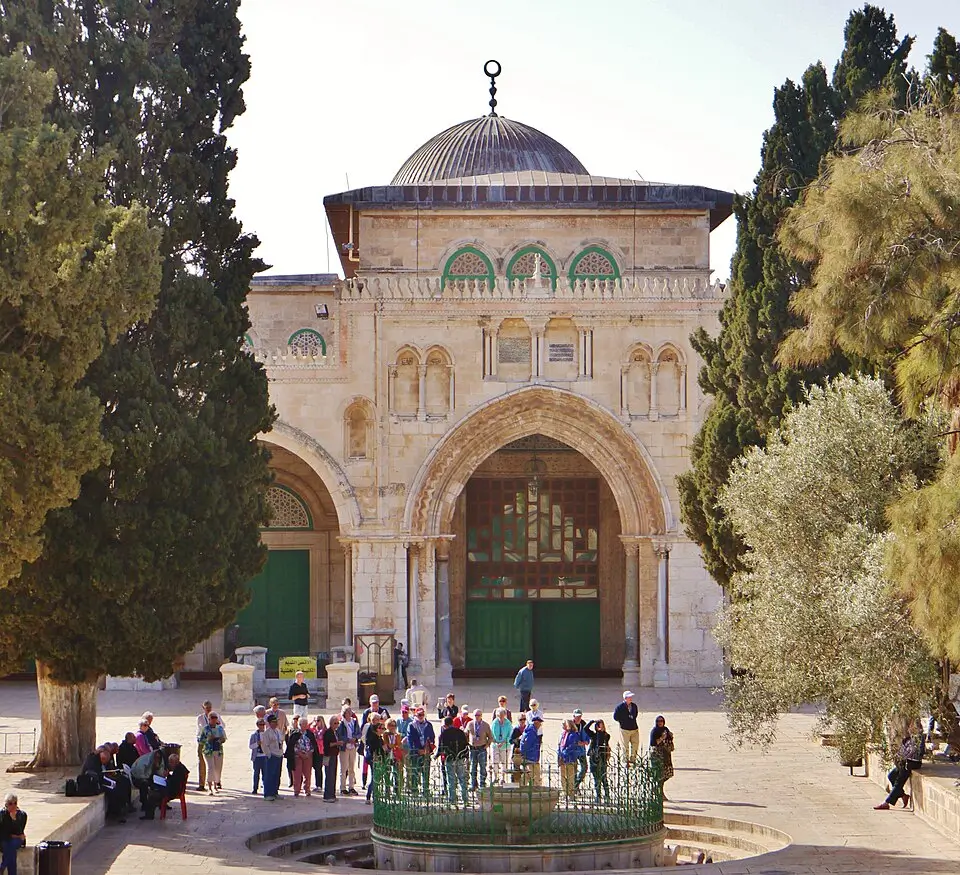
Jerusalem also occupies a special place in Islam. The area known as the Temple Mount is home to the Al-Aqsa Mosque and the Dome of the Rock. According to Islamic tradition, the Prophet Muhammad’s Night Journey and Ascension to heaven are connected to Jerusalem. The city is regarded as one of Islam’s most important holy places.
Interestingly, followers of these religions interpret some places and events associated with Jerusalem in different ways. The same physical space is connected to distinct historical memories, beliefs, and religious practices.
Jerusalem’s significance, therefore, is not merely religious. It is also at the center of disputes over national identity, political sovereignty, and historical justice. Israel considers Jerusalem its capital, while Palestinians regard East Jerusalem as the capital of a future Palestinian state. The city’s final status remains one of the most difficult issues in the international conflict.
The Roman Empire and the Expansion of the Jewish Diaspora
After the fall of the Babylonian Empire, the region came under Persian rule. The policies of the Persian king Cyrus II in the sixth century BCE allowed exiled Jews to return to Judah and rebuild the Temple. Later, the region came under the influence of Hellenistic states and subsequently the Roman Empire.
Several uprisings took place in Judea during Roman rule. The confrontation between Jews and Romans intensified particularly during the revolt that began in 66 CE. In 70 CE, the Roman army captured Jerusalem and destroyed the Second Temple. This became one of the most painful turning points in Jewish history.
The destruction of the Temple also transformed religious life. Synagogues, rabbinic teaching, the study of sacred texts, and the observance of religious laws became even more important in Judaism. Jewish religious tradition increasingly relied on practices that could be maintained without a Temple.
After the suppression of the Bar Kokhba revolt in 132–135 CE, Roman authorities strengthened their control over the region even further. Some Jews were killed, while others were relocated to different places or forced to change their homes.
However, it would be inaccurate to suggest that Jews disappeared entirely from their historical homeland after these events. Jewish communities continued to exist in the region, while other communities developed across Mediterranean countries, the Middle East, Europe, and eventually other parts of the world.
This centuries-long geographical dispersal of Jewish communities is known as the Jewish diaspora. It did not result from a single event. Wars, deportations, economic migration, persecution, and the gradual establishment of Jewish communities in different countries all contributed to its development.
Jews living in the diaspora made significant contributions to the cultures of many countries, although they frequently faced discrimination, forced displacement, and violence. At the same time, Jewish religious and cultural traditions maintained a symbolic connection to the historical homeland over many centuries.
How Did the Idea of Creating Modern Israel Emerge?
In the nineteenth century, the spread of nationalism across Europe transformed the political aspirations of many peoples. During the same period, the modern Zionist movement gained strength. Its goal was to establish a national home for the Jewish people in a territory connected to their historical homeland and, ultimately, to create an independent state.
Several factors contributed to the growth of Zionism. Jews living in Europe faced restrictions and antisemitism. Although their rights gradually expanded in some societies, hostility toward Jews and violence against them remained serious problems in other countries.
One of the leading figures of modern political Zionism was Theodor Herzl. In 1896, he published The Jewish State, in which he outlined a political solution to the Jewish national question. In 1897, the First Zionist Congress was held in Basel, helping the movement develop into an organized political force.
The Zionist movement was not uniform. Its members held different political views, had varying attitudes toward religion, and envisioned different forms of government for a future state. Some Jews viewed a return to the historical homeland as a form of national revival, while others favored integration into the societies in which they lived or the development of Jewish cultural autonomy.
There was another side to this process. An Arab population already lived in Palestine, with its own social, cultural, and political interests. Local Arabs sought their own independence and self-determination and became increasingly concerned about growing Jewish immigration, land purchases, and plans to establish a future state.
As a result, the aspirations of two national movements regarding the same territory gradually came into conflict. For Jews, the land represented a historical homeland and an opportunity to establish a secure national home. For Palestinian Arabs, it was the place where they lived and maintained their social and political life.
This confrontation later became one of the principal foundations of the Israeli-Palestinian conflict.
The Holocaust — A Tragedy That Changed the World’s Attitude
During the Second World War, Nazi Germany and its allies carried out a systematic campaign to annihilate the Jewish people. Approximately six million Jews were murdered in the Holocaust. People were killed through mass shootings, confinement in ghettos, forced labor, and extermination camps.
The Holocaust was an extreme manifestation of European antisemitism and Nazi racial ideology. It destroyed centuries-old Jewish communities and deprived millions of people of their families, homes, and lives.

After the war ended, thousands of Jewish survivors in different parts of Europe continued to live in displaced-persons camps. Many no longer had homes to which they could return, while some survivors were afraid to go back even to the countries where they had lived before the war.
The Holocaust intensified international debate about Jewish security, the future of displaced people, and the creation of an independent national state. At the same time, the idea of establishing modern Israel had existed for several decades before the Holocaust. The state’s creation therefore cannot be explained solely by the consequences of the Second World War: it was rooted in a longer political movement, immigration, and international developments.
In 1947, the United Nations adopted a plan to divide the territory of Palestine into two states: one Jewish and one Arab. Jerusalem was to be placed under a special international administration.
The Jewish leadership accepted the plan, while Palestinian Arabs and Arab states rejected it. Their opposition was connected to the proposed territorial division, the composition of the population, the right to self-determination, and disagreements over whether the plan was fair. The decision was followed by an escalation of violence and armed confrontation.
1948 — The Creation of the State of Israel and the Palestinian Nakba
On May 14, 1948, shortly before the end of the British Mandate, David Ben-Gurion proclaimed the establishment of the State of Israel. The new state became a major milestone in the history of Jewish national self-determination.
However, a large-scale war followed soon after the declaration of independence. The armies of neighboring Arab states entered the conflict, and confrontations among the local population developed into a regional war.

The consequences of the war were devastating for both peoples, although their experiences differed. For Israel, it was a struggle for the survival of a new state, which faced the challenge of securing its existence and protecting its population. For Palestinians, the war became a tragedy of mass displacement, the loss of homes, and the destruction of their national community.
During the 1948 war, more than 700,000 Palestinians fled or were forced to leave their homes. Many became refugees in neighboring territories and countries. Palestinians refer to these events as the Nakba, an Arabic word meaning “catastrophe.” Many Palestinian families continue to preserve the memory of the villages, towns, and homes they lost during the events of 1948.
The reasons for Palestinian displacement were not identical in every case. People fled because of fighting, violence, and fear; residents were expelled from many places, and in some cases people were subsequently unable to return. The scale of these events and their consequences remain subjects of historical and political debate.
Under the 1949 armistice agreements, Israel established control over more territory than had been allocated to it under the United Nations partition plan of 1947. The West Bank came under Jordanian control, while the Gaza Strip came under Egyptian administration. The Palestinian Arab state envisaged in the partition plan was never established.
Thus, 1948 became a central event in two different national memories: the year of Israeli independence and the year of the Palestinian Nakba. Understanding both experiences is essential to fully grasping the history of the modern conflict.
The Six-Day War and the Intensification of Territorial Disputes
In June 1967, the Six-Day War broke out between Israel and neighboring Arab states. Within a few days, Israel defeated the military forces of Egypt, Jordan, and Syria and captured the Gaza Strip, the West Bank, East Jerusalem, the Sinai Peninsula, and the Golan Heights.
The war significantly altered the political map of the Middle East. Large numbers of Palestinians were once again forced to leave their homes, and Israel took control of territories whose status later became a central issue in peace negotiations.
Israel subsequently returned the Sinai Peninsula to Egypt as part of a peace agreement. However, the status of the West Bank, East Jerusalem, and the Golan Heights remains the subject of international disputes.
One particularly difficult issue is the construction and expansion of Israeli settlements in the West Bank. Much of the international community considers these settlements incompatible with international law, a position that Israeli governments have challenged with various arguments. The settlements remain one of the principal obstacles to reaching a peace agreement with the Palestinians.
After the 1967 war, the United Nations Security Council adopted Resolution 242, which addressed the settlement of territorial issues arising from the war and the principles for establishing a just and lasting peace in the region.
These events further connected Israel’s security concerns with Palestinian self-determination, the status of the territories, and the interests of regional powers.
Why Has the Israeli-Palestinian Conflict Remained Unresolved?
The Israeli-Palestinian conflict cannot be explained solely as a religious confrontation. Although Jerusalem and other sacred sites are part of the dispute, its main causes are also connected to territory, national self-determination, security, refugees, statehood, and political power.

For many Israelis, the existence of their own state is an essential guarantee of the Jewish people’s historical rights and security. Centuries of persecution, pogroms, and the Holocaust strengthened the belief that the Jewish people need a place where they can determine their own future.
For Palestinians, the central issues include the creation of an independent state, the protection of their land and rights, the end of occupation, and a resolution to the refugee question. For many Palestinian families, the events of 1948 are not simply a tragedy of the past; they continue to shape contemporary identity and political demands.
Security is another dimension of the conflict. Terrorist attacks, rocket strikes, and the actions of armed groups create a persistent sense of threat among Israel’s population. Palestinians, in turn, are severely affected by military operations, movement restrictions, the destruction of homes and infrastructure, arrests, and humanitarian crises.
Hamas’s rise to power in the Gaza Strip and its armed confrontation with Israel have made the situation even more complicated. Hamas is a Palestinian Islamist organization whose armed wing has carried out attacks against Israel. Israel and several other countries designate Hamas as a terrorist organization. At the same time, it is essential to distinguish between armed organizations and civilians: the Palestinian people are not synonymous with Hamas, just as not all Israeli citizens support their government’s policies.
Numerous attempts have been made to achieve peace, including the Oslo Accords of the 1990s. This process established mutual recognition between Israel and the Palestine Liberation Organization and made the creation of limited Palestinian self-government possible. However, a final agreement was never reached.
The main unresolved issues include borders, the status of Jerusalem, the future of Palestinian refugees, Israeli settlements, security guarantees, and the powers of a Palestinian state. Deep mistrust between the parties and recurring cycles of violence further reduce the prospects for negotiations.
For this reason, it is difficult to imagine resolving the conflict through military superiority alone or by ignoring the demands of one side. Lasting peace requires both the protection of Israel’s population and a fair resolution of questions concerning Palestinian rights, dignity, and self-determination.
Modern Israel — How Did the Country Become a Technology Hub?
Israel attracts international attention primarily because of its history and the conflicts of the Middle East. However, understanding the country’s modern character also requires examining the development of science and technology.
Israel has developed an advanced technology sector in which software, cybersecurity, medical technology, information technology, and innovative companies play important roles. Tel Aviv and its surrounding areas are regarded as a prominent international center for startups.
Several factors have contributed to this development. These include scientific research at universities and research institutions, investment in the technology sector, highly skilled professionals, connections to international markets, and the application of knowledge gained in the defense sector to civilian technologies.
Nevertheless, Israel’s technological success cannot be explained by a single factor. Economic policy, education, entrepreneurship, international cooperation, and the country’s historically shaped security environment have all played a role.
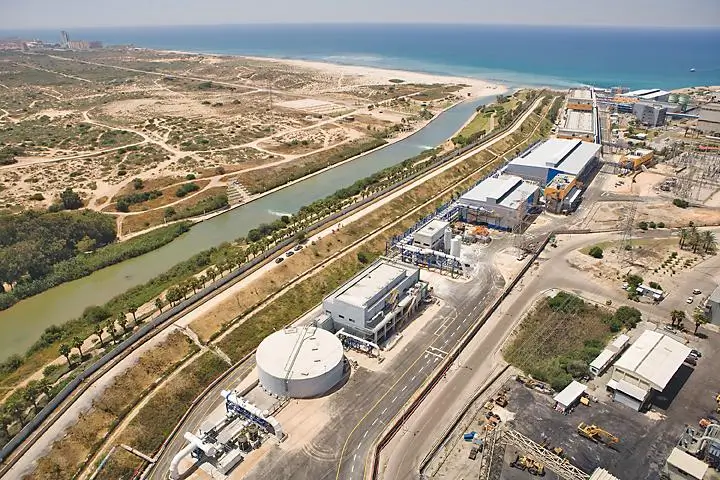
Water management is a particularly interesting area. Much of Israel has a dry climate, and freshwater resources are limited. In response, the country has developed technologies for seawater desalination, wastewater reuse, and water conservation.
Drip irrigation is an important example. This method delivers water directly to plant roots. It can reduce water loss and improve agricultural efficiency, particularly in regions where water scarcity is a serious problem.
According to assessments by the Organisation for Economic Co-operation and Development, Israel has introduced important technological solutions in response to water scarcity. Seawater desalination and wastewater reuse have become significant components of the country’s water-management system.
This example demonstrates how natural limitations can encourage innovation. At the same time, technological achievements do not mean that every economic or social problem has been solved. Israel also faces challenges involving inequality, housing affordability, and differences among social groups.
The Unusual History of the Hebrew Language
One of Israel’s most interesting characteristics is connected to the modern history of the Hebrew language.
For thousands of years, Hebrew played an important role in the religious and literary traditions of Judaism. However, during different periods, other languages often dominated the everyday speech of Jews living outside the Land of Israel. For example, many Jewish communities in Europe spoke Yiddish, while other languages were used in Mediterranean and Middle Eastern communities.
In the late nineteenth and early twentieth centuries, a movement to revive Hebrew as a spoken language gained momentum. Eliezer Ben-Yehuda and other enthusiasts played a particularly important role in this process, seeking to adapt the language to all aspects of modern life.
Through the creation of new terms, the use of Hebrew in education, and its adoption in everyday communication, the language gradually became part of modern public life.
Today, Hebrew is Israel’s principal official language. Its modern development is a remarkable example of how a language rooted in historical and religious tradition can become a fully functioning means of everyday communication.
At the same time, Israeli society is multilingual. Arabic and the languages of various immigrant communities are also used in the country, reflecting the historical and demographic diversity of its population.
Israel Is More Than Jerusalem
When people talk about Israel, attention often focuses on Jerusalem and political conflicts. However, the country’s cities and regions have very different characteristics.
Tel Aviv is known for its modern architecture, cultural life, technology companies, and Mediterranean coastline. The city and its surrounding areas play an important role in Israel’s economic life.
Jerusalem, by contrast, stands out for its historical and religious significance. Ancient buildings, museums, holy sites, and neighborhoods belonging to different religious communities exist side by side. The city’s cultural diversity also reflects its complexity: historical heritage and modern political claims often intersect within the same space.

The Negev Desert in the south differs from the coastal region in both landscape and climate. It contains desert ecosystems, geological formations, and agricultural communities where water-conservation technologies are particularly important.
The Dead Sea is notable for its natural characteristics. It is one of the lowest bodies of water on Earth’s land surface, and its high concentration of salt and other dissolved substances distinguishes it significantly from ordinary seas. Because of its high salinity, people can float more easily on its surface. However, getting the water into one’s eyes or mouth can be dangerous, so caution is necessary when swimming.
These places demonstrate that Israel is simultaneously a center of historical heritage, modern urban life, diverse natural environments, and technological development.
Why Is the History of Israel Still Important Today?
The history of Israel shows how deeply modern politics can be connected to events of the past. Memories of ancient kingdoms, religious traditions, the experience of the diaspora, the Holocaust, the creation of the state, and the Palestinian Nakba continue to influence national identities and political demands.
Understanding this history requires distinguishing between different kinds of evidence and complex facts. Ancient religious traditions are not always equivalent to archaeologically verified accounts; one people’s historical connection to a territory does not automatically cancel the rights of another people; and a modern political conflict cannot be fully understood by considering the experience of only one side.
For Israel, statehood and security are inseparable from the historical experience of the Jewish people. For Palestinians, national self-determination, their connection to the land, the refugee question, and the creation of an independent state remain essential demands.
At the same time, the history of the Middle East is not solely a history of confrontation. The region has been an important center of world civilization, religion, trade, science, and cultural exchange. Its past reminds us that different societies interacted for centuries, learned from one another, and attached different meanings to the same places.
To understand Israel more fully, it is necessary to learn about its ancient history, modern society, political realities, and the experiences of Palestinians. Only this broader perspective allows us to see not only the conflict but also the historical processes that shaped the Middle East as it exists today.
Ultimately, the history of Israel reminds us of an important truth: understanding the past is essential to making sense of the present, but acknowledging historical suffering and seeking a peaceful future require respect for the rights and human dignity of all peoples.
The images used in the article are sourced from Wikimedia Commons and are in the public domain.
If you found the article interesting, share it with your friends and leave a comment.