Stalin’s Secret Police: Covert Operations Abroad

When people talk about the Soviet Union under Stalin, attention often turns to the mass repressions carried out inside the country, the Gulag, and the Great Terror of the 1930s. Yet the Soviet state security system did not operate only within the borders of the USSR. Part of its activities took place abroad — in European cities, the United States, the Middle East, and elsewhere. There, Soviet security services monitored émigré organizations, collected intelligence, built agent networks, attempted to neutralize political opponents and, in certain cases, became involved in kidnappings and assassinations. The study of these operations became particularly interesting after various Soviet archival documents were made available to researchers.
From the Cheka to the NKVD — who carried out covert operations?
During Stalin’s rule, Soviet state security agencies changed their names and structures several times. In the early period, the GPU and OGPU played important roles; later, many of their functions were transferred to the NKVD. The NKGB also existed for a period. Therefore, the expression “Stalin’s secret police” does not refer to one single institution, but rather to the Soviet state security system, whose structure changed over time.
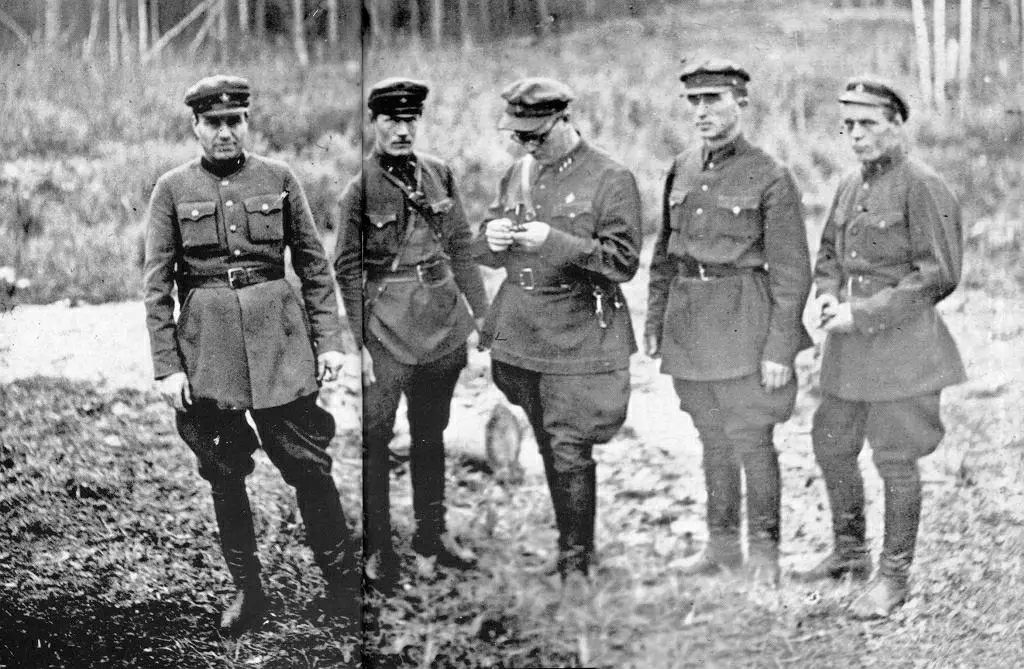
This distinction is important because some of the most famous foreign operations began before Stalin had fully consolidated his power. For example, the “Trust” operation began in the 1920s and deserves to be treated as a separate historical subject. During the Stalin era, however, Soviet foreign operations increasingly took on a more dangerous character.
One major area of Soviet foreign activity concerned émigré communities. After the Bolshevik Revolution and the Russian Civil War, thousands of people left the Soviet territories. Among them were former military officers, politicians, monarchists and members of other anti-Soviet groups. Some continued political activities against the Soviet government from abroad. Moscow therefore viewed them not simply as political opponents living in foreign countries, but also as potential security threats.
Paris — a city where Soviet and anti-Soviet networks collided
In the 1930s, Paris was one of the most important centers of Russian political emigration in Europe. The Russian All-Military Union, known as ROVS, had a network there. It brought together former White Russian military officers.
For Soviet security services, organizations like these were of particular interest. The issue was not simply political propaganda. Soviet intelligence sought to learn what plans émigré groups had, whom they were connected to, and whether their activities could be used against the Soviet Union.
One of the most effective methods used by Soviet intelligence was infiltration into opposition organizations. An agent could spend years appearing to be an ordinary member — or even an influential figure — within an émigré group, while secretly working for Soviet intelligence.
One of the best-known examples is the case of Nikolai Skoblin.
Nikolai Skoblin — an agent inside the opposition
General Nikolai Skoblin was an important figure in the Russian émigré military community and was associated with the activities of the ROVS. It later became known that he was cooperating with Soviet intelligence.

This meant that Soviet intelligence had its own source inside émigré military circles.
Skoblin became particularly important in the case of Yevgeny Miller. Miller was one of the leaders of the ROVS, and his activities were of great interest to the Soviet authorities.
On September 22, 1937, Miller disappeared in Paris. Before leaving for a meeting, he left a note indicating that he was going to meet people who had been presented as German military representatives together with Skoblin. This detail later became an important clue for investigators.
Miller’s disappearance was not an ordinary case of a missing person. He had been kidnapped by Soviet agents and taken to the Soviet Union. He was later imprisoned in Moscow and executed in 1939.
What makes the operation particularly striking is that the Soviet security services used not only physical force, but also trust and deception. The main weapon was sometimes not a gun, but the ability to convince a person that he was going to a safe meeting.
The kidnapping of Yevgeny Miller — a covert operation in Paris
The Miller case demonstrates how far Soviet intelligence could go in targeting a political opponent abroad.

Several people and different cover identities were reportedly used in organizing the operation. Historical sources indicate that Soviet agents posed as German military representatives in order to create a credible setting for the meeting. Miller was brought to the meeting through Skoblin.
But the operation contained one important mistake: before leaving, Miller left a note indicating whom he was meeting and who was expected to be present. When he failed to return, the note became an important clue for French investigators.
Skoblin fled and disappeared from France. Miller, meanwhile, was taken to the Soviet Union.
The case illustrates the basic mechanics of many covert operations of the period: an agent inside the opponent’s circle, a false identity, a staged meeting, abduction and rapid disappearance.
When Soviet agents themselves became targets
During Stalin’s Great Terror, Soviet agents operating abroad were not necessarily safe from their own government.
In the late 1930s, Soviet intelligence increasingly suspected its own personnel of being “enemy agents.” Some officers working abroad were recalled to Moscow. Some were arrested and executed, while others refused to return to the Soviet Union.
Documents published by the Wilson Center show that after 1937, purges also affected Soviet intelligence networks operating abroad. Several well-known intelligence officers were accused of having “Trotskyist” connections; some refused to return to the Soviet Union, while others died abroad.
This created one of the strangest paradoxes of the system: a person could work for the Soviet state for years and later become a target of that same state.
Ignace Reiss — the intelligence officer who broke with Moscow

One of the best-known examples of this paradox is Ignace Reiss.
Reiss was an experienced intelligence officer connected to the Soviet security services. In 1937, during Stalin’s Great Purge, he decided to break with the Soviet government.
His decision was particularly dangerous because he possessed knowledge about the internal workings of Soviet intelligence.
Several weeks later, in September 1937, he was killed near Lausanne, Switzerland. The assassination was linked by historical accounts to Soviet intelligence; the case has generally been discussed as an operation carried out by the NKVD.
The story of Reiss is not simply the story of one assassination. It demonstrates how dangerous a person could become to the Soviet system when he possessed inside information and decided to stop cooperating with it.
Walter Krivitsky — the man who told the West about the Soviet system

Walter Krivitsky was a senior Soviet intelligence officer who defected to the West.
His defection was particularly significant because he had extensive knowledge of the internal workings of Soviet intelligence.
The purges of 1937–1938 also affected Soviet intelligence networks operating abroad. Documentary material shows that several Soviet intelligence officers came under suspicion during this period. Krivitsky became one of the most famous defectors.
His story once again demonstrates that Soviet agents working abroad faced two dangers simultaneously: the counterintelligence services of foreign countries and their own government.
The operation that became a symbol of Stalin’s era — the assassination of Leon Trotsky
Perhaps the most famous Soviet operation abroad was the assassination of Leon Trotsky.
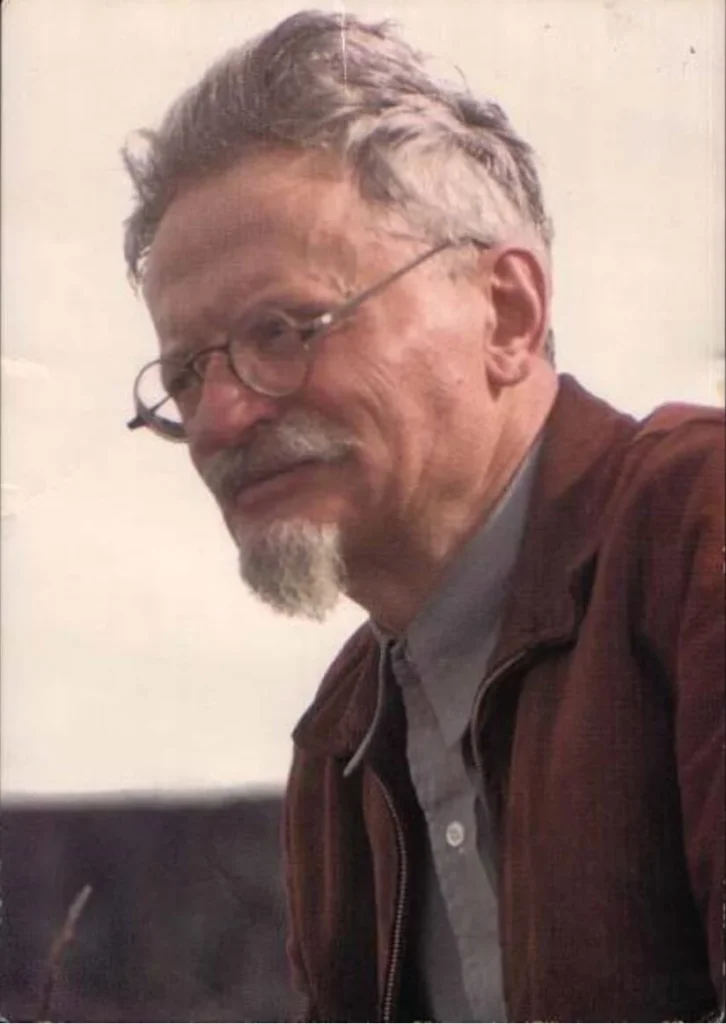
Trotsky was Stalin’s political opponent and one of the most important former leaders of the Soviet state. He remained influential within the international left, and the Soviet government continued to regard him as a serious threat.
In 1940, Trotsky was living in Mexico, where he was protected by guards and had already survived an earlier attack.
On August 20, 1940, Ramón Mercader, who had infiltrated Trotsky’s circle under a false identity, attacked him in his study and struck him with an ice axe. Trotsky initially survived the attack but died the following day.
Mercader was arrested and eventually sentenced to 20 years in prison.
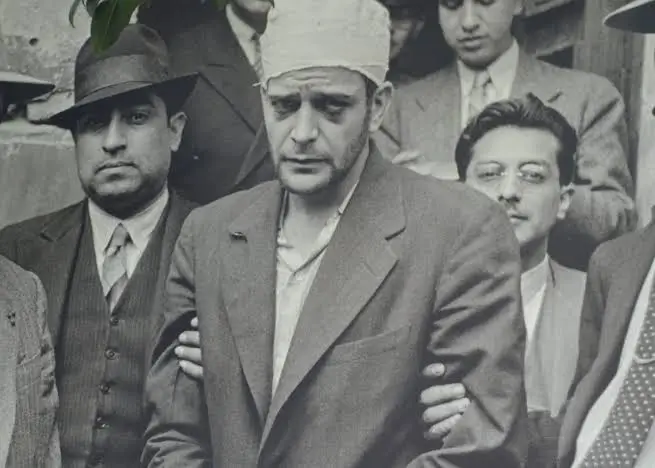
The preparation for the assassination involved more than the final attack itself. Mercader gradually gained access to Trotsky’s circle and established a degree of trust. This is what makes the operation one of the best-known examples of long-term infiltration in the history of intelligence.
The assassination of Trotsky is often discussed as a case in which the Soviet government used long-term covert penetration against a political opponent rather than simply relying on a direct attack.
America and Europe — expanding intelligence networks
Soviet intelligence activity was not limited to monitoring Russian émigrés.
During the 1930s, Soviet intelligence sought to maintain networks in various countries. Military, political and technological information was important to Moscow. Documentary evidence concerning Soviet agents in the United States and Britain shows that foreign networks operated in several areas.
An NKVD document from 1939, later published, describes the activities of the Soviet station in the United States, including contacts with agents, technical intelligence, political work and diplomatic intelligence. The document also illustrates how important the reliability of agents had become.
This material is significant because it shows that Soviet foreign intelligence was not a small network with a single objective. It was a complex system operating in several directions.
Disinformation — a weapon that did not require bloodshed
Covert operations did not always involve assassination or kidnapping.
One important tool of Soviet intelligence was disinformation and deception. Its purpose could be to create a false picture for an opponent, provoke conflicts within political organizations or influence decisions.
The “Trust” operation is one classic example, although its full history deserves a separate article. The operation demonstrated the principle that sometimes the best way to defeat an opponent was to deceive him.
Why was controlling agents abroad so difficult?
Soviet intelligence faced a very different environment outside the USSR.
Inside the Soviet Union, state security agencies had enormous administrative and repressive resources. Abroad, however, they had to operate in the territory of another state, facing foreign police forces, counterintelligence agencies, borders and legal systems.
This is why Soviet intelligence relied on:
Covert agents — people who concealed their real identities;
Secret meetings — organized in small groups and secure locations;
False identities — including the use of diplomatic or civilian cover;
Infiltration of émigré organizations — to obtain information;
Disinformation — to mislead opponents;
Kidnapping — especially when important individuals were to be forcibly transferred to Soviet territory;
and, in the most extreme cases, assassination.
Documentary evidence indicates that such operations were subject to centralized control and that some were connected directly to senior Soviet security officials.
How much do we know today?
The opening of Soviet archives allowed historians to study the structure of the security services and their operations in much greater detail.
However, one important point must be remembered: not all secret documents have been opened, and the complete history of every operation is not known.

Research materials from the Wilson Center indicate that important collections relating to Soviet security agencies exist in Russian state archives, including special files associated with Stalin, Molotov and Beria. At the same time, researchers have not always had full access to these archives.
For this reason, historical writing on secret operations must carefully distinguish between:
what is documented in archival records;
what historians have reconstructed;
what comes from former agents’ memoirs;
and what remains only a possible interpretation.
This distinction is especially important because stories about secret operations have often been surrounded by myths and political propaganda.
Conclusion — a secret war without borders
The foreign operations of Stalin-era Soviet security services demonstrate that, for the Soviet government, political conflict did not end at the country’s borders.
The struggle against émigré organizations, infiltration of foreign networks, disinformation, kidnappings and assassinations of political opponents represented different aspects of Soviet activity abroad.
The kidnapping of Yevgeny Miller in Paris, the killing of Ignace Reiss in Switzerland and the assassination of Leon Trotsky in Mexico were different operations, but they shared one important feature: the Soviet government used covert methods to pursue political opponents beyond Soviet borders.
What is most striking about these stories is not only how the agents operated. It is the broader question of how a state security system could become an instrument whose operational boundaries no longer corresponded to the country’s physical borders.
That is why declassified documents are so valuable today. They reveal not only individual espionage stories, but also the mechanisms of an entire political system — a system that pursued its opponents abroad and, at times, showed no mercy even toward its own agents.
The images used in the article are sourced from Wikimedia Commons and are in the public domain.
If you found the article interesting, share it with your friends and leave a comment.