
The Beginning of Modern Art
Art has never been only about beauty. Often, it is protest, challenge, shock, and questions that society prefers to avoid. Throughout art history, many works have shaken the moral foundations of their time, but one painting elevated this to an entirely new level.
This is the canvas by the French painter Édouard Manet — “Le Déjeuner sur l’herbe” (Luncheon on the Grass).
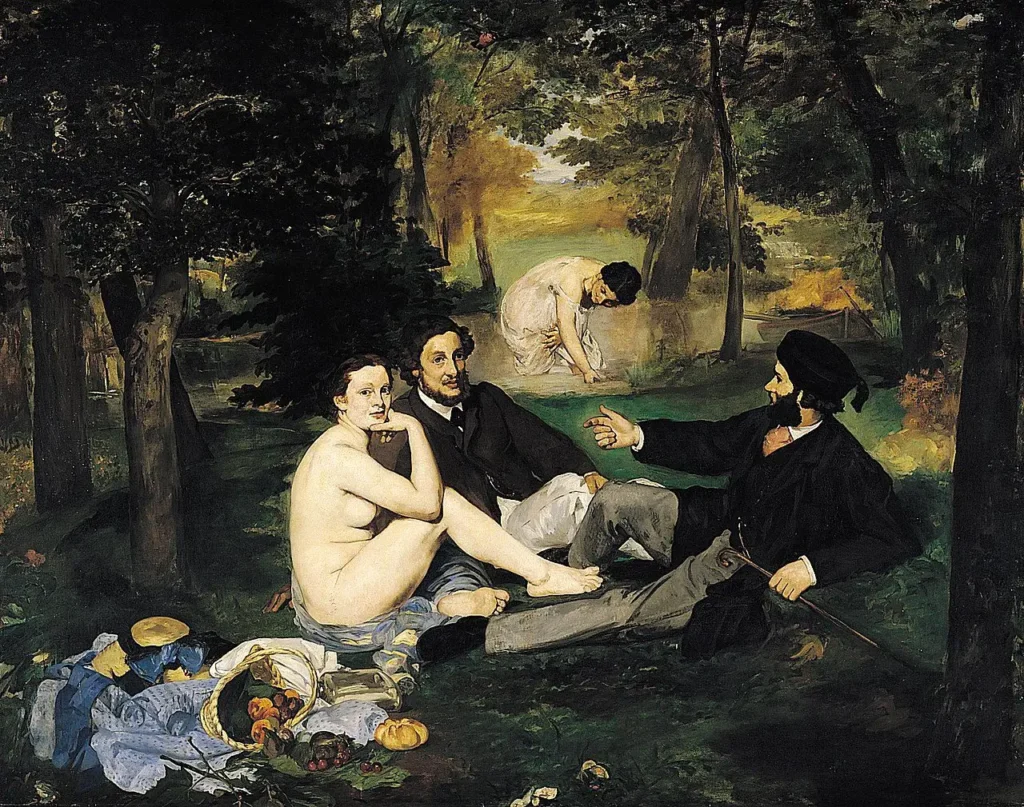
In 1863, one of the most important art exhibitions in Paris — the Salon — took place. Manet presented a painting depicting two dressed men and a naked woman sitting in nature. At first glance, it appears to be an ordinary picnic, but the problem was that the woman was neither a mythological figure nor a fictional being — she was a real Parisian woman, an ordinary citizen.
At that time, nude figures in art were considered acceptable only if they represented gods, mythological heroes, or allegories. Manet, however, portrayed a nude woman in a real setting alongside real people — and this caused a scandal.
The composition of the painting sharply differs from academic norms. The figures seem placed in the foreground, the spatial relationships are not perfectly calculated, and the light and color do not create a classical illusion.
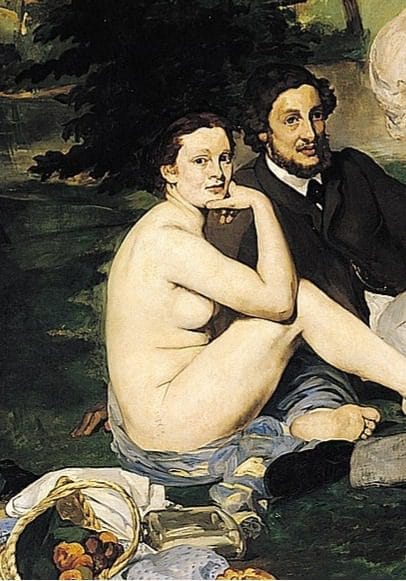
Especially important is the woman’s gaze: she looks directly at the viewer. This broke the traditional relationship between art and audience. The female figure is not idealized or “hidden” in symbolism — she is presented as a real person.
After the exhibition, rumors spread across Paris. Newspapers called the work immoral, indecent, and a mockery of art. Many visitors went to the exhibition specifically to laugh at the painting or insult it.
Some were so outraged that they shouted loudly in front of the canvas. Viewers claimed it was “not art,” but a “provocation.”
Manet did not aim to create a scandal. His goal was to show real life as it is — without concealment, without idealization. The painting was not a provocation, but an “intellectual challenge” of its time.
For him, art should no longer be just a display of ideal beauty. He wanted to turn it into a mirror of society.
The nude woman in his painting is not an erotic object — she looks directly at us, as if asking:
“Why does my existence disturb you so much?”
How the Painting Changed Art History
Although society rejected the painting at the time, today art historians consider it the beginning of modern art.
Manet’s work became the foundation of movements that later gave rise to:
- Impressionism
- Modernism
- Contemporary painting
He was among the first to dare to show reality directly, without idealization — and this is what freed art from old rules.
Ironically, the painting that was once mocked and criticized is now housed in one of Paris’s most famous museums — the Musée d’Orsay — and is valued at hundreds of millions of dollars.
What was once considered “immoral” is now part of the world’s cultural heritage.
Conclusion
Édouard Manet’s “Luncheon on the Grass” is considered one of the most important works in the history of 19th-century European painting. Although it does not strictly belong to the Impressionist movement, it created the intellectual and aesthetic foundation upon which modern art later developed.
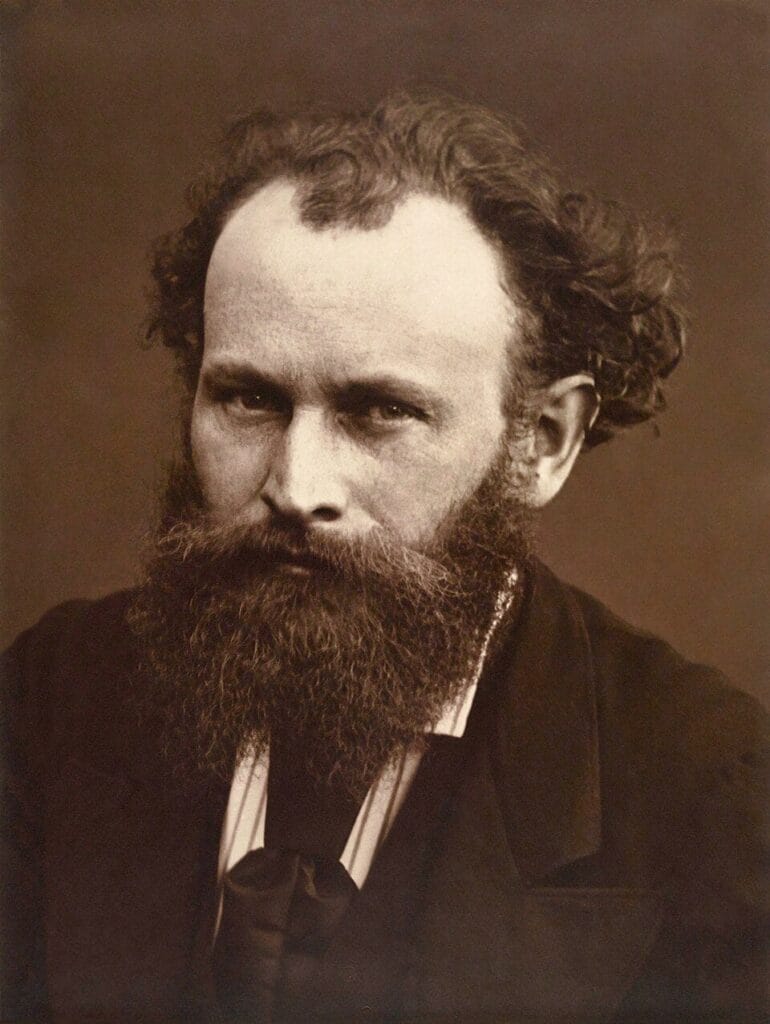
Manet dared to break the academic rules that had defined for centuries how the human body, nature, and everyday life could be depicted.
Today, this painting is seen as one of the first steps on the path that led to the diverse and free forms of modern art.
Photos used in this article are sourced from Wikimedia Commons and are public domain.
If you found the article interesting, share it with your friends and leave a comment.