When the Playing Field Became a Battlefield
Four Sporting Events That Left a Mark on World History
Sports are usually associated with entertainment, competition, and a healthy lifestyle. Yet history has shown that there were moments when a stadium, a swimming pool, or a sports arena became far more than just a place for competition. They became stages where national pride, political conflicts, and even international relations were put to the test.
Sometimes a single match, a single goal, or even a chance encounter proved more influential than armies or diplomatic negotiations. These are four remarkable stories that demonstrate how sport has shaped the course of history.
1. “Blood in the Water” — The Most Dramatic Match of the 1956 Melbourne Olympics
In November 1956, Soviet troops entered Budapest and brutally crushed the Hungarian Uprising. At the same time, Hungary’s national water polo team was already competing at the Olympic Games in Melbourne. Many of the players learned only after arriving in Australia that their homeland had been devastated and that the fate of their families remained uncertain.

The Olympic semifinal brought Hungary face-to-face with the Soviet Union. It was no longer just a sporting contest—it had become a symbol of national pride and resistance.
“We felt that we weren’t playing only for ourselves, but for all of Hungary,” Hungarian star Ervin Zádor later recalled.
The match quickly turned violent. Beneath the water, players kicked, punched, and wrestled with each other throughout the game. With just minutes remaining and Hungary leading 4–0, Soviet player Valentin Prokopov struck Zádor in the face. The Hungarian emerged from the pool with blood streaming down his face, creating one of the most iconic images in Olympic history.
The crowd reacted furiously, with spectators attempting to storm the pool area before police intervened. The match was ended early, Hungary was declared the winner, and the team went on to win Olympic gold. “Blood in the Water” remains one of the most powerful examples of the intersection between sport and politics.
2. Ping-Pong Diplomacy — The Chance Meeting That Brought Two Nations Closer (1971)
In the early 1970s, the United States and the People’s Republic of China had virtually no diplomatic contact. Decades of Cold War hostility had left the two countries deeply distrustful of one another.

During the 1971 World Table Tennis Championships in Japan, American player Glenn Cowan accidentally boarded the Chinese team’s bus. At first, silence filled the bus, as Chinese athletes were discouraged from interacting with foreigners—especially Americans.
Then China’s legendary player Zhuang Zedong broke the silence. He walked over, shook Cowan’s hand, and presented him with a silk tapestry depicting a Chinese landscape. Cowan responded by giving him a souvenir T-shirt.
Photographs of the encounter made headlines around the world. Soon afterward, China invited the U.S. table tennis team to visit Beijing—the first official American delegation to enter China since 1949. The visit paved the way for warmer relations, eventually leading to President Richard Nixon’s historic trip to China and a new era in U.S.–China diplomacy.
The episode has since become known as “Ping-Pong Diplomacy.”
3. The Falklands War and Maradona’s Revenge (1986)
In 1982, Argentina and the United Kingdom fought a brief but bloody war over the Falkland Islands. Although Britain emerged victorious, the conflict left deep emotional scars across Argentina.
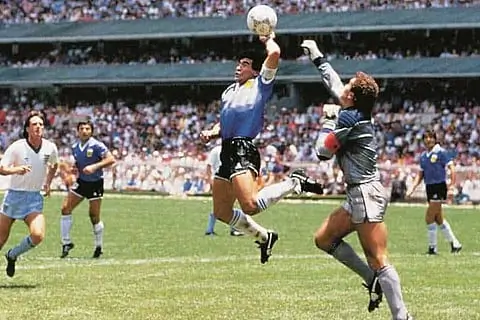
Four years later, the two nations met again—this time on the football field—in the quarterfinals of the 1986 FIFA World Cup in Mexico. For many Argentinians, the match represented far more than a place in the semifinals.
Its central figure was Diego Armando Maradona.
His first goal became infamous. He punched the ball into the net with his hand, but the referee failed to notice the infringement. Later, Maradona famously described it as being scored “a little with the head of Maradona and a little with the hand of God.”
Only minutes later, he produced what many consider the greatest goal in football history. Starting from inside his own half, he dribbled past multiple English defenders and the goalkeeper before scoring. The goal is still widely remembered as the “Goal of the Century.”
Argentina won the match 2–1 and later captured the World Cup title. For many Argentinians, the victory symbolized the restoration of national pride after the trauma of war.
4. The Christmas Truce — When Football Paused a World War (1914)
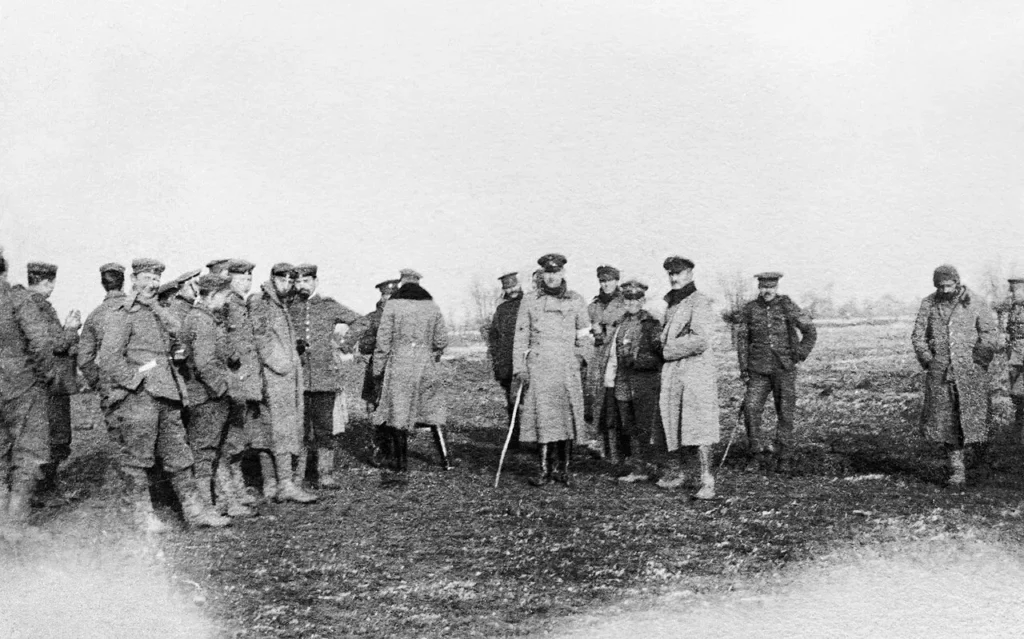
The opening months of the First World War were marked by relentless violence. British and German soldiers faced each other from muddy trenches along the Western Front, where thousands died in brutal fighting.
On the night of December 24, 1914, something extraordinary happened.
Christmas carols drifted from the German trenches. British soldiers responded by singing songs of their own. Within hours, soldiers from both sides laid down their weapons and met in the area between the trenches, known as No Man’s Land.
They exchanged Christmas greetings, cigarettes, food, and small gifts. In several sectors of the front, they even organized informal football matches, using military coats as goalposts.
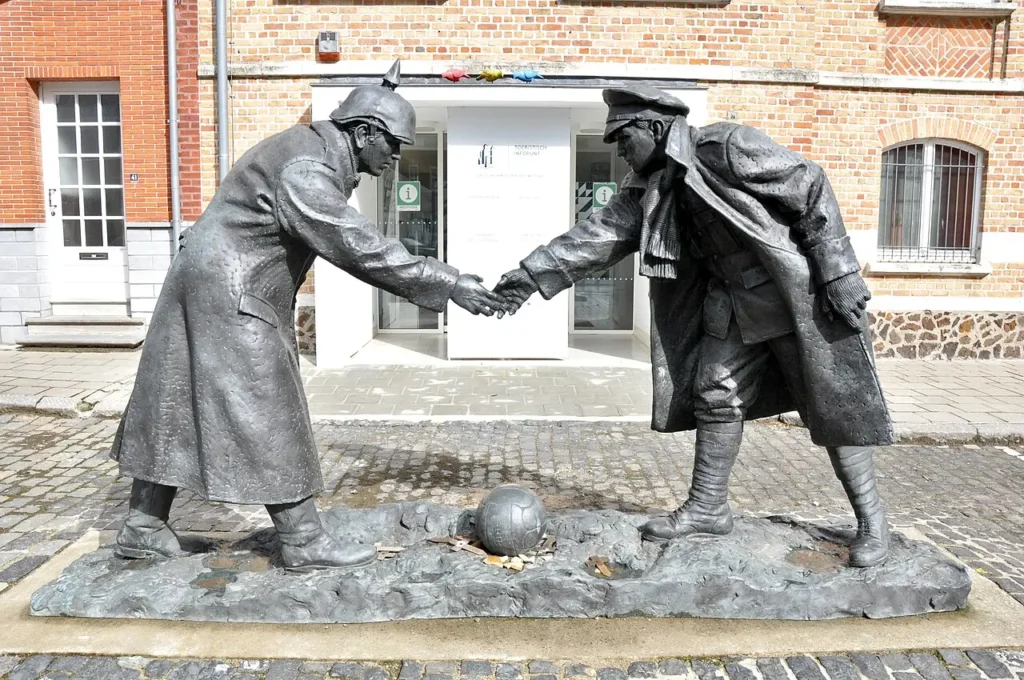
Although the truce lasted only briefly and the fighting soon resumed, the Christmas Truce has become one of history’s most moving reminders that even in the darkest moments of war, humanity can prevail.
Conclusion
These four stories remind us that sport is about far more than medals, trophies, or final scores. It often reflects the emotions of nations, the struggles of societies, and the realities of global politics.
Sometimes the playing field becomes a battlefield. At other times, it becomes a bridge to peace. That is why certain sporting events are remembered not only for who won or lost, but for the lasting impact they had on the world.
The images used in the article are sourced from Wikimedia Commons and are in the public domain.
If you found the article interesting, share it with your friends and leave a comment.