Vasily Arkhipov — The Man Who Saved the World from Catastrophe
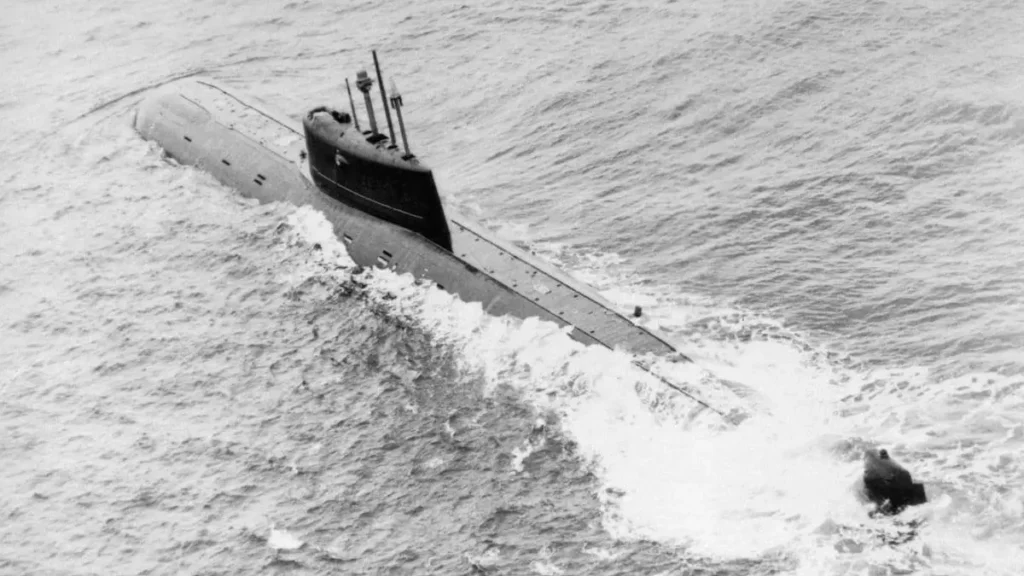
On October 27, 1962, deep beneath the Caribbean Sea, the Soviet submarine B-59 was surrounded by American military vessels. Inside the submarine, the air was becoming increasingly oppressive, the temperature was extremely high, the crew was exhausted and drained, and they had lost contact with Moscow. They did not know whether war between the United States and the Soviet Union had already begun. Outside, they could hear explosions. American vessels were trying to force the submarine to surface, but the Soviet crew had no information about this. To them, everything looked like a genuine attack.
But B-59 was carrying something far more dangerous than conventional weapons. The submarine had a nuclear torpedo on board with a yield of approximately 15 kilotons — a weapon whose detonation could have had catastrophic consequences. At that moment, the Americans did not know that the Soviet submarine was armed with a nuclear torpedo.
The submarine’s commander, Valentin Savitsky, thought that war had already begun. He ordered preparations for the use of the nuclear torpedo. And at that very moment, the decision of three men stood before history.
Two of them agreed.
The third said — No.
That third man was Vasily Arkhipov.
The Man Almost No One Knew About

Vasily Arkhipov was born in 1926 in the Soviet Union. He studied at a naval school and, after the end of World War II, continued his service in the Soviet submarine fleet. His career gradually advanced, and eventually he became one of the senior officers of a submarine brigade.
Arkhipov was neither a member of the highest political leadership of the Soviet Union nor a military figure whose name appeared regularly in newspapers. He was a professional submarine officer who had accumulated experience throughout his career that went far beyond ordinary military service.
One of the most important events in his life took place in 1961.
It was the K-19 disaster.
K-19 — The First Warning
In 1961, Arkhipov was aboard K-19 when the Soviet nuclear submarine suffered a serious technical accident. A problem developed in the reactor cooling system, and the nuclear reactor was in danger of overheating.
The crew had very little time.
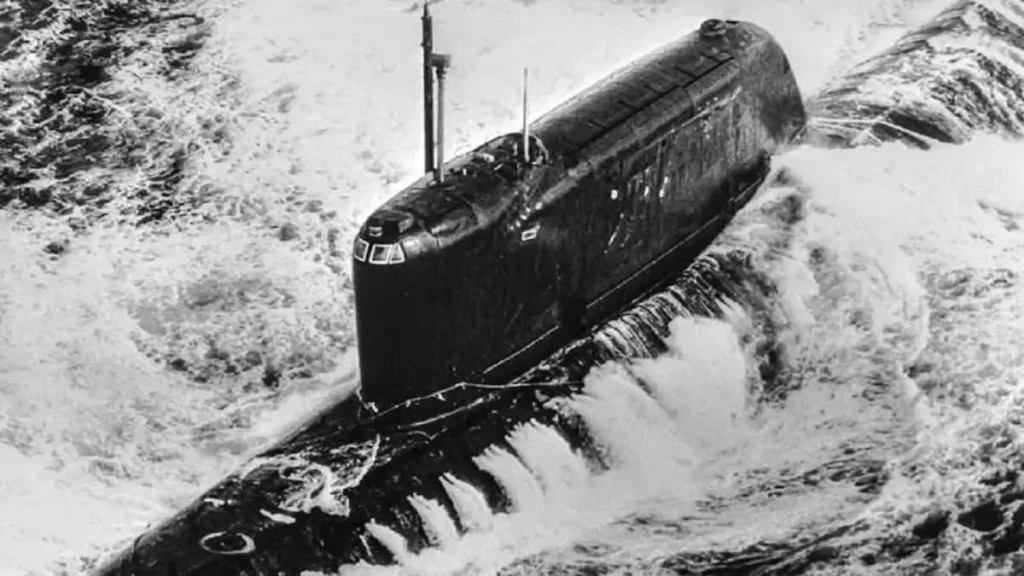
If the reactor temperature reached a critical level, the consequences could have been catastrophic. The sailors began constructing an improvised system that would allow them to cool the reactor. To do this, several men entered an area with extremely high levels of radiation.
The crew members managed to cool the reactor and save the submarine at the cost of their lives. Arkhipov was also involved in these events. The significance of this experience became much clearer a year later. In 1962, he once again found himself facing a nuclear threat, but this time the problem was no longer a technical reactor accident. The possibility of using a nuclear weapon was now at the center of the situation.
The Cuban Missile Crisis
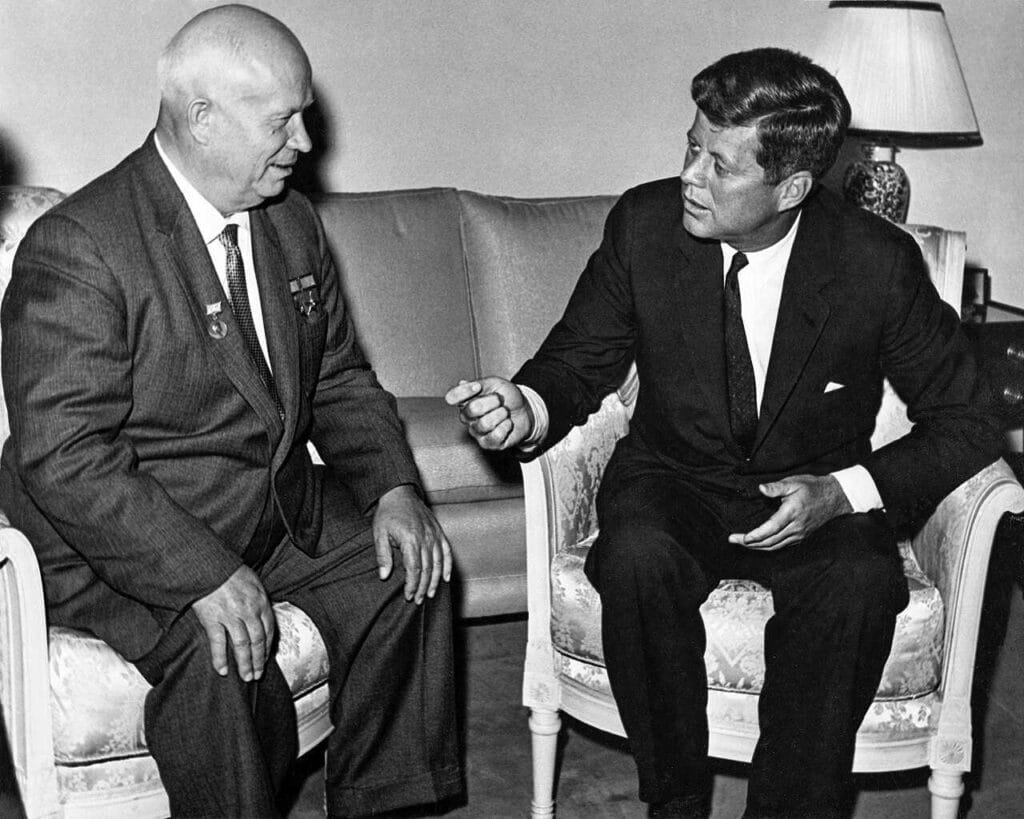
In October 1962, the United States discovered that the Soviet Union was attempting to deploy nuclear missiles in Cuba. The confrontation between U.S. President John F. Kennedy and Soviet leader Nikita Khrushchev brought humanity to one of the most dangerous points in the history of nuclear war.
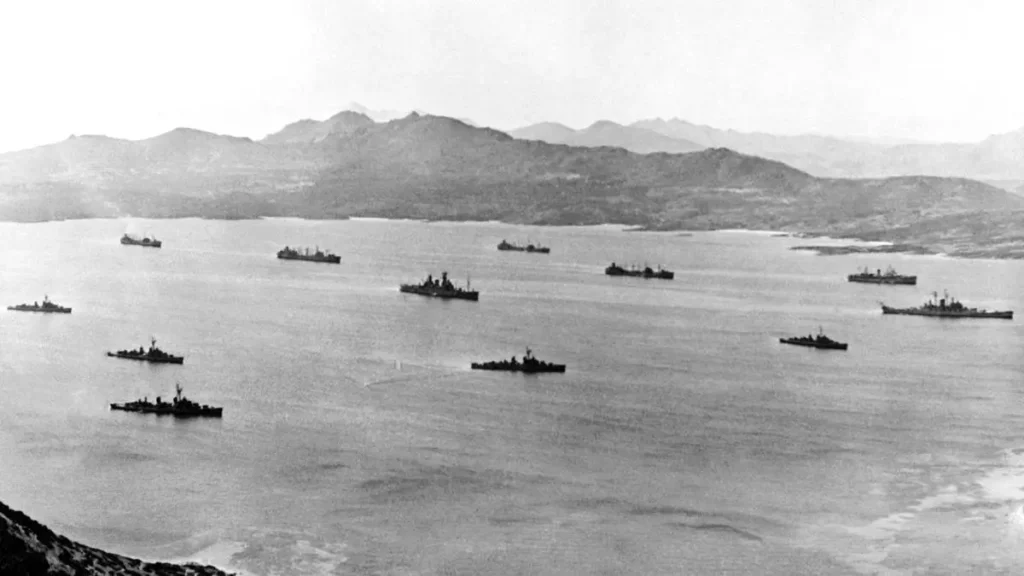
The United States established a naval “quarantine” around Cuba. American military vessels controlled the area and attempted to locate Soviet ships and submarines. The Soviet Union, meanwhile, sent several submarines toward Cuba.
One of them was B-59.
These submarines had a highly secret mission. Each of them carried one nuclear torpedo on board. At that moment, American intelligence knew nothing about this. This circumstance later proved to be one of the most frightening parts of the entire story.
American vessels searched for the submarines without knowing that they might be carrying nuclear weapons. The Soviet crews, meanwhile, watched the actions of the American military without having complete information about Washington’s real intentions. Both sides were hiding something from each other. And both were afraid.
B-59 Deep Beneath the Caribbean Sea
B-59 had to remain underwater for a long time. Its diesel engines and batteries were not designed for prolonged operations under such conditions. Conditions inside the submarine were becoming increasingly difficult.
The temperature, especially in the engine compartment, became extremely high. Carbon dioxide levels increased. The crew also faced problems with their water supply. The men were exhausted and worked for hours under difficult conditions. At the same time, they had no normal radio communication with Moscow.
This detail may seem insignificant, but it became one of the main causes of what happened next. The crew of B-59 did not know what was happening on the surface. They did not know whether political negotiations were continuing. They did not know what orders the Soviet leadership was receiving. They did not know whether war had already begun. And then American military vessels appeared around them.
Explosions Underwater
The U.S. Navy wanted to bring B-59 to the surface. American vessels were using special signaling depth charges in the direction of the submarine. Their purpose was not to destroy the submarine, but to force it to surface and identify itself. But the crew of B-59 knew nothing about this. Inside the submarine, they could hear the sound of explosions. American aircraft were flying outside. Searchlights illuminated the submarine’s conning tower. The situation increasingly resembled a full-scale attack.
Vasily Arkhipov later recalled these events himself, in 1997. According to his account, aircraft were flying very low, using powerful searchlights, and the sounds of gunfire and explosions could be heard near the submarine.
The submarine’s commander, Valentin Savitsky, found himself in an extremely difficult situation. He thought that war might already have begun.
The Nuclear Torpedo
The nuclear torpedo aboard B-59 was not an ordinary weapon. Its yield was approximately 15 kilotons — roughly the same scale as the atomic bomb dropped on Hiroshima.
If it had been used, its closest target would have been the American aircraft carrier USS Randolph. Documents published by the National Security Archive state that the vessel carried approximately 3,400 sailors and Marines.
But the explosion would not have meant only the destruction of one American vessel. U.S. forces in the region also had nuclear depth charges. If the Americans had seen that a Soviet submarine had used a nuclear weapon, their response could have been extremely rapid and devastating.
The next step would then have depended on decisions in Moscow and Washington. That is precisely why the decision made aboard B-59 could have become the beginning of a much larger conflict.
Three Men in One Room
Now we come to the moment that made Vasily Arkhipov’s name connected with one of the most extraordinary episodes in history. Three senior officers were in B-59’s command compartment:
Valentin Savitsky — the submarine’s commander;
Ivan Maslennikov — the political officer;
Vasily Arkhipov — chief of staff of the submarine brigade, who was aboard B-59 during this particular operation.
Savitsky believed that war between the Soviet Union and the United States had already begun. He wanted to use the nuclear torpedo. According to subsequent testimony and published materials, the decision required the agreement of three senior officers.
Savitsky agreed. Maslennikov agreed as well. The third voice was Arkhipov’s.
And Arkhipov did not give his consent.
One “No”
Arkhipov’s opposition to launching the nuclear torpedo was based on the fact that he paid attention to the actions of the American forces and realized that some of their signals might indicate not an attack, but a demand for the submarine to surface.
According to materials published by the National Security Archive, Arkhipov urged Savitsky to calm down, recognize that the Americans were sending a signal, and send a response signal. Savitsky eventually ordered the submarine to return the signal.
That was the moment that changed the direction of the situation. B-59 did not become the first Soviet submarine to use a nuclear weapon. The submarine surfaced, and the torpedo was not fired.
Did Arkhipov Really “Save the World”?
This is where historical fact must be separated from legend.
In 2002, at a conference marking the 40th anniversary of the Cuban Missile Crisis, Thomas Blanton, director of the U.S. National Security Archive, made a famous statement: “A guy called Vasili Arkhipov saved the world.”
That statement spread Arkhipov’s story around the world, but historians should be more cautious. We do not know exactly what would have happened if the nuclear torpedo had been fired. American forces might have launched a retaliatory strike. The conflict might have ended quickly. Or events might indeed have escalated into a full-scale nuclear war.
It is impossible to say with certainty.
But one thing is confirmed: B-59 was armed with a nuclear torpedo, the crew was operating under extremely difficult conditions, the Americans had no information about the weapon, and the submarine ultimately did not use a nuclear weapon.
Therefore, it is more accurate to say:
Arkhipov may have played a decisive role in preventing nuclear war.
One Important Contradiction
There is another interesting detail in this story. Arkhipov’s own 1997 account does not directly say that he was the person who single-handedly stopped the launch of the nuclear torpedo. Instead, he describes the chaos that had developed, Savitsky’s condition, and how they realized that the American forces were sending signals rather than carrying out a direct attack.
That is why it is more difficult for historians to reconstruct exactly what happened during those few minutes. However, the accounts of other participants and documents published later provide a much clearer picture of Arkhipov’s role. Materials from the National Security Archive directly describe that the decision to use the nuclear torpedo required the agreement of three senior officers and that Arkhipov was opposed.
This distinction is important.
Historical truth is not always as simple as a movie script.
Sometimes the main event is known as a matter of fact, but different witnesses remember exactly how each second unfolded in different ways.
Why Did the Americans Know Nothing?
The most frightening detail today is also that the American military did not realize how dangerous their actions were. They were trying to bring B-59 to the surface. But they did not know that the submarine was carrying a nuclear torpedo. They did not know that the Soviet crew had lost contact with Moscow. They did not know that the submarine’s captain might have thought that war had already begun.
And, consequently, the American side could not have imagined that what appeared to be a routine signaling operation could bring the situation to the point of nuclear weapons being used.
This is one of the most important lessons of the Cuban Missile Crisis: in the nuclear age, catastrophe does not always begin with a preplanned decision. Sometimes it can be caused by a misunderstanding.
That Day Was Not Only About B-59
October 27, 1962, is not considered the most dangerous day of the Cuban Missile Crisis by accident. On the same day, an American U-2 reconnaissance aircraft was shot down over Cuba by a Soviet surface-to-air missile, killing the pilot, Rudolf Anderson. The situation became even more tense within the American military leadership.

At the same time, the B-59 incident was unfolding in the Caribbean. On one side, American and Soviet forces were dangerously approaching one another. On the other, political negotiations between Washington and Moscow were continuing.
Only a few more mistakes, a misunderstood order, or one bad decision might have been enough to push the situation out of control.
Documents published later about the Cuban Missile Crisis showed that both sides were often operating with incomplete information during those days.
Why Didn’t Arkhipov Become a Soviet Hero?
If Arkhipov’s decision was truly so important, why did he not become a famous hero of the Soviet Union? One reason was the secrecy surrounding the incident itself.
Soviet military operations were highly classified. The general public was not supposed to know that Soviet submarines were operating with nuclear torpedoes near Cuba.
The Americans also did not know the full picture. As a result, neither Soviet society nor Western society had complete information about how close the world had come to catastrophe. Arkhipov’s name remained outside the history books for decades.
The Truth Emerged Only Later
After the Cuban Missile Crisis ended, the story of B-59 did not immediately become known to the general public. The 40th-anniversary conference on the Cuban Missile Crisis, held in Havana in 2002, played an important role in bringing the memories of former Soviet and American participants together in one place.
It became clear there that the actions carried out by American vessels against the submarine had been far more dangerous and confusing for the Soviet crew than the American side had realized.
Only later did it also become known that Soviet submarines had been carrying nuclear torpedoes. The emergence of this information partly rewrote the history of the Cuban Missile Crisis.
Until then, people knew that the world had come close to nuclear war. Now it became clear that this danger did not exist only in the offices of presidents. It was also hidden inside the dark and confined compartments of submarines.
The Man Who Did Not Consider Himself a Hero
The most interesting aspect of Arkhipov’s story is that he himself did not portray all of this as a decisive moment in world history. To him, it was one of the most difficult days of his military service. He had no idea that in the future people would write books about his decision, make documentaries, and call him “the man who saved the world.”
Arkhipov died in 1998.
He did not live to see the period when his story became known to the wider public. There is a particular irony in this. The man whose name would later become associated with preventing nuclear war was already dead by the time that happened.
What Remained After That Day?
The Cuban Missile Crisis ended within several days. The Soviet Union began withdrawing its missiles from Cuba, while the United States pledged not to invade Cuba. At the same time, a secret agreement was made to remove the American Jupiter missiles from Turkey.
The world avoided war.
But people did not know for a long time just how close everything had come to catastrophe. The story of B-59 changed that picture. It showed that the prevention of nuclear war was not solely the result of negotiations between Kennedy and Khrushchev. At some of the most dangerous moments, decisions were made by people whose names never appeared in any newspaper.
One of them was Vasily Arkhipov.
The Man Who May Have Prevented History’s Most Terrible Chapter
Today, it is impossible to know exactly what would have happened if B-59 had actually fired the nuclear torpedo. An American military vessel might have been destroyed. The Americans might have launched a retaliatory strike. The tension between the Soviet leadership and the American government might have escalated into a full-scale war. Or perhaps everything would ultimately have been brought to a halt.
There is no exact answer to these questions.
That is why Vasily Arkhipov’s story still reminds us of one simple but frightening truth:
The fate of humanity can sometimes lie not in the hands of the most powerful people, but in the decision made by a single person — a decision that may seem insignificant at the time, yet could determine the fate of millions of lives in the future.
The images used in the article are sourced from Wikimedia Commons and are in the public domain.
If you found the article interesting, share it with your friends and leave a comment.