
The Antikythera Mechanism: Ancient Greek computer
The history of humanity is full of discoveries that radically change our perceptions of the past. However, there is one object that shocked scientists and forced them to re-evaluate the technological capabilities of the ancient world. This is the Antikythera Mechanism — a device often called the “world’s first computer.”
A Secret Discovery from the Seabed
It all began in 1900, when Greek sponge divers discovered the wreck of an ancient Roman ship near the island of Antikythera. The ship, dating back to the 1st century BC, was full of valuable statues and jewelry. However, among the discovered items was a seemingly insignificant, corrosion-eaten piece of bronze.
It was only a year later that archaeologist Valerios Stais noticed that this “piece” had gears inside it. At that time, no one could imagine that this object was more complex than any other device humanity created for the next 1500 years.

Amazing Engineering: What is Hidden Inside the Body?
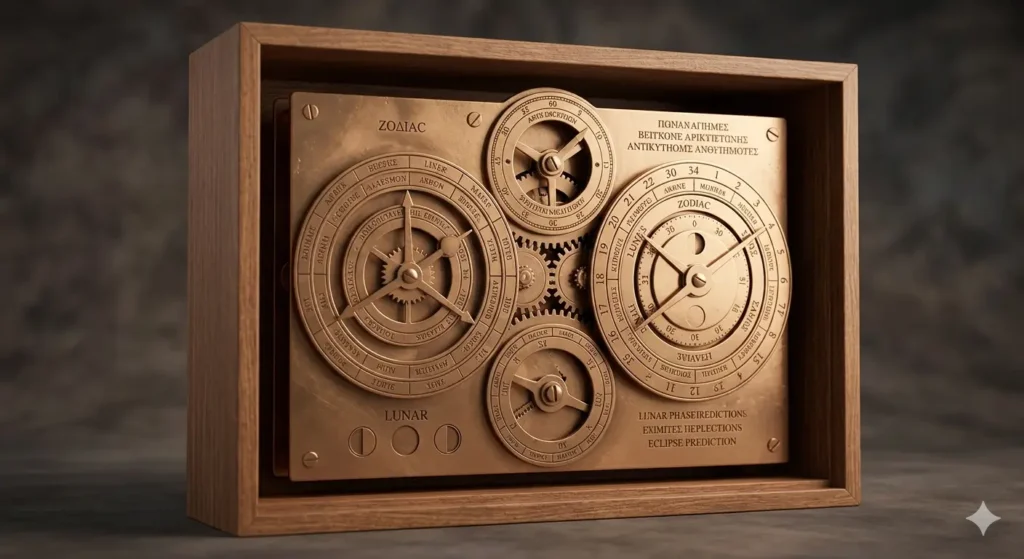
The Antikythera Mechanism was originally housed in a wooden box and was no larger than a shoebox. It had front and back dials covered with inscriptions — a kind of “instruction manual.”
Modern X-ray and tomographic studies have shown that the mechanism consisted of at least 30 bronze gears. These gears were so precisely interconnected that they could be used to perform complex mathematical calculations. Differential gearboxes of this level appeared in Europe only in the astronomical clocks of the 14th century.
What Was the “Ancient Computer” Used For?
This device was not just a clock. It was a real astronomical calculator. Its main functions included:
- Predicting Planetary Motion: The mechanism showed the position of the Sun, the Moon, and the five planets known at that time (Mercury, Venus, Mars, Jupiter, Saturn) in the sky.
- Lunar Phases: The device accurately calculated the lunar calendar and showed the changing phases of the Moon.
- Predicting Eclipses: The mechanism could foretell when a solar or lunar eclipse would occur, and with the accuracy of a specific time and color.
- Olympic Games Calendar: One of the dials was dedicated to the four-year cycle of Panhellenic games (including the Olympics).

Who Was Its Author?
Debates among scientists continue to this day about who created this ingenious device. Analysis of the inscriptions suggests that it may have been manufactured on the island of Rhodes. Many researchers associate it with the great Greek mathematician and inventor — Archimedes, or his school. Although Archimedes died earlier than the mechanism’s creation, it is likely that the device was created based on his technological legacy.
Why Was This Knowledge Lost?
The Antikythera Mechanism shows that Ancient Greeks were very close to an “industrial revolution.” However, a logical question arises: if they could create such complex machines, why didn’t this progress continue?
Historians believe that such items were very expensive and rare. The rise of the Roman Empire, wars, and subsequent social changes caused this level of engineering knowledge to simply disappear. It took humanity 1500 years to technologically approach the same benchmark.
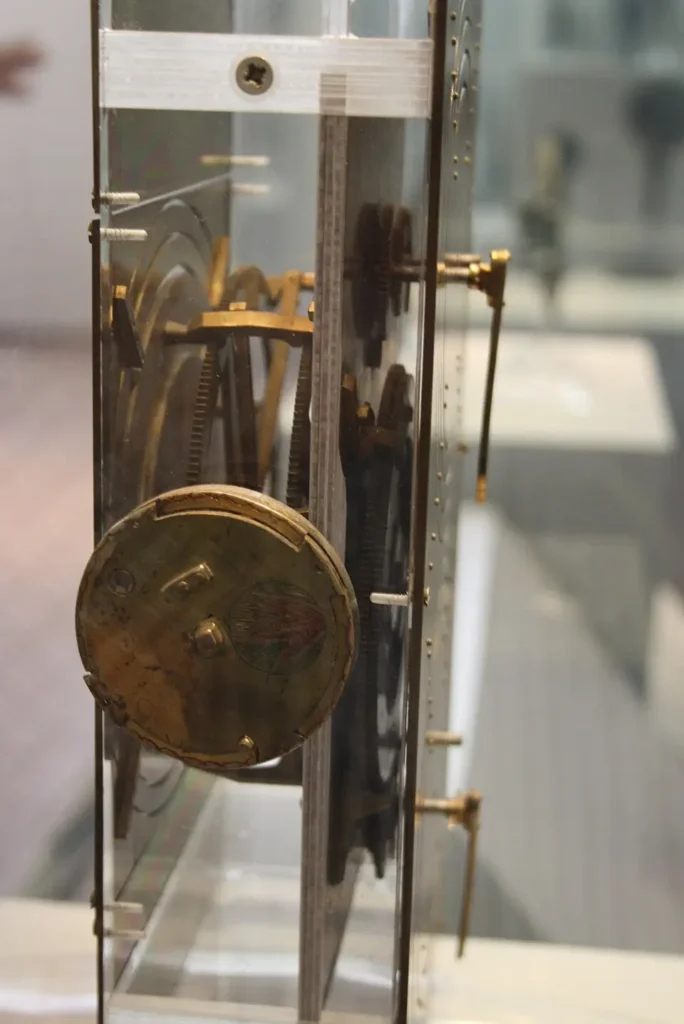
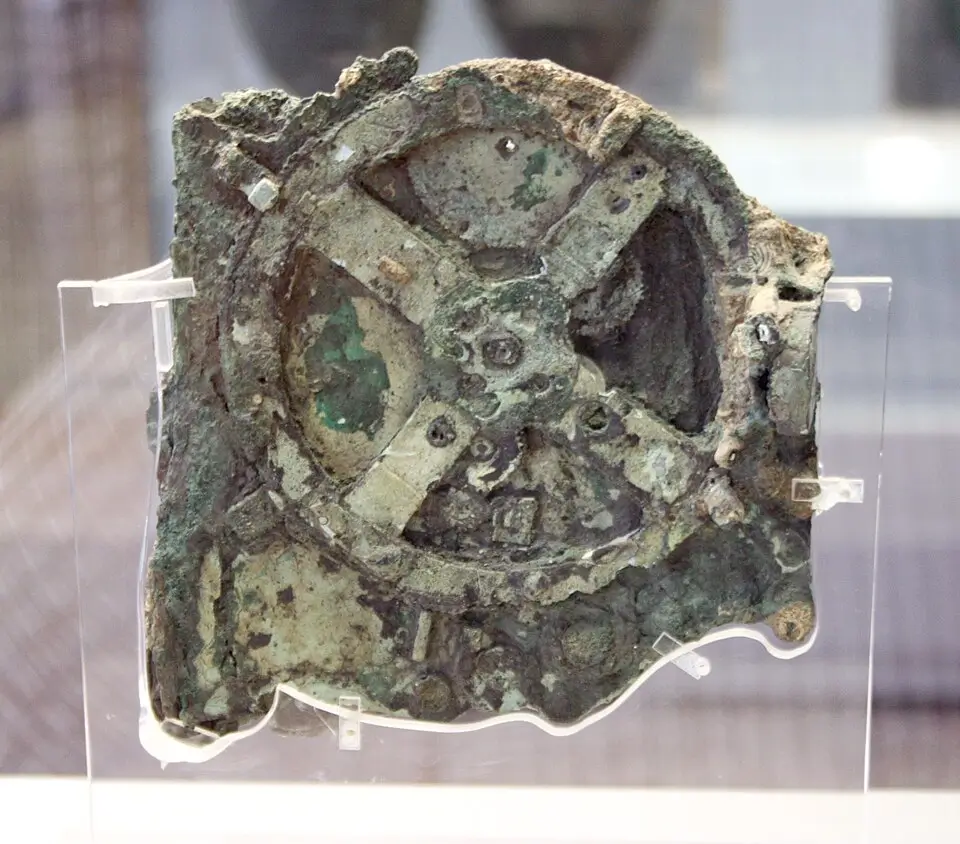
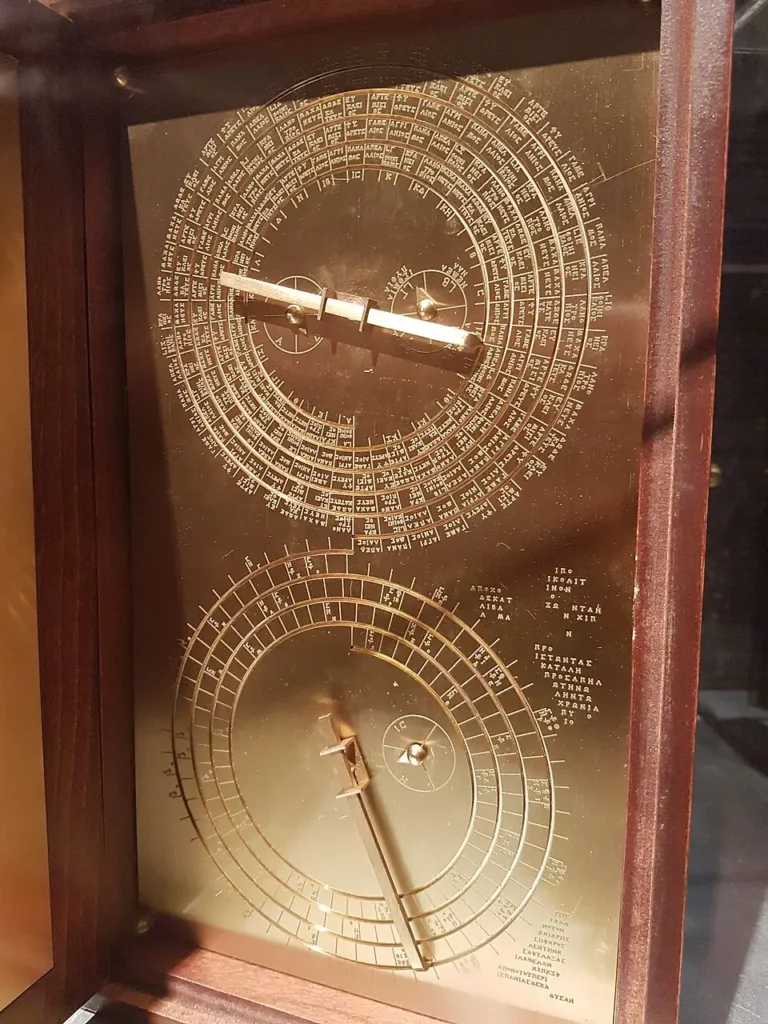
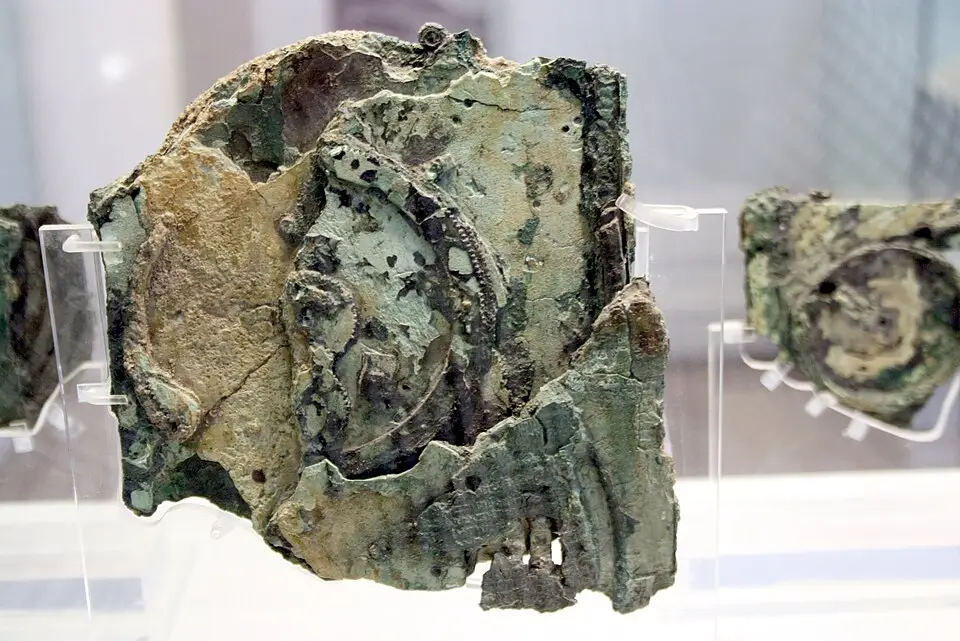
Antikythera Mechanism – Exhibits of the Archaeological Museum of Athens
Conclusion
The Antikythera Mechanism is proof that the human mind has always strived to solve the laws of the universe. It reminds us that history is not always linear — sometimes we lose great knowledge and then spend centuries reinventing it.
Today, this unique exhibit is kept in the National Archaeological Museum of Athens and continues to amaze millions of people with its mystery and genius.
If you found the article interesting, share it with your friends and leave a comment.