The Dissolution of the Soviet Union — How a Superpower That Ruled Half the World Collapsed
On December 26, 1991, the world witnessed one of the most significant events in modern history—the Soviet Union ceased to exist. A state that had been one of the world’s most powerful political, military, and economic forces for nearly 70 years collapsed within a matter of months. This event became a turning point not only for the people of the Soviet Union but for the entire world.
But how did a superpower with millions of soldiers, thousands of nuclear warheads, and a vast territory ultimately fall apart?
An Empire That Seemed Unstoppable
Following the Russian Revolution of 1917, the Soviet Union was officially established in 1922. Its goal was to build a socialist state based on communist ideology.
After World War II, the Soviet Union emerged as a true superpower. Its influence stretched from Eastern Europe to Asia. Soviet scientists launched the first artificial satellite into space and later sent the first human into orbit.
At first glance, the country appeared immensely strong. Behind this impressive image, however, serious problems were steadily growing.
An Economy Slowly Falling Apart
The Soviet economy was based on centralized planning. All major economic decisions were made in Moscow. While this system initially produced results, its weaknesses became increasingly obvious over time.
Factories often produced goods that people did not need, while essential products remained in short supply. Long lines outside stores became a common sight. Citizens frequently waited for hours to buy bread, meat, clothing, and other basic necessities.
During the 1970s and 1980s, economic growth nearly came to a halt. The government spent enormous sums on the military while the civilian sector lagged further behind the West.
The Cold War and the Arms Race
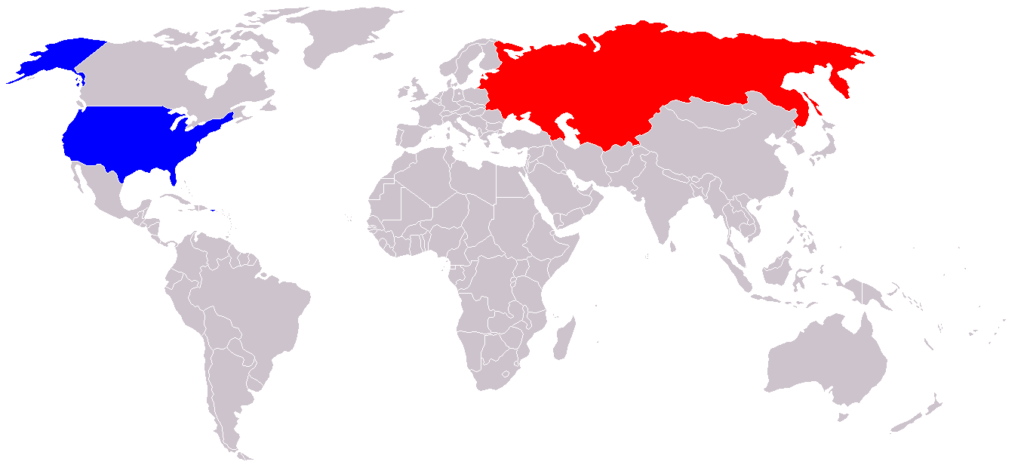
For decades, the Soviet Union and the United States were locked in a global rivalry known as the Cold War.
Both sides sought military superiority over the other. Developing nuclear weapons, producing advanced missiles, and investing in military technology required vast financial resources.
Although the Soviet Union remained a military giant, its economy struggled under the burden. The arms race became increasingly difficult to sustain.
The Afghan War — The Soviet Union’s Vietnam

In 1979, Soviet troops entered Afghanistan. The Kremlin expected a quick and successful operation, but reality proved very different.
The war lasted nearly ten years. Thousands of Soviet soldiers were killed, tens of thousands were wounded, and the government spent billions of rubles on the conflict.
The war damaged not only the economy but also public confidence in the government. More and more citizens openly questioned the decisions of Soviet leaders.
Gorbachev’s Rise to Power
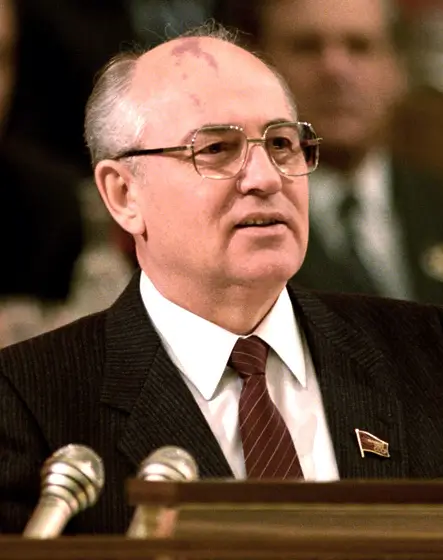
In 1985, Mikhail Gorbachev became the leader of the Soviet Union.
Gorbachev quickly realized that the country was facing serious challenges. He introduced reforms that became known as Perestroika (restructuring) and Glasnost (openness).
Perestroika aimed to modernize the economy, while Glasnost encouraged greater freedom of expression and transparency.
For the first time in decades, Soviet citizens were able to speak more openly about government failures, Stalin’s repressions, and problems that had long been hidden from public discussion.
However, the reforms produced unintended consequences. People gained not only greater freedom but also a clearer understanding of the system’s weaknesses.
The Rise of National Movements
The Soviet Union consisted of fifteen republics. For years, Moscow maintained strict control over them, but by the late 1980s demands for independence were becoming stronger.
The Baltic republics—Lithuania, Latvia, and Estonia—were particularly active.
Soon, similar movements appeared across other Soviet republics. Increasing numbers of people began to believe that independence offered a better future.
The August Coup — The Last Attempt to Save the Union
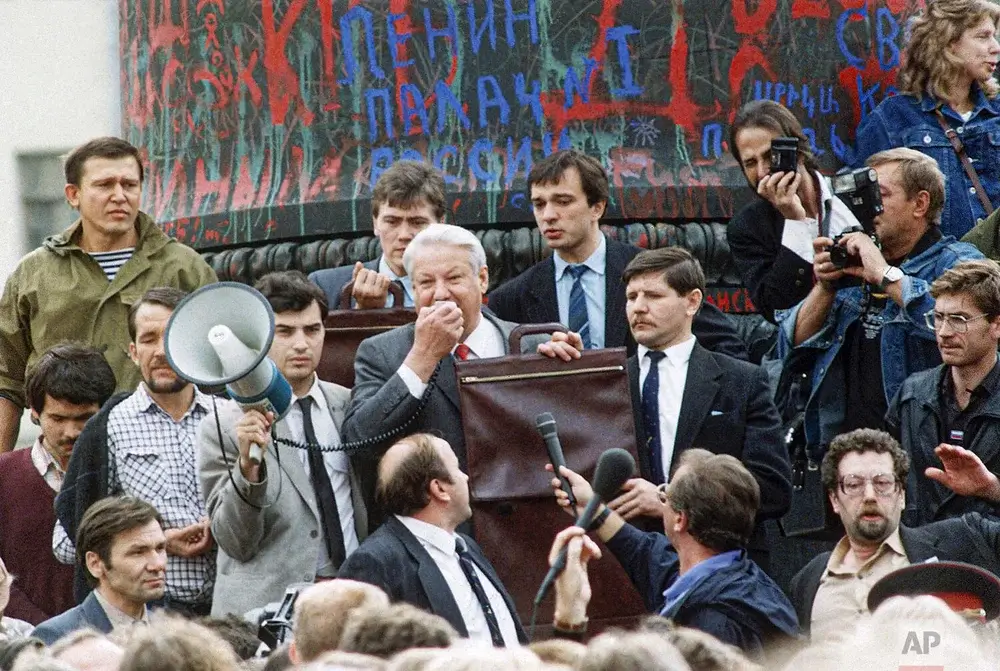
In August 1991, a group of high-ranking Soviet officials attempted a coup d’état.
Their goal was to remove Gorbachev from power and restore the old system. Gorbachev was effectively placed under house arrest, and a state of emergency was declared.
However, events did not unfold as the coup organizers had planned.
Thousands of people took to the streets of Moscow. A decisive role was played by Boris Yeltsin, who openly challenged the coup leaders.
Within days, the coup collapsed. The failure dealt a devastating blow to the authority of the Soviet government.
The End of the Soviet Union
By the end of 1991, it had become clear that the Soviet Union was on the verge of collapse.
In December, the leaders of Russia, Ukraine, and Belarus met and signed an agreement that effectively brought the Soviet Union to an end.
On December 25, Gorbachev resigned as president.
That same evening, the Soviet flag was lowered from the Kremlin and replaced with the Russian tricolor.
On December 26, 1991, the Soviet Union was officially dissolved.

Consequences That Changed the World
The collapse of the Soviet Union ushered in a completely new era.
The Cold War came to an end. Communist regimes across Eastern Europe disappeared. Former Soviet republics became independent states.
However, the transition also brought serious challenges. Many countries experienced economic crises, millions lost their jobs, and several regions descended into armed conflict.
Nevertheless, December 1991 remains a historic moment when one of the twentieth century’s greatest political experiments came to an end.
Legacy
Decades have passed since the dissolution of the Soviet Union, yet its impact is still felt today. Modern international relations, the politics of Eastern Europe, energy security, and numerous ongoing conflicts are directly or indirectly connected to the events of 1991.
The collapse of the Soviet Union serves as a reminder that even the most powerful empires can fall when economic problems, political crises, and public dissatisfaction accumulate simultaneously. A state that once controlled nearly half the world disappeared from the map within months, becoming one of the most remarkable events in modern history.
The images used in the article are sourced from Wikimedia Commons and are in the public domain.
If you found the article interesting, share it with your friends and leave a comment.