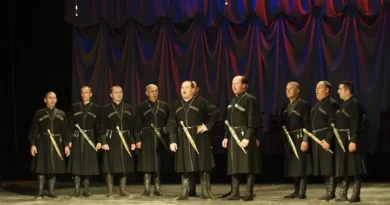
Galaktion Tabidze — A Georgian Genius Whose Tragic Fate Remained a Soviet Secret
In the history of world literature, there are poets whose work ceases to be merely a combination of words — it becomes the expression of an entire nation’s spiritual experience. Such a figure was Galaktion Tabidze, a Georgian poet often hailed as the “King of Poets” in his homeland.
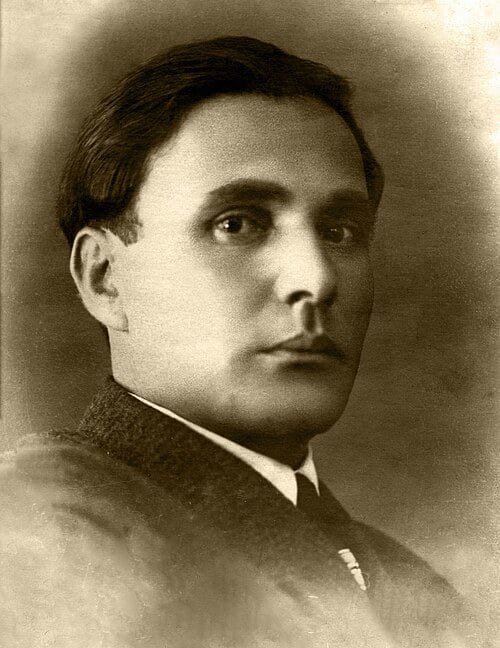
His poems are distinguished by extraordinary musicality, deep symbolism, and a universal expression of human emotions. Although the boundaries of the Georgian language somewhat limited his international recognition, the scale of his poetry transcends the cultural space of a single country.
Galaktion’s life resembled a novel — filled with glory, solitude, love, loss, political pressure, and ultimately, a tragic end that raises questions to this day.
In 1959, in Soviet Georgia, Galaktion Tabidze passed away in a psychiatric hospital. According to the official version, the poet committed suicide by jumping from a hospital window.
However, for decades, another version persisted in the public consciousness: some suggested that his death might have been linked to Soviet state interference and that the poet was forcibly thrown from the window.
Is this merely a legend, or an unexamined chapter of history? There is still no single consensus answer to this question.
Yet one thing is undeniable — the story of Galaktion Tabidze is not just the story of one poet’s passing. It is a story about the power of art, the influence of a political era, and how one individual’s legacy can become the memory of an entire nation.
Galaktion Tabidze — The Poet Who Turned the Georgian Word into Music
To understand the phenomenon of Galaktion Tabidze, one must understand the country he came from.
Georgia is a small country in the Caucasus with an ancient culture that fought for centuries to preserve its identity, language, and heritage. The Georgian language possesses one of the oldest written traditions in the world, and it was in this language that Galaktion created poetry that transformed the Georgian reader’s understanding of what a verse could achieve.
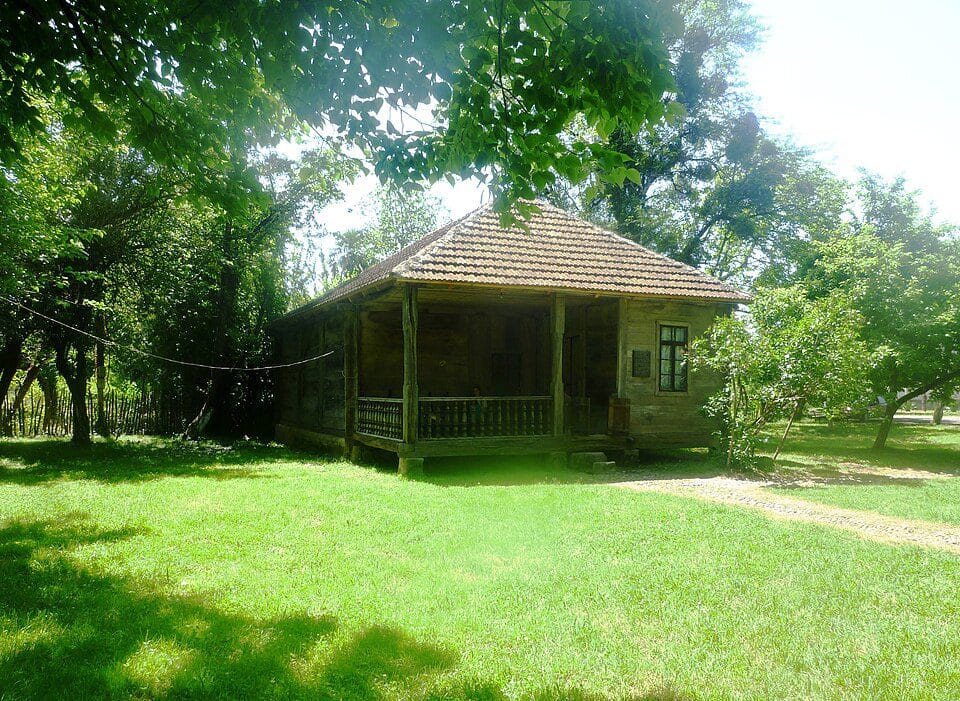
He was born in 1891 in the village of Chqviishi, Imereti. He spent his childhood surrounded by nature, folk songs, and Georgian oral folklore. This environment would later exert a profound influence on his work — his poems often echo the melancholy, beauty, and mystery of the Georgian landscape.
From the beginning, the young Galaktion set himself apart from other poets. He was drawn not only to the Georgian classical tradition, but also to European symbolism, French poetry, and modern literary movements. He sought to elevate Georgian poetry to the level of contemporary world literature.
The primary force of his work lay not only in thought, but in music. For Galaktion, a word was not merely a medium for conveying information — it possessed color, sound, and emotional power.
This quality rendered him an exceptionally singular poet.
A Poet Crowned “The King of Georgian Poets”
In the early 20th century, as world literature was undergoing vast transformations, a poet emerged in Georgia who bridged tradition and modernity.

His poems touched upon themes that transcend national borders:
- Solitude;
- Love;
- Loss;
- Man’s inner struggle;
- The quest for beauty;
- The transience of time.
That is precisely why his poetry resonates far beyond Georgia. Even if readers unfamiliar with the Georgian language cannot always fully sense the music of his phrasing, his core themes are universal — touching the shared human experience.
In world literature, one frequently encounters poets whose lives and works are inextricably linked. For instance, the English poet Lord Byron, the Russian poet Alexander Pushkin, or the Spanish poet Federico García Lorca — their creations are bound not only to their verses, but to the eras and personal dramas through which they lived.
In this light, Galaktion Tabidze’s story unfolds along a similarly tragic arc.
An Era That Altered the Destiny of the Georgian Intelligentsia
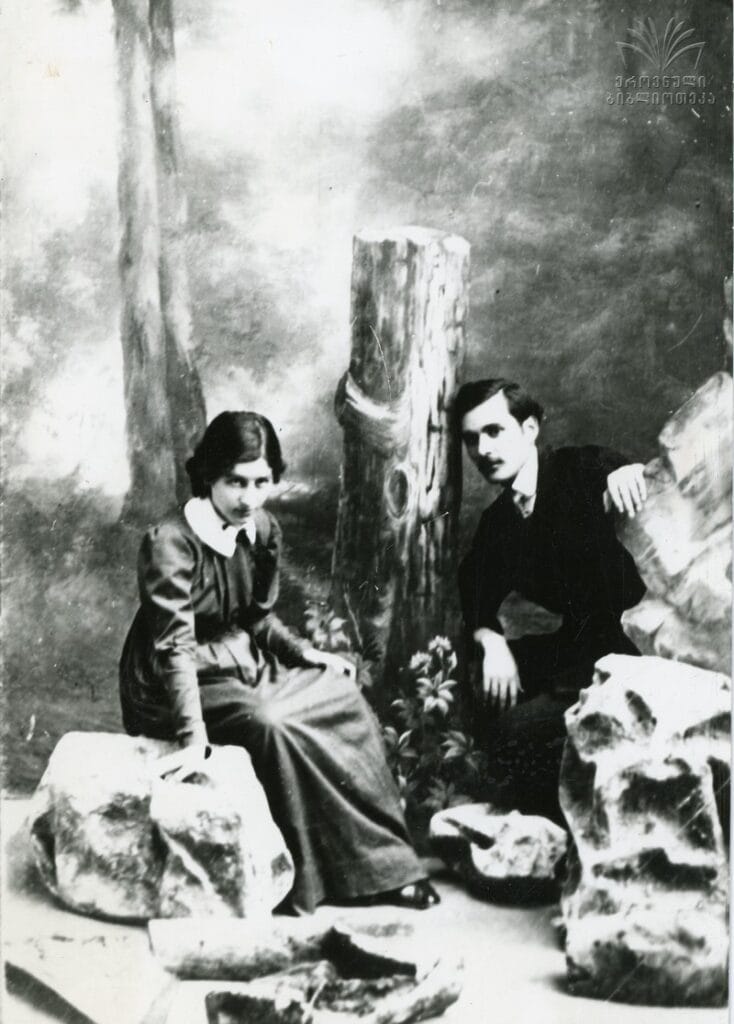
Galaktion’s life coincided with one of the most tumultuous periods in world history.
He witnessed the collapse of the Russian Empire, Georgia’s brief period of independence (1918–1921), and the subsequent establishment of Soviet rule.
The 1921 occupation of Georgia by Soviet Russia dramatically transformed the country’s political and cultural landscape. Artists found themselves in a precarious position: they had to preserve creative freedom within a system where the state exerted strict control over expression.
In the Soviet Union, many writers and intellectuals fell victim to political repression. Some were arrested, others exiled, and some physically eliminated.
Galaktion himself was not repressed to the extent of many other Georgian writers, yet his life was profoundly altered by the era’s weight.
The old cultural world crumbled around him. His friends and fellow thinkers suffered in various ways. A particularly devastating blow was the arrest and execution of his wife, Olga Okudzhava, in the 1940s.
These tragedies left a heavy imprint on his inner world.
The Solitude of a Genius
One of the most prominent motifs in Galaktion’s life was solitude.
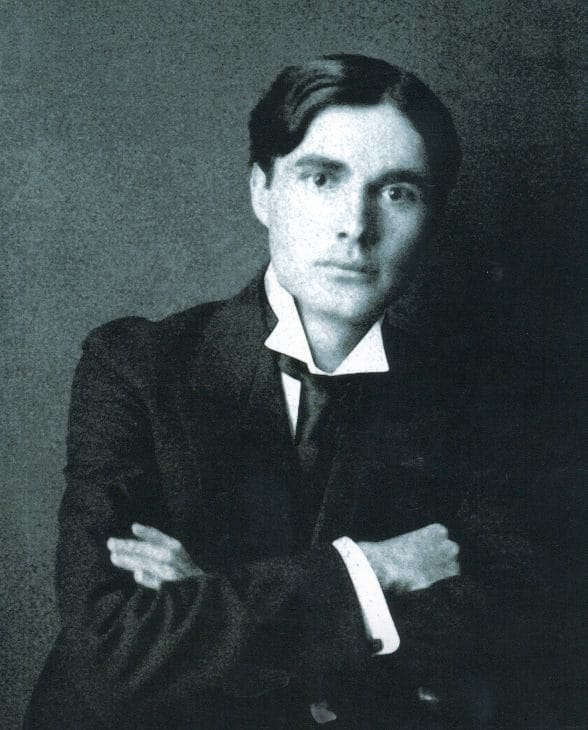
He was a man acclaimed by an entire nation as a master poet, yet in his personal life, he frequently endured deep isolation.
Memoirs of his contemporaries depict a contradictory figure: on one hand, a genius of colossal creative power; on the other, a man often left alone in his battle with personal anguish.
Within this contradiction lies the tragic beauty of his life.
Galaktion Tabidze was not merely a poet writing verses. He was a human being whose fate became a mirror of his era’s spiritual condition.
His final years raised even more questions.
In March 1959, when the “King of Poets” was advanced in age and burdened by failing health, an event occurred that remains a subject of debate to this day.
It was a day that inscribed Galaktion Tabidze’s name not only in the pages of literature, but also among history’s lingering mysteries.
Galaktion Tabidze’s Final Day — The Official Version and the Mysteries Surrounding His Death
March 1959 — The Last Chapter of the Poet’s Life
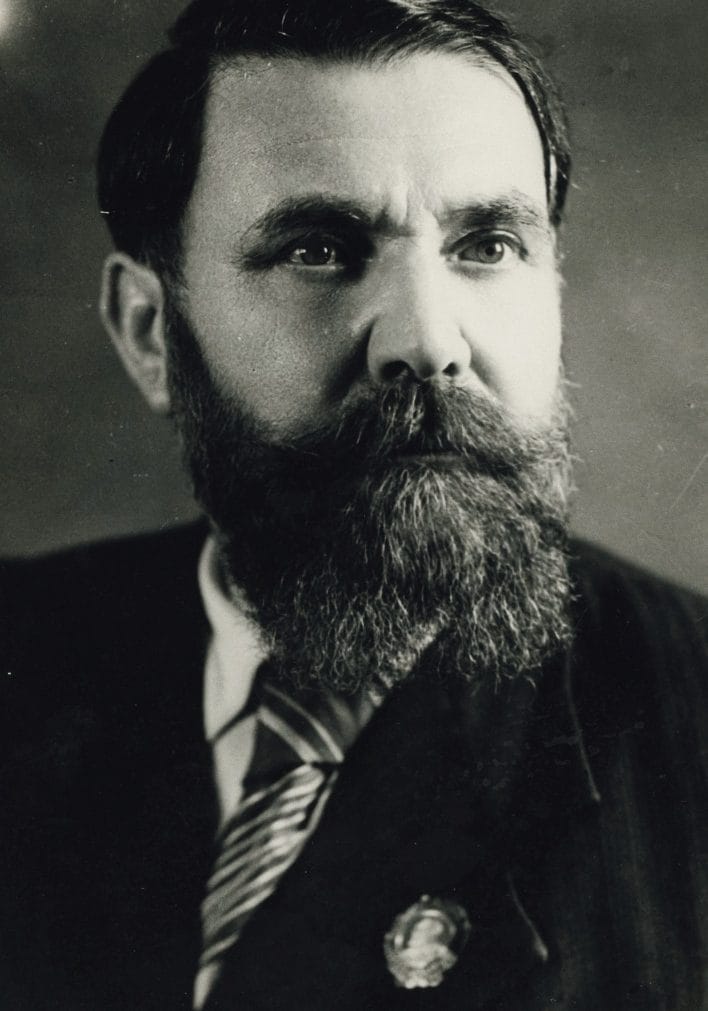
By 1959, Galaktion Tabidze had already become a living legend. In Georgia, he was known as a supreme poet who had forged a new era in Georgian literary history.
Yet beneath the external glory lay a life marked by severe personal tragedies.
In his final years, Galaktion’s health deteriorated significantly, plagued by both physical and psychological suffering. In that era, discussing mental health was far more taboo than it is today, and individuals facing such conditions often risked social isolation.
In March 1959, the poet was staying at a psychiatric hospital in Tbilisi.
On March 17, an event transpired that would mark one of the most tragic chapters in Georgian cultural history.
According to official reports, Galaktion Tabidze ended his life by jumping from a hospital window.
During the Soviet era, this event was not widely publicized. The authorities routinely sought to manage unpleasant details regarding public figures, especially those of national significance.
Galaktion’s death sent shockwaves throughout Georgia.
Georgians had lost the man who, for generations, stood as a primary symbol of the nation’s spiritual landscape.
Why Did Doubts Arise Surrounding the Official Account?
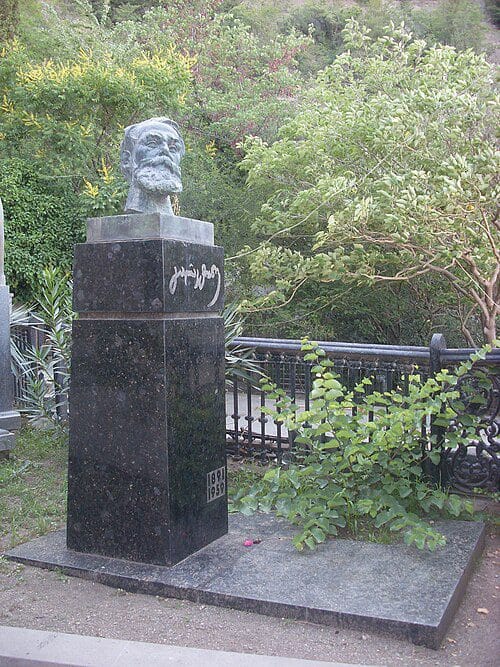
Over the years, the public began to question: was it truly a suicide?
Several factors fueled these suspicions.
First — the historical reality of the Soviet regime.
The 20th-century history of the Soviet Union contains numerous instances of state control over intellectuals, persecution of dissidents, and, in some cases, violent actions.
In Georgia specifically, the purges of the 1930s left deep scars. Many Georgian writers, scholars, and public figures fell victim to political persecution.
This collective memory fostered an environment where people naturally doubted whether the tragic deaths of prominent figures were always as presented by official accounts.
Second — the figure of Galaktion himself.
He was no ordinary individual; he was a national symbol. His artistic authority and stature were so immense that many found it hard to accept that such a figure would end his own life.
The Homicide Hypothesis — Legend or Genuine Suspicion?
According to a widespread alternative theory, Galaktion may have been murdered, with his death subsequently staged as a suicide.
Proponents of this view generally highlight several points:
- The Soviet regime’s hostility toward independent thinkers.
- The fact that Galaktion’s poetry frequently transcended Soviet ideological boundaries. His work served no political slogans; instead, it spoke to the human soul, sorrow, freedom, and spiritual longing.
- The lack of complete transparency in the official investigation surrounding the death of such a prominent figure.
However, it is crucial to note: there is no publicly available documentary evidence confirming that Galaktion Tabidze was killed on orders from the Soviet state.
The murder theory remains a hypothesis rather than a verified historical fact.
Why Is This Story Difficult to Evaluate?
For historians, such cases present a challenge because they exist at the intersection of two distinct realities.
On one hand, official documents and records point to suicide.
On the other hand, the political context of the period — the closed nature of the Soviet system, information control, and past repressions — fostered deep societal distrust.
Historical analysis requires caution here: no hypothesis should be declared as absolute truth without definitive proof.
Perhaps future archival discoveries will shed further light on the matter.
Galaktion’s Tragedy — Beyond a Single Life
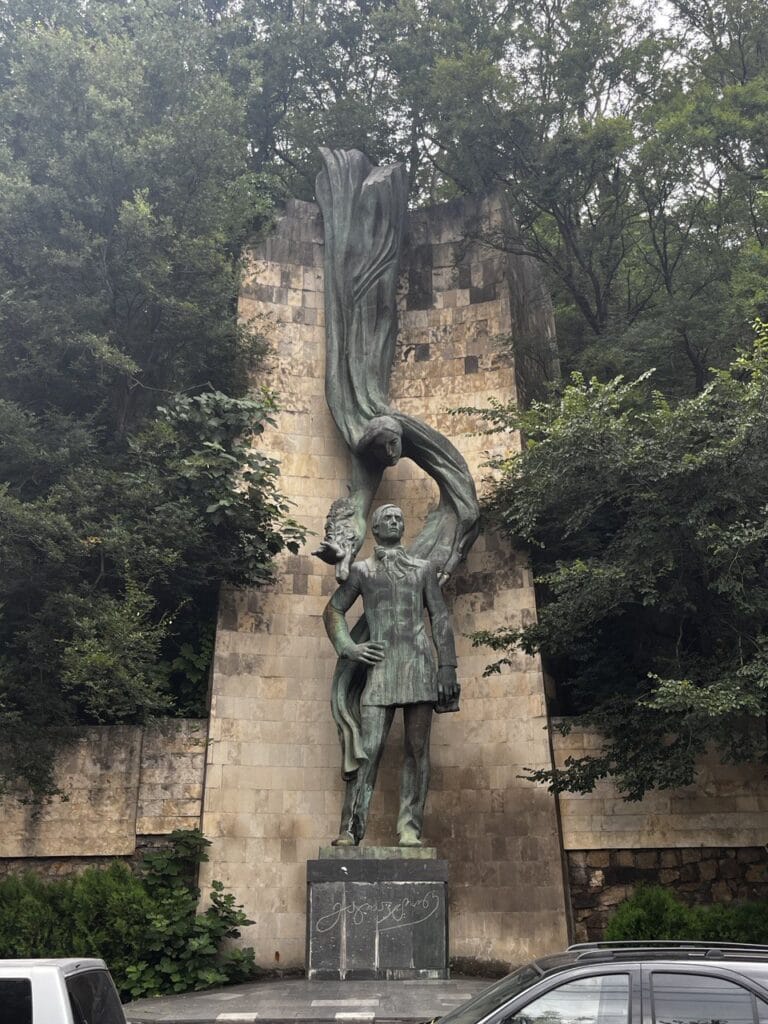
The mystery of Galaktion Tabidze’s death resonates not only because of his status as a famous poet.
This narrative illustrates how the fate of a great artist can become bound to the wider conflicts of an entire era.
Two forces collided in his life:
- A creative genius that forged poetry passed down through generations.
- A harsh political environment that shattered the private lives of many.
This is why Galaktion Tabidze’s story holds international relevance. It is not merely a chapter in Georgian literature — it is a universal tale of an artist striving to preserve inner freedom in perilous times.
Galaktion Tabidze and World Literature — The Legacy of a Lost Genius
Why Does Galaktion Tabidze Deserve the Attention of Global Readers?
World literature features many grand creators whose names were initially known only within their homelands. Often, this was not due to a lack of talent, but rather to language and cultural barriers.
Literature produced in smaller languages sometimes struggles to reach the international audience it merits.
Galaktion Tabidze’s case is a prime example.
His poetry was composed in Georgian — a language with centuries of history, yet unfamiliar to many readers worldwide. Discovering Galaktion thus offers international readers not just an introduction to a single poet, but an entry point into an entire cultural universe.
His work unites universal themes understood by all, regardless of language or nationality: love, loss, solitude, the search for beauty, the transience of time, and the internal human struggle.
This is why great poetry invariably breaks through national borders.
Galaktion and Other Master Poets
Galaktion Tabidze’s path mirrors the lives of other literary giants.
Like Federico García Lorca, he lived in an era when art and politics were locked in a complex, tense relationship.
Like Rainer Maria Rilke, his poetry placed deep emphasis on the inner world, spiritual search, and human solitude.
Like Pablo Neruda, he became a defining voice of his country’s cultural identity.
While every poet is unique and direct comparisons apply only to certain aspects, they share a common trait — they were not merely writers of verse, but figures who articulated the soul of their times.
The Portrait of a Tragic Genius
To the public, he was a genius, the “King of Poets,” yet his personal life was frequently marked by isolation and suffering.
One of the most compelling motifs in Galaktion’s life is the stark contrast between public renown and private agony.
This duality is a common thread in the biographies of great artists.
Creative brilliance does not guarantee a harmonious existence. Often, those who craft the most profound works undergo severe internal turmoil.
Herein lies Galaktion’s tragedy — he created poetry that gifted others emotional richness and beauty, while spending his final years amid pain and hardship.
The Unsolved Mystery
Decades later, questions surrounding Galaktion Tabidze’s death persist.
Was it suicide?
Or were there unrevealed circumstances that history has yet to uncover?
There is no definitive answer to these questions.
Yet perhaps the true significance of Galaktion’s story lies beyond this enigma.
The essential question may not be simply, “How did Galaktion Tabidze die?”
But rather: “How did a person living in such a turbulent era manage to create art that earned his name eternal immortality?”
That is where his true legacy lies.
Galaktion Tabidze — An Unsilenced Voice
Today, Galaktion Tabidze remains a pillar of Georgian culture.
His poems continue to be read, his name remains synonymous with the highest peaks of Georgian verse, and his life continues to spark interest and debate.
His story reminds us that art often survives long after individuals and political regimes have vanished.
The Soviet Union is gone.
The era that shaped Galaktion’s life has passed into history.
Yet his words endure.
And that is the ultimate victory of a master creator — when time itself fails to erase his voice.
Galaktion Tabidze is not merely a Georgian poet.
He stands as an example of how one individual, speaking through a single language and culture, can create something universal that resonates across human hearts everywhere.
His life was tragic.
His death was shrouded in mystery.
His poetry remains eternal.
The images used in the article are sourced from Wikimedia Commons and are in the public domain.
If you found the article interesting, share it with your friends and leave a comment.