
What Happens in the Human Brain Before Death?
Science’s Answer About the Final Minutes of Life
One of the greatest mysteries in human life is the moment about which almost no one can give a definitive answer: what happens when life comes to an end? We know how the heart works, how the brain receives oxygen, how breathing stops, and how the body gradually loses the functions necessary to sustain life. But one question is far more difficult — what happens to consciousness as the body approaches death?
For a long time, this question was explored mainly by philosophy and religion. Today, however, science has the ability to observe the functioning of the human brain, at least for a certain period, as the body approaches death. Through electroencephalography, monitoring of the brain’s oxygen supply, and modern resuscitation techniques, scientists have documented cases that have made our traditional understanding of the process even more intriguing.
Some people who survived cardiac arrest have reported seeing a light, feeling a sense of peace, experiencing the sensation of observing their own body from outside it, or suddenly remembering events from their lives. These experiences are known as near-death experiences, or NDEs.
But this is where the most fascinating question begins: are these experiences created by the brain, or do they suggest that there is something about consciousness that we still do not understand?
Science does not yet have a definitive answer.
When the Heart Stops, Everything Does Not End Immediately
The first important thing to understand is that cardiac arrest and irreversible death are not exactly the same event.
When the heart stops, blood is no longer circulating normally throughout the body. As a result, the brain no longer receives enough oxygen and glucose. Within seconds, a person loses consciousness because normal brain function requires a great deal of energy.

But this does not mean that every process in the brain stops at exactly the same moment.
Brain cells function within complex networks, and their functions deteriorate at different rates. After cardiac arrest, a chain of physiological processes begins: blood circulation decreases, oxygen levels fall, neurons lose their energy supply, and the coordinated activity of neural networks gradually breaks down.
This is also why resuscitation is possible. Doctors attempt to restore circulation before brain damage becomes irreversible.
And it is precisely this transitional period that contains one of the greatest mysteries.
Why Is the Brain So Sensitive to Oxygen Loss?
The human brain makes up only a small fraction of the body’s total mass, yet it consumes a remarkably large share of the body’s energy. Its nerve cells require a constant supply of energy to maintain electrical signals and communicate with one another.
When blood circulation stops, this energy system begins to fail rapidly.
Neurons struggle to maintain the electrical gradients they need to function properly. The balance of ions inside and outside cells begins to break down, chemical signaling becomes disrupted, and the coordinated activity of neural networks gradually deteriorates.
That is why a prolonged lack of oxygen is extremely dangerous for the brain.
But there is something important to understand: brain activity is not simply an on-or-off system.
Different regions of the brain and different neural networks may lose their functions at different rates. Under certain circumstances, some forms of electrical activity can persist for a period of time or appear again during the dying process.
And this is where some of the most intriguing observations in modern neuroscience begin.
The “Wave of Death” — What Have Scientists Observed?
In 2023, a study published in the journal Proceedings of the National Academy of Sciences attracted considerable attention.
Researchers examined the electrical activity of four patients whose brains were being monitored as they approached death. In two of the patients, shortly before or around the time of cardiac arrest, scientists observed an increase in gamma-band activity and changes in connectivity between different regions of the brain.
Gamma waves are high-frequency electrical oscillations in the brain. They have been associated with several complex cognitive processes, although their exact relationship with consciousness remains an active area of research.
There is an important qualification, however: the study involved only four patients.
Therefore, its findings cannot establish that every human brain becomes more active before death, nor can they prove that this activity represents conscious experience.
For scientists, the observation was unexpected and potentially important, but it requires much more research.
In other words, researchers observed something worthy of further investigation — but they still do not know exactly what that activity means for a person’s subjective experience.
Can the Brain Still “Think” During the Dying Process?
This is a much more difficult question.
Electrical activity in the brain does not automatically mean that a person is consciously experiencing the world.
For example, certain electrical processes may continue even when a person is unable to consciously perceive their surroundings or form memories.
Consciousness is not simply the presence of a single electrical wave or the activity of one neuron. It appears to depend on the interaction of numerous brain networks.
That is why scientists are trying to determine not only whether the brain remains active, but what kind of activity is occurring and whether it is associated with conscious awareness.
And this leads to another important line of research.
A Person May Be Conscious Even When No One Can See It
In 2023, researchers published the large-scale AWARE-II study, which examined 567 cases of cardiac arrest across 25 hospitals.
During resuscitation, the researchers used EEG and measures of brain oxygenation, and survivors were later interviewed about whether they had experienced memories or perceptions during the period of cardiac arrest and resuscitation.
Of the 567 patients, only 53 survived to hospital discharge, and 28 were able to participate in interviews.
Among those 28 survivors, 11 — approximately 39% — described memories or perceptions associated with conscious experiences during the cardiac-arrest period.
Researchers identified several different categories of experience. Some patients described dream-like experiences, some reported memories or perceptions associated with the resuscitation process, and others described experiences they interpreted as transcendent or connected with death.
Even more interestingly, the study recorded periods of electrical activity on EEG during resuscitation that displayed certain characteristics associated with normal brain activity, despite the brain being in a severely ischemic state.
This finding is certainly intriguing.
But it does not prove that consciousness exists after death.
What it suggests is that cardiac arrest and resuscitation are much more complicated than the simple idea that “the heart stops, and the brain immediately shuts down completely.”
Why Do People See a Light?
One of the best-known features of near-death experiences is the perception of a bright light.

Some people describe moving through a tunnel toward a light. Others report an overwhelming sense of peace or describe their surroundings as unusually vivid and clear.
Similar experiences have been reported across different cultures and historical periods.
Science has proposed several possible explanations.
One possibility involves reduced oxygen availability, changes in neural activity, and disruptions in the way the visual system processes information. Researchers have also considered changes in sensory processing, memory activation, and neurochemical processes associated with extreme physiological stress.
However, there is no single mechanism that currently explains every reported near-death experience.
A 2024 review examining research on near-death experiences following cardiac arrest found that their reported frequency varied considerably between studies, ranging from approximately 6.3% to 39.3%. The researchers also noted substantial methodological differences between studies.
In other words, these experiences are a real reported phenomenon, but their underlying cause has not yet been conclusively established.
Seeing Yourself From Outside Your Body
One of the most striking features reported in some near-death experiences is the sensation of being outside one’s own body.
Some survivors report that they seemed to see their own body lying on a bed while observing doctors or the surrounding room from above.
This is particularly interesting to scientists because it relates directly to our sense of self.
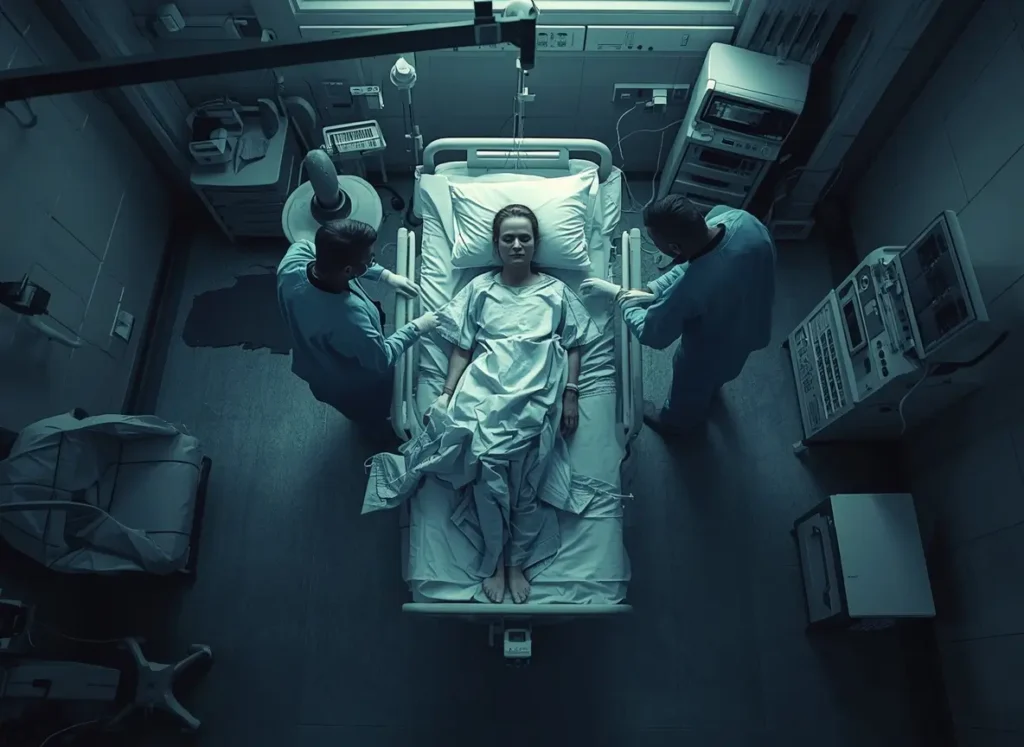
The feeling that “I am here, inside this body” is believed to arise from the interaction of several brain systems.
The brain constantly receives information from vision, touch, the vestibular system, and other sensory sources. It combines this information to construct a spatial model of the body.
If these systems become temporarily disrupted, a person’s perception of their own body and location in space can also change.
For this reason, neuroscientists have proposed that out-of-body experiences may be connected to disruptions in the brain’s model of the body.
However, this remains an area of scientific investigation rather than a definitive explanation for every case.
Why Do People Remember Their Entire Lives?
Some people who have experienced a near-death state report that it felt as if their entire life flashed before their eyes.
They may describe memories appearing rapidly, sometimes involving emotionally important moments from childhood, family life, or other significant experiences.
This raises another fascinating question: why would memory become so vivid during a moment of extreme physiological crisis?
Stress, emotionally charged memories, and the activation of different memory systems may all play a role.
But there is an important limitation.
A person’s recollection after resuscitation does not necessarily tell us exactly when the experience occurred.
Some memories may relate to the period of cardiac arrest. Others may have formed during resuscitation, while still others could have emerged as consciousness was returning.
This is one reason researchers remain cautious when interpreting reports of near-death experiences.
Why Do These Experiences Feel So Real?
This may be one of the most fascinating aspects of the phenomenon.
People who report near-death experiences often say that the experience did not feel like an ordinary dream.
For some, it was so vivid and emotionally powerful that they remembered it in extraordinary detail years later.
Research has identified recurring features including a sense of peace, perception of light, a feeling of separation from the body, and memories or perceptions involving important life events.
But none of this necessarily means that the experience was supernatural.
The human brain is capable of creating extraordinarily realistic subjective worlds. During ordinary dreams, people can see places, people, sounds, and events with such vividness that they seem completely real while the dream is happening.
Therefore, the key scientific question is not simply:
“Did the person really see these things?”
Instead, it is:
“How can the brain generate such an intense and realistic experience during an extreme physiological crisis?”
That question remains open.
The Strangest Part — Brain Activity Near the Moment of Death
This may be where modern neuroscience is approaching one of its most intriguing boundaries.
In the 2023 PNAS study, EEG recordings from four dying patients showed an increase in gamma activity and changes in connectivity between different brain regions in two of the cases around the time of death.
The authors emphasized that the physiological meaning of this activity is not yet fully understood.
The findings are particularly interesting because they challenge the overly simple idea that brain activity always disappears in a perfectly smooth and immediate way as death approaches.
The picture may be much more complicated.
Some neural networks may continue functioning for a period of time, while others deteriorate rapidly. Different systems may become disconnected from one another, and unusual patterns of activity may emerge.
But scientists remain cautious.
The discovery of electrical activity in a dying brain does not automatically demonstrate consciousness.
It shows that the brain can display complex electrical patterns during the dying process. Whether those patterns correspond to subjective experience is a separate question.
So What Does a Person Actually Feel Before Death?
There is no universal answer.
Some people may have no conscious memory of the experience at all. Others may report dream-like states. Some describe peace, light, separation from the body, or memories of significant events from their lives.

Not all experiences are positive.
Research suggests that near-death experiences can sometimes be associated with profound psychological changes after recovery, including reduced fear of death, a stronger appreciation of life, increased spirituality, and greater empathy. But difficult or distressing experiences can also occur and may leave lasting emotional effects.
This is why near-death experiences should not be reduced to a simple story about “seeing a light.”
For some survivors, the experience can become one of the most significant events of their lives.
Does This Mean Consciousness Continues After Death?
Science currently has no conclusive evidence that it does.
At the same time, science does not yet have a complete explanation for every reported conscious experience associated with cardiac arrest.
These two statements are not contradictory.
We can say that:
- near-death experiences are a documented phenomenon;
- some of them are extremely vivid and can have long-lasting psychological effects;
- certain forms of brain activity can persist or reappear during cardiac arrest and resuscitation;
- scientists still do not fully understand the meaning of all such activity;
- and none of these findings proves that human consciousness continues independently after the irreversible cessation of brain function.
That is where current scientific knowledge reaches its boundary.
Death May Not Be a Single Moment
Perhaps one of the most important things we have learned from modern research is this:
Death is not necessarily a single instant.
It is a complex biological process.
The heart can stop and later be restarted through resuscitation. Different brain networks can lose their function at different rates. Electrical activity can change or persist for a period of time. And a person’s memories of the event may only become accessible after consciousness has returned.
For scientists, the dying process may therefore be better understood as a gradually unfolding breakdown of a highly complex biological system, rather than as a single switch being turned off.
And within this transition between life and death lies one of the most difficult questions in neuroscience:
How long can the human brain maintain activity that might be associated with conscious experience?
We still do not know.
The Greatest Mystery Is Still Consciousness
We now know a great deal about the human brain.
We know that billions of neurons communicate through electrical and chemical signals. We understand many of the mechanisms involved in memory, perception, movement, and sensory processing.
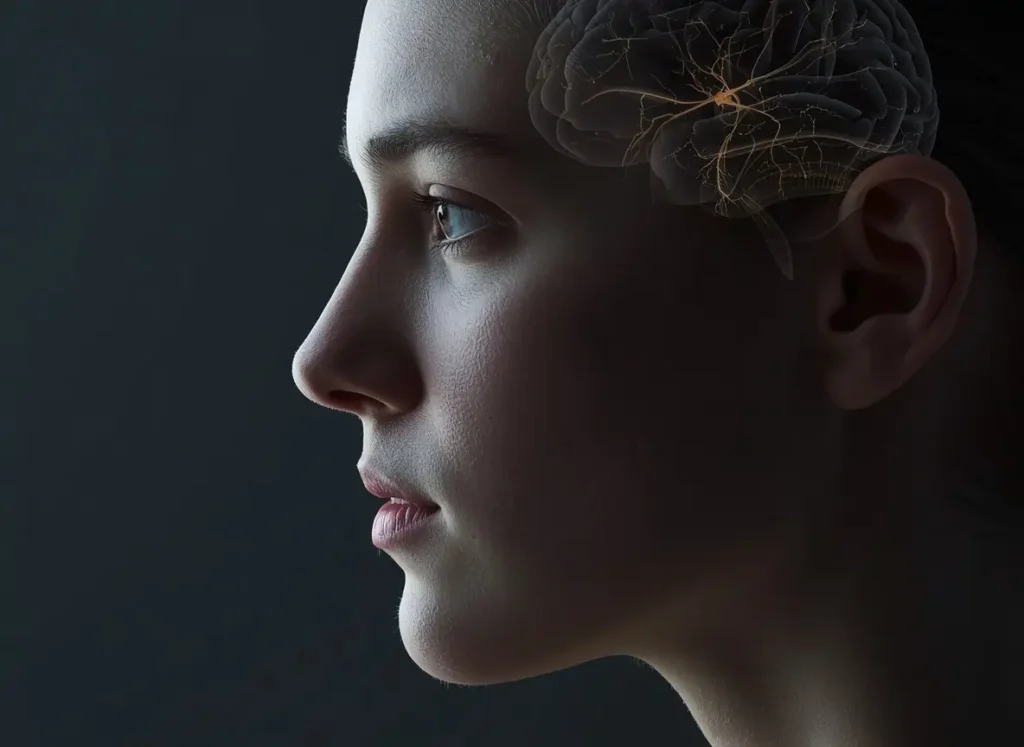
Yet one fundamental mystery remains:
How does subjective experience emerge at all?
Why isn’t the brain simply a collection of electrical and chemical reactions? Why do we experience the world from a first-person perspective? Why do we have a sense of self?
The study of death makes these questions even more difficult.
When the heart stops and the brain enters an extreme physiological crisis, some survivors later report remarkably vivid conscious experiences. At the same time, scientists have observed unusual patterns of electrical activity in some dying or resuscitated brains.
But we cannot yet establish a direct connection between these observations.
Perhaps future technologies will allow researchers to monitor the human brain during the final moments of life with much greater precision. Perhaps future studies will reveal mechanisms that are invisible to us today.
For now, however, the most scientifically responsible conclusion is this:
We know that the brain does not necessarily become completely inactive the instant the heart stops. We know that some survivors report vivid conscious experiences associated with cardiac arrest. We know that unusual changes in brain activity can occur near the end of life. But we still do not know exactly what these phenomena mean for consciousness.
And that is why the human brain remains one of science’s greatest mysteries — even in the final moments of life.
Perhaps the strangest thing of all is that when scientists study death, they ultimately return to one of the greatest mysteries of life itself: consciousness.
Sources
The main scientific conclusions of this article are based on peer-reviewed studies and reviews, including the AWARE-II study published in Resuscitation, research published in PNAS on gamma activity in the brain of a dying person, and a 2024 systematic review of near-death experiences.
Important note: The article does not claim either a supernatural explanation or that all NDEs have already been explained by a specific brain mechanism. Existing research reveals intriguing phenomena, but many questions remain open areas of scientific inquiry.
If you found the article interesting, share it with your friends and leave a comment.