
The Seven Wonders of the Ancient World
Humans have always harbored a desire to create something that would withstand the test of time. Immense temples, statues reaching toward the sky, and grand palaces — these were not merely architecture. They were expressions of the power, faith, and imagination of civilizations.
In the ancient world, there were seven structures recognized as the “Wonders of the World.” They were so impressive that travelers told legends about them. However, today, almost none of these wonders exist. Only stories, ruins, and imagination remain.
What were the “Seven Wonders of the Ancient World”?
Ancient Greek travelers and historians created a list of places they believed were humanity’s greatest creations. The list included:
- The Great Pyramid of Giza
- The Hanging Gardens of Babylon
- The Statue of Zeus at Olympia
- The Temple of Artemis at Ephesus
- The Mausoleum at Halicarnassus
- The Colossus of Rhodes
- The Lighthouse of Alexandria
Of these wonders, only the Pyramid of Giza remains fully intact today. The others were destroyed by wars, earthquakes, fires, and the relentless force of time.
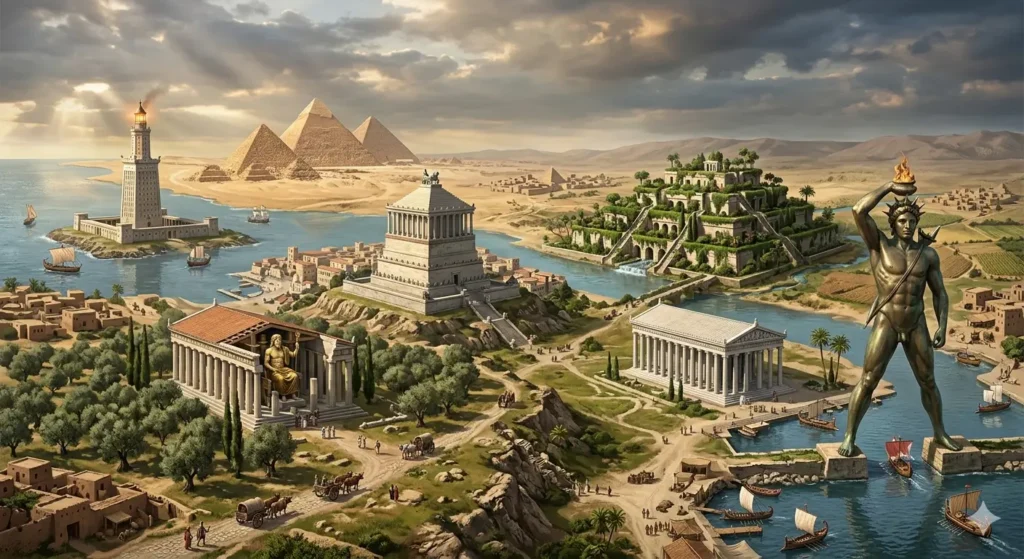
The Great Pyramid of What were the “Seven Wonders of the Ancient World”?
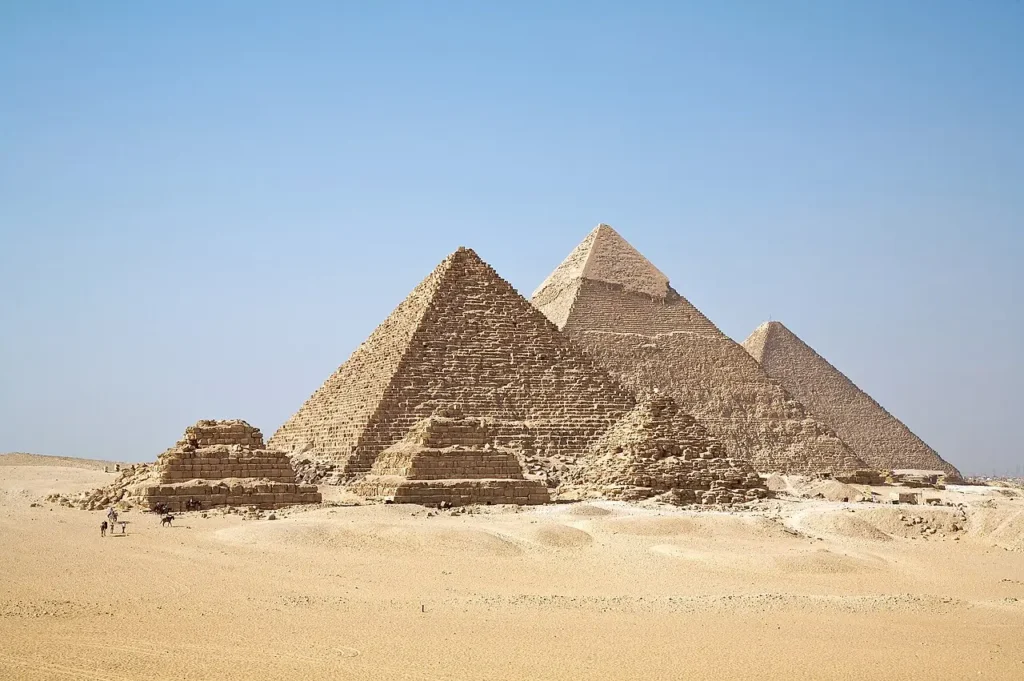
Giza — The Only Wonder That Withstood Time
Of the Seven Wonders of the Ancient World, only the Great Pyramid of Giza remains fully intact today.
Built approximately 4,500 years ago in Egypt, it served as the tomb for Pharaoh Khufu. Its original height was about 146 meters, which was considered an unimaginable engineering achievement for that era.
The pyramid is constructed from millions of stone blocks, some of which weigh several tons. To this day, it is not precisely known how the ancient Egyptians managed to build such a massive structure using the technology of that time.
For centuries, the Great Pyramid of Giza remained the tallest man-made structure in the world.
Today, it is not only an architectural marvel but also one of the greatest mysteries in human history. Scientists continue to explore its internal structure, secret corridors, and construction methods.
The Great Pyramid of Giza reminds us that some creations can truly defy time — and that is why it remains the only living witness among the Seven Wonders of the Ancient World.
The Hanging Gardens of Babylon
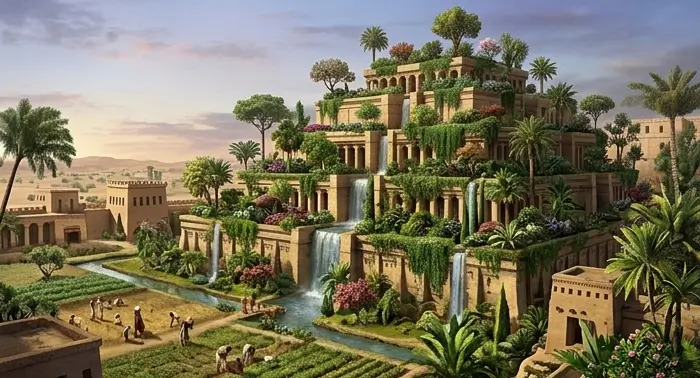
According to legend, King Nebuchadnezzar of Babylon built the vast gardens for his wife, who missed her native mountains. It is said they were multi-story terraces filled with exotic plants, waterfalls, and trees, utilizing a complex mechanism to lift water from the Euphrates River. It was a green paradise created in the middle of a desert.
Curiously, some historians believe these gardens may never have existed at all. No direct archaeological evidence confirms their existence to this day. They may have been real, or perhaps they were just a legend that grew over centuries.
The Statue of Zeus
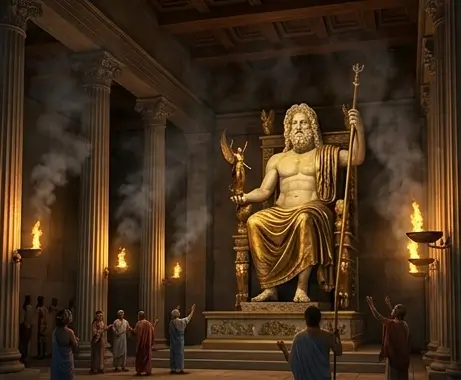
In Olympia, Ancient Greece, stood an enormous statue depicting the god Zeus, created by the famous sculptor Phidias. The statue was approximately 12 meters high and made of gold and ivory.
Travelers said that entering the temple felt as though you were looking at God himself. Centuries later, the temple was destroyed, and the statue was either consumed by fire or lost after being moved to Constantinople. Today, only descriptions and images on coins remain.
The Temple of Artemis
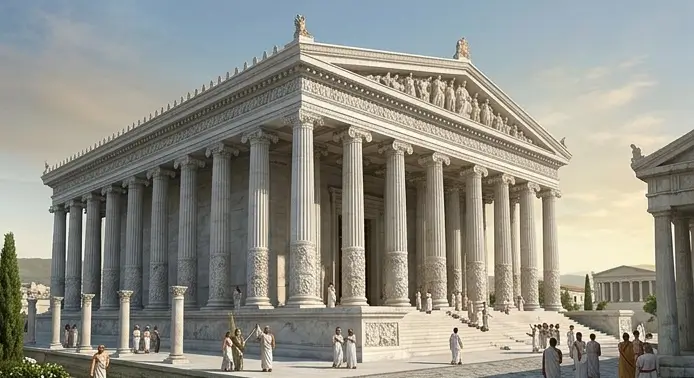
The Temple of Artemis at Ephesus was so grand it was called the “House of the Gods”. Built entirely of marble and decorated with 127 massive columns, it featured works by the finest artists. Its history ended tragically in 356 BC when a man named Herostratus burned it down just so his name would be remembered in history. It was rebuilt but later destroyed by the Goths. Today, only a few columns and ruins remain.
The Colossus of Rhodes
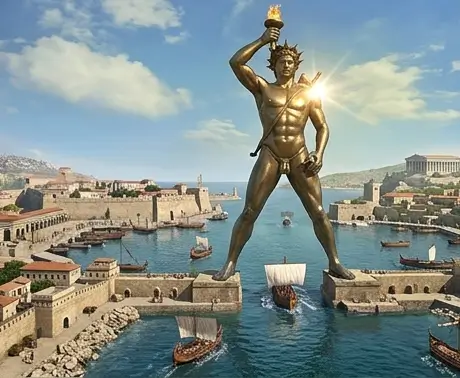
The Colossus of Rhodes was a giant bronze statue of the sun god Helios, standing about 30 meters tall — an incredible scale for that time. Legend says it stood at the harbor entrance, overlooking the ships. Just 54 years after its completion, a strong earthquake toppled it.
The ruins lay on the ground for centuries because people believed moving them would bring misfortune. It remained there for 800 years until Arab conquerors dismantled the bronze and sold it as scrap.
The Lighthouse of Alexandria
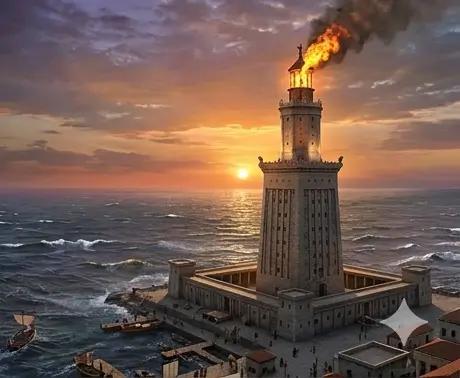
Built in the city of Alexandria, Egypt, the lighthouse was one of the most technologically advanced structures of the ancient world. Reaching a height of about 100 meters, its fire was visible for kilometers.
It guided sailors and served as a symbol of safety for centuries. A series of powerful earthquakes eventually destroyed it, and today, parts of its remains are found on the seafloor.
The Mausoleum at Halicarnassus
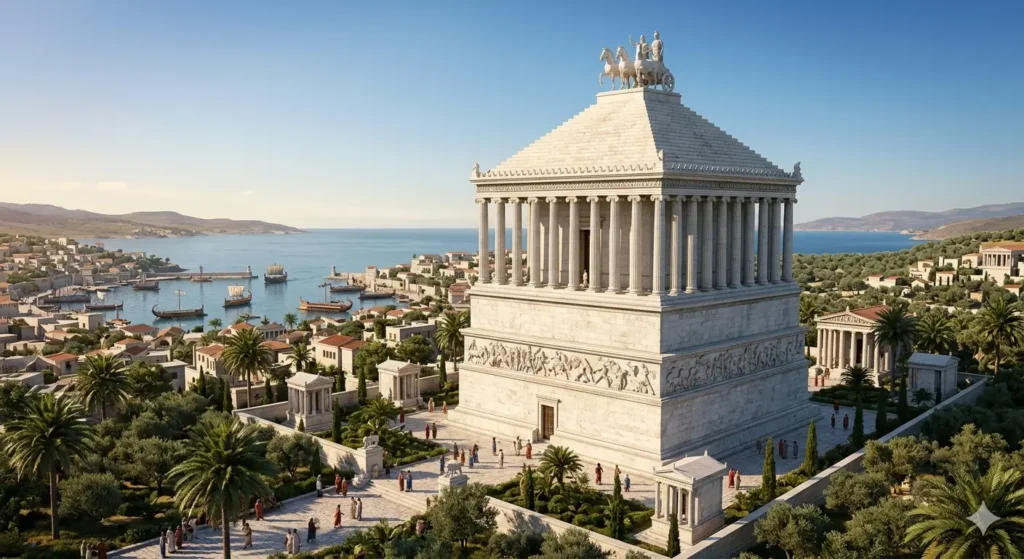
This grand tomb was built for King Mausolus. Its architecture became so famous that all grand tombs were later called “mausoleums”. Reaching 45 meters in height and crowned with a statue of a four-horse chariot, it was decorated with various sculptures and intricate ornaments. Earthquakes eventually destroyed it, and some of its stones were later used to build fortifications.
Conclusion: Humanity Remaining in the Ruins
The Seven Wonders of the Ancient World are more than just architectural and engineering feats; they embody the cultural, religious, and political aspirations of the civilizations that created them. Each structure is an echo of the eternal human desire to leave an indelible mark on history and immortalize the power of its era in material form.
While most have not reached us, their value has not faded over time. They remain a source of inspiration for both scientists and the public, serving as a symbolic reminder that even the greatest empires are vulnerable to time and nature. Simultaneously, they prove the scale of human creativity, standing as eternal symbols of our cultural heritage.
If you found the article interesting, share it with your friends and leave a comment.