
Mona Lisa — The Most Mysterious Painting in History
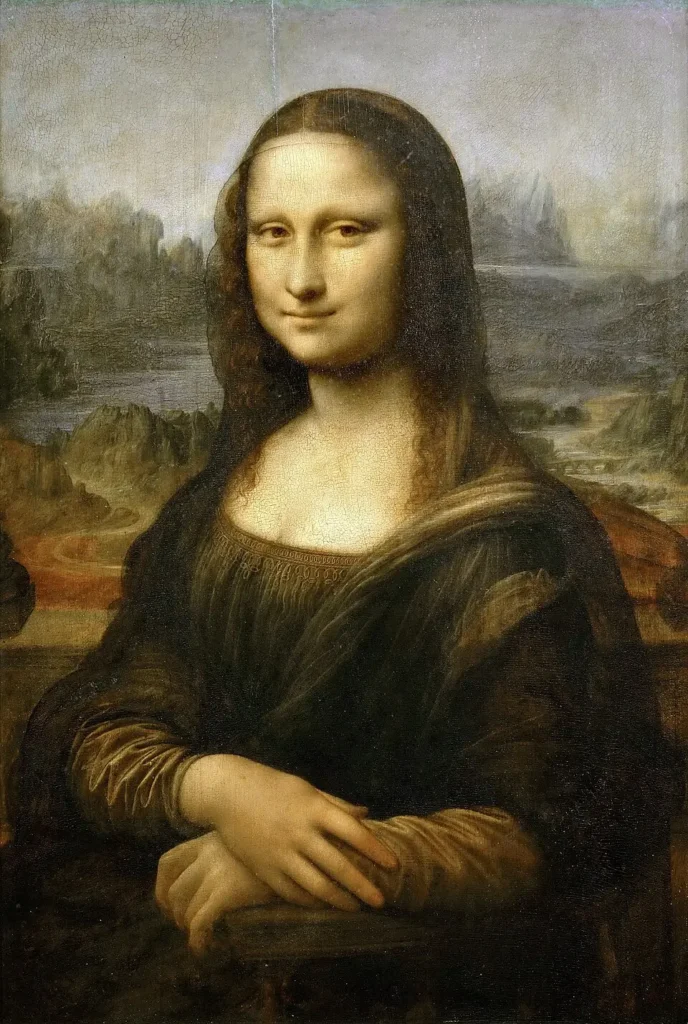
There are few works in history that have sparked as many questions, debates, and admiration as the “Mona Lisa.” This small portrait has remained one of the most famous and discussed artworks for centuries. But what makes it so special?
The Author — The Genius Leonardo da Vinci

The “Mona Lisa” was created by the Italian genius Leonardo da Vinci, who was not only a painter but also a scientist, engineer, and anatomist. He belonged to the Renaissance era — a period that completely transformed the development of art and science.
Leonardo worked on this painting approximately between 1503 and 1519, and interestingly, he carried it with him until the end of his life.
Who is the Mona Lisa?
According to the most common theory, the woman depicted is Lisa Gherardini — a Florentine woman and the wife of a merchant.
However, there are other theories:
- It may be Leonardo’s idealized woman
- Some believe it is a self-portrait in female form
- Others think it is a symbolic figure, not a real person
That is why her identity is still not fully confirmed.
The Mysterious Smile
The Mona Lisa’s smile is its most famous feature.
Why is it so special?
- It changes depending on the viewing angle
- Sometimes it appears, sometimes it disappears
- This effect is achieved using Leonardo’s technique called Sfumato
This technique involves soft transitions between colors, creating a natural and “alive” effect.
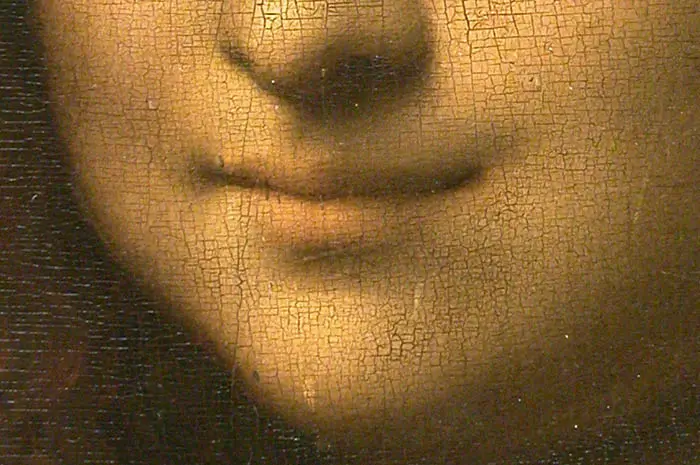
There is also a hypothesis that the model may have had slight facial nerve damage.
This could mean:
- Weak muscle movement on one side of the face
- An asymmetrical smile
- An unusual expression
Some doctors suggest it could have been:
- Facial nerve paresis
- Or a temporary condition (due to stress or health issues)
Some historians believe that Lisa Gherardini was pregnant or had recently given birth at the time.
This could explain:
- A calm and slightly restrained smile
- A relaxed but not very expressive face
There is also the idea that Leonardo intentionally created a dual emotion:
- Sadness and calmness
- Seriousness and gentle joy
This confuses the human brain, making it difficult to determine exactly what Mona Lisa is feeling.
The smile may be:
- A technical illusion
- A physiological trait
- Or Leonardo’s genius concept
Most likely, it is a combination of all these — which is why it still fascinates us today.
The Science Behind the Mona Lisa
Leonardo paid great attention to human anatomy and visual perception.
Scientists say:
- The perception of the smile depends on peripheral vision
- When you look directly at the face, the smile fades
- When you look elsewhere, the smile becomes more visible
This creates the illusion that the painting is “alive.”
Background — Real or Imagined?
The background features a strange, almost surreal landscape:
- Mysterious roads
- Unusual bridges
- Unreal scenery
Some believe it is a real place in Italy, while others think it is purely Leonardo’s imagination.


Where is it Today?
Today, the Mona Lisa is kept in one of the world’s most famous museums — the Louvre Museum in Paris.
It is:
- Protected by bulletproof glass
- Preserved under controlled temperature and humidity
- Viewed by thousands of visitors daily
The 1911 Theft — A Scandal That Boosted Its Fame
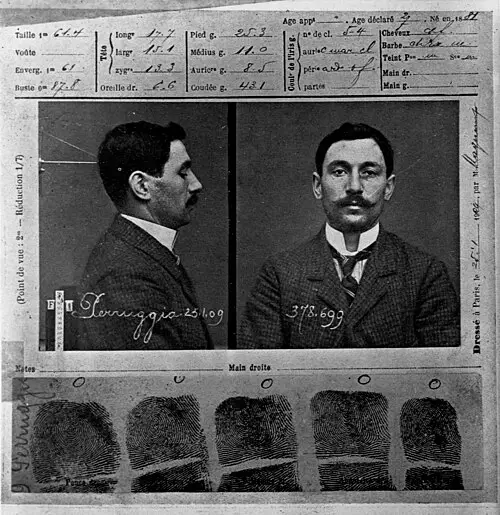
In 1911, the painting was stolen by an Italian worker, Vincenzo Peruggia.
His motive:
👉 To return the painting to Italy
Two years later, he was caught, and the Mona Lisa was returned to the Louvre.
Interestingly, it was after this incident that the painting became world-famous.
Value — A Priceless Masterpiece
The Mona Lisa is not for sale, but its value is estimated at hundreds of millions of dollars.
In 1962, it was insured for about $100 million — equivalent to billions today.
Interesting Facts
- The painting is relatively small (77 x 53 cm)
- Mona Lisa appears to have no eyebrows (possibly faded over time)
- Leonardo worked on it for years, constantly refining details
- It is one of the most protected artworks in the world
Why is the Mona Lisa So Special?
The Mona Lisa is not just a painting. It is:
- A fusion of art and science
- A psychological experiment
- A historical mystery
Its mystery, technical perfection, and history create a unique combination that remains unmatched.
Conclusion
Even after centuries, the Mona Lisa still raises questions:
👉 Who was this woman really?
👉 Why is she smiling like that?
👉 What message did Leonardo leave behind?
And perhaps these very questions are why this painting will never lose its magic.
The images used in the article are sourced from Wikimedia Commons and are in the public domain.
If you found the article interesting, share it with your friends and leave a comment.