
An Experiment: Officially Permitted Cruelty
In 1932, in the state of Alabama, USA, a study began that would become one of the darkest medical experiments in history.
It was called the “Tuskegee Syphilis Study” — and was officially presented as a medical observation.
In reality, it was a long-term experiment conducted on human beings, lasting 40 years.
Who Were the “Patients”
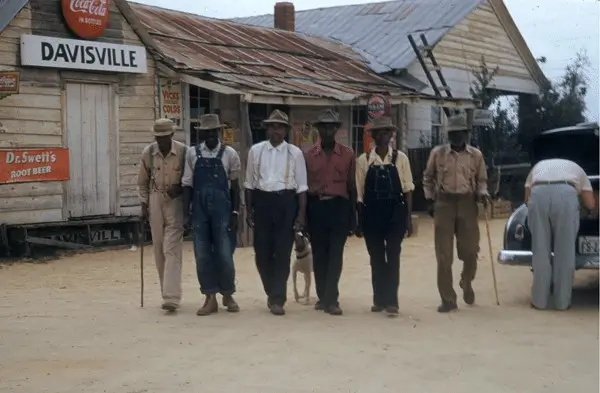
The study involved 600 African American men:
- Most were poor
- Most were uneducated
- Many trusted doctors without question
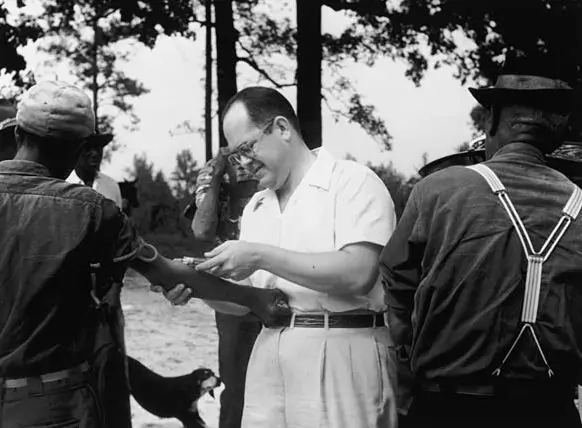
They were told that they were being treated for:
They were treating “bad blood disease”
Syphilis was never mentioned.
Treatment — was never provided.
The Real Purpose of the Experiment

Doctors wanted to understand:
How syphilis progresses in the human body if left completely untreated.
Therefore:
- Patients were not told their diagnosis
- They were not given treatment, even when it became available
- They were deliberately prevented from seeking help from other doctors
All of this was done within an official government program.
The Most Shocking Moment
In the 1940s, syphilis became treatable with penicillin.
This drug was widely used and saved lives.
But the participants of the Tuskegee study:
- Were deliberately denied penicillin
- Were kept in the dark
- The continuation of the experiment was prioritized over human lives
This was no longer ignorance.
It was a conscious choice.
Who Conducted the Experiment
The experiment was carried out by:
- The U.S. Public Health Service
- Licensed physicians
- With government funding
No laws were broken.
The law simply did not account for patients’ rights.
The Consequences
During the study:
- Many patients died
- The disease spread to their wives
- Children were born with congenital syphilis
The experiment ended only in 1972,
when a journalist exposed the truth.
The public was shocked.
The government was forced to admit wrongdoing.
A Total Ethical Collapse
The Tuskegee experiment ultimately demonstrated that:
- Laws can be unethical
- Doctors can become observers instead of protectors
- Science, without control, can easily lose its humanity
After this, the following were introduced:
- Mandatory informed consent
- Bioethics committees
- Strict oversight of medical research
But these were lessons learned too late.
The Tuskegee experiment reminds us of one dangerous truth:
When a doctor follows the law but not their conscience —
medicine becomes a tool, not a form of care.
And history obliges us to ask not only:
“Is it possible?”
but always —
“At what cost?”
A short feature about the Tuskegee experiment is provided below:
Photos used in the article are sourced from Wikimedia Commons and are public domain.
If you found the article interesting, share it with your friends and leave a comment.